- by New Deal democrat
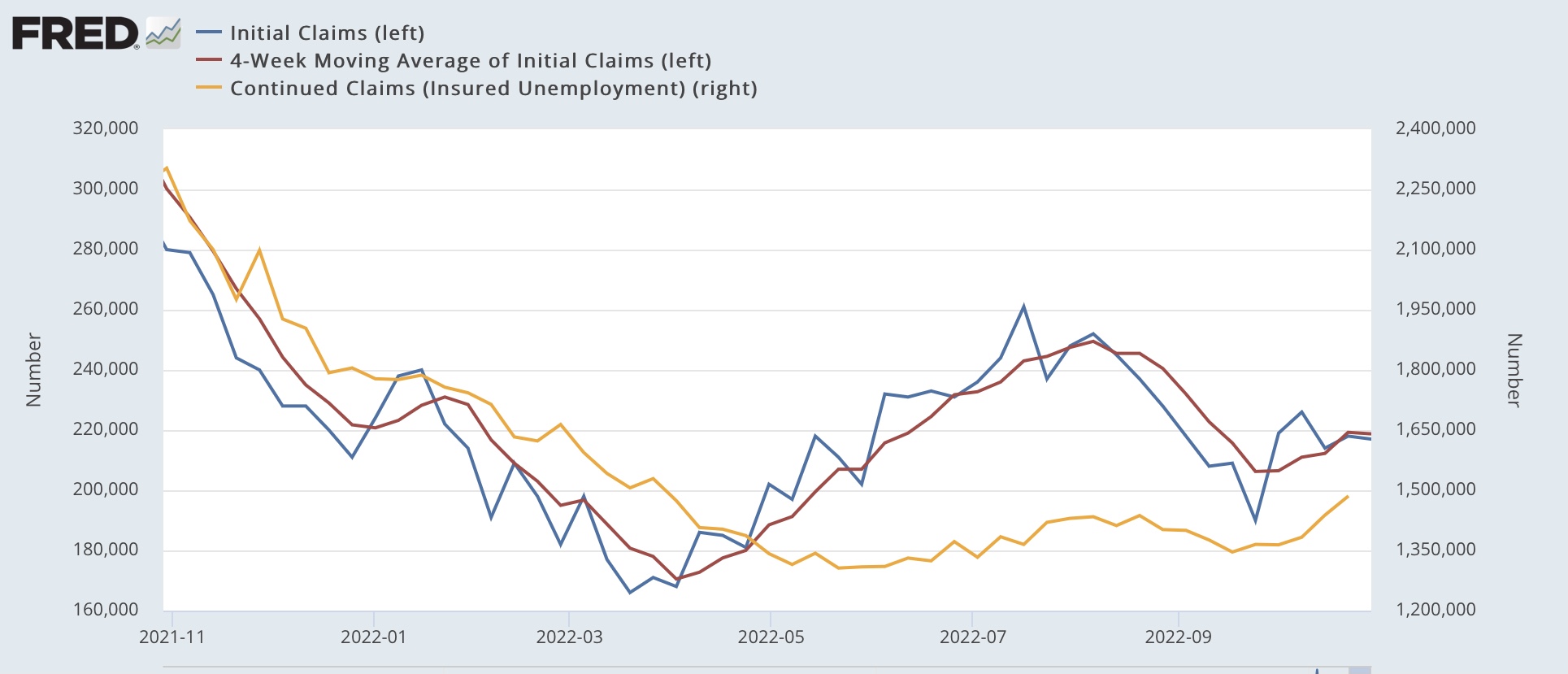
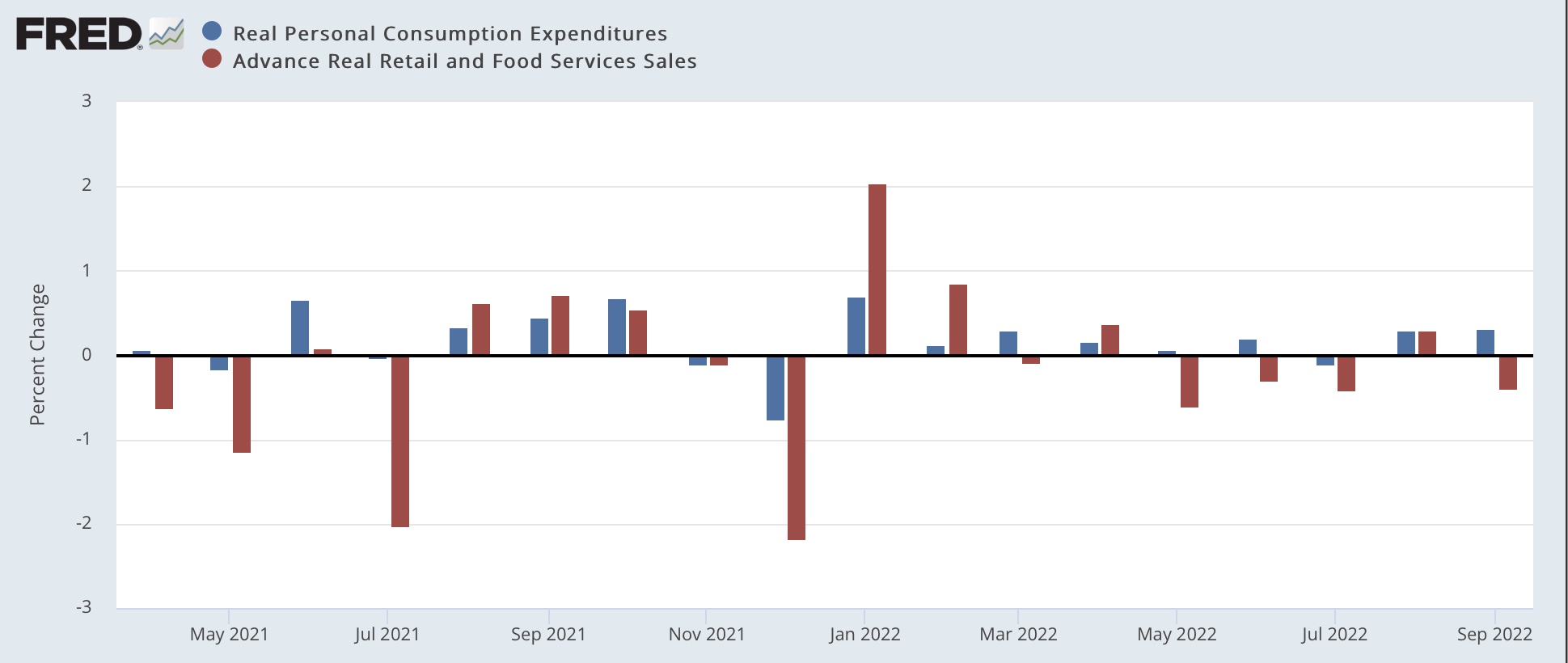
With the sharp increases in interest rates, and the complete stalling of real consumer spending measured YoY, since early this year I have expected employment to follow suit, decelerating over time to a stall. And the three month average in employment gains since February decelerated from over 500,000 to 372,000 through September. Because jobless claims, which have risen from their June lows, lead the unemployment rate, I have also expected that to stop declining, and indeed to rise a little.
Both of those were borne out in today’s employment report for October. The three month average of job growth declined to 289,000, and the unemployment rate rose 0.2% to 3.7%.
Here’s my in depth synopsis.
HEADLINES:
- 261,000 jobs added. Private sector jobs increased 233,000. Government jobs increased by 28,000.
- The alternate, and more volatile measure in the household report *delined* by -328,000 jobs. The above household number factors into the unemployment and underemployment rates below.
- U3 unemployment rate rose 0.2% to 3.7%.
- U6 underemployment rate rose 0.1% to 6.8%.
- Those not in the labor force at all, but who want a job now, declined -117,000 to 5.717 million, compared with 4.996 million in February 2020.
- Those on temporary layoff increased 89,000 to 847,000.
- Permanent job losers rose 60,000 to 1,241,000.
- August was revised downward by -23,000, while September was revised upward by 52,000, for a net increase of 29,000 jobs compared with previous reports.
Leading employment indicators of a slowdown or recession
These are leading sectors for the economy overall, and will help us gauge whether the strong rebound from the pandemic will continue. These were mainly positive:
- the average manufacturing workweek, one of the 10 components of the Index of Leading Indicators, was unchanged at 41.1 hours.
- Manufacturing jobs increased 32,000, and are at a level higher than before the pandemic.
- Construction jobs increased 1,000, also at a level higher than before the pandemic.
- Residential construction jobs, which are even more leading, rose by 2,400.
- Temporary jobs rose by 11,800. Since the beginning of the pandemic, over 300,000 such jobs have been gained.
- the number of people unemployed for 5 weeks or less increased by 57,000 to 2,211,000, about 90,000 above its pre-pandemic level.
Wages of non-managerial workers
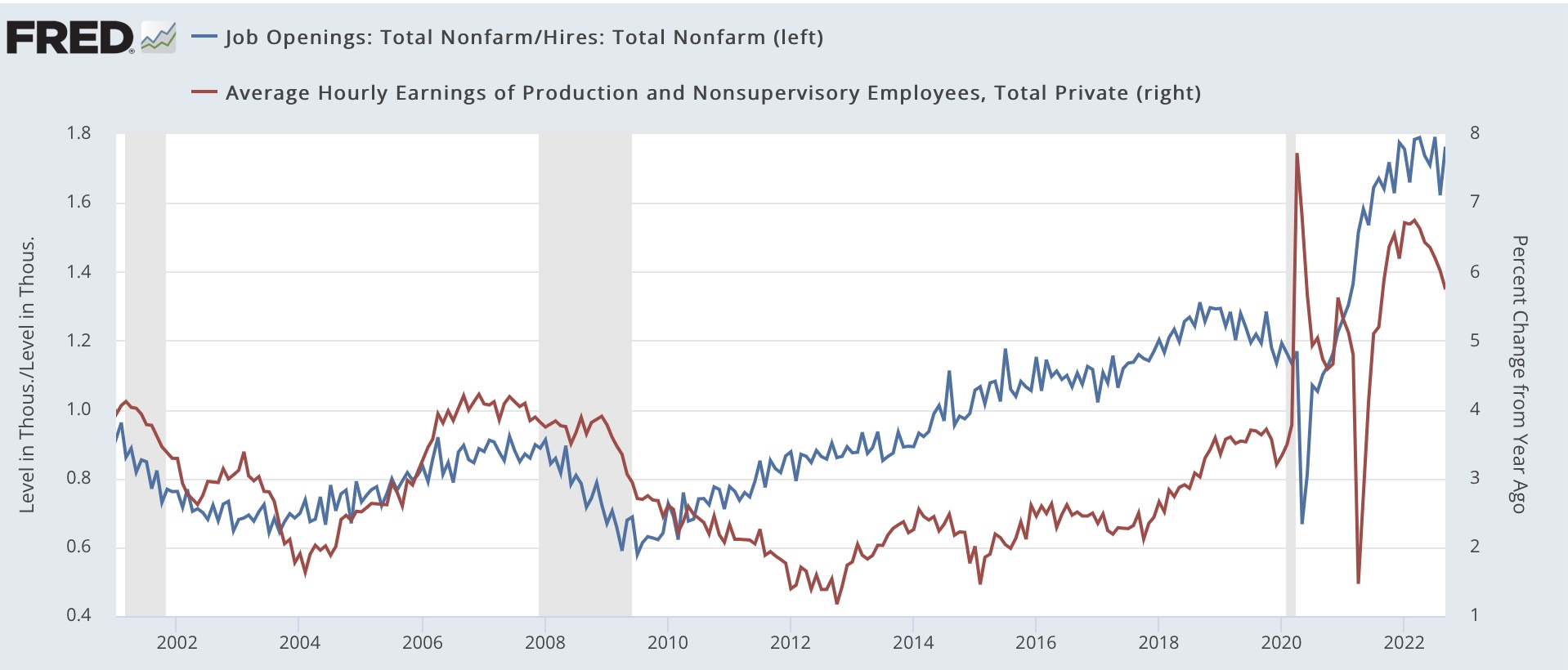
- Average Hourly Earnings for Production and Nonsupervisory Personnel rose $0.09 to $27.86, which is a 5.5% YoY gain, a further decline of -0.3% from last month and its 6.7% peak at the beginning of this year.
Aggregate hours and wages:
- the index of aggregate hours worked for non-managerial workers increased 0.2% which is above its level just before the pandemic.
- the index of aggregate payrolls for non-managerial workers rose by 0.4%, and is up 8.9% YoY. This metric has been decelerating nominally almost consistently for the past 16 months. Compared with inflation through September, it is up only 0.5% YoY (recessions typically start when it crosses zero).
Other significant data:
- Leisure and hospitality jobs, which were the most hard-hit during the pandemic, rose 35,000, but are still about -6.5% below their pre-pandemic peak.
- Within the leisure and hospitality sector, food and drink establishments added 6,000 jobs, but are still -4.6% below their pre-pandemic peak.
- Professional and business employment increased by 39,000, over 1,000,000 above its pre-pandemic peak.
- Full time jobs decreased -433,000 in the household report.
- Part time jobs increased 164,000 in the household report.
- The number of job holders who were part time for economic reasons declined -186,000 to 3,577,000.
- The Labor Force Participation Rate declined -0.1% to 62.2%, vs. 63.4% in February 2020.
SUMMARY
The establishment component of this report was decent, while the household component was poor, even recessionary.
To start with the bad news, in the household report over 300,000 jobs were lost. Worse, the losses were in full time jobs, only made up partially by gains in part time jobs. Since this feeds into the unemployment and underemployment rates, both of those rose. Both the labor force participation rate and the employment to population ratio declined.
By contrast, in absolute terms the household report was pretty good. There were widespread job gains, including in the leading sectors. That manufacturing jobs and hours held up was particularly good. In general the leading components of the report remained positive. Wage gains for non-supervisory workers remain strong, although they continue to decelerate on a YoY basis.
I am particularly watching real aggregate payrolls as a recession marker. These probably remained positive, but I suspect they decelerated further, under 1% this month, but for that we’ll have to wait for the inflation report.
All in all, a late cycle decelerating report, with a household component that may be a harbinger of worse to come.