Tuesday, February 26, 2008

Today's Markets

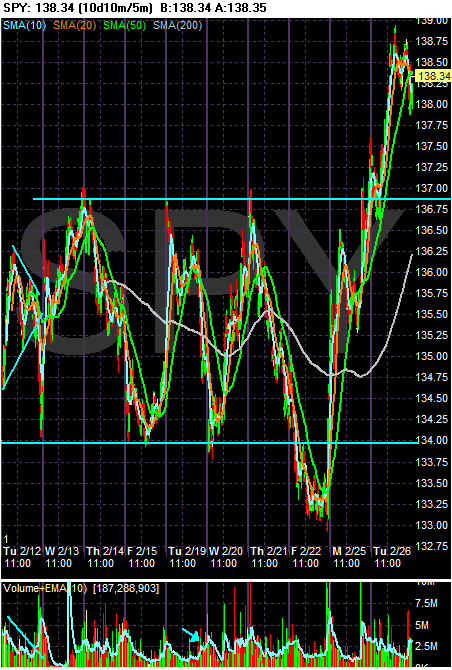
OMG -- did the markets break out of their trading range today?


Above is a 10 day chart of the SPYs in 5-minute increments. Notice the strong rally over the last 2 days from 133.15 (approximately) to 138.34 -- an increase of about 4%. That's a big move, although the back and forth action of the last 10 days has muted its importance.
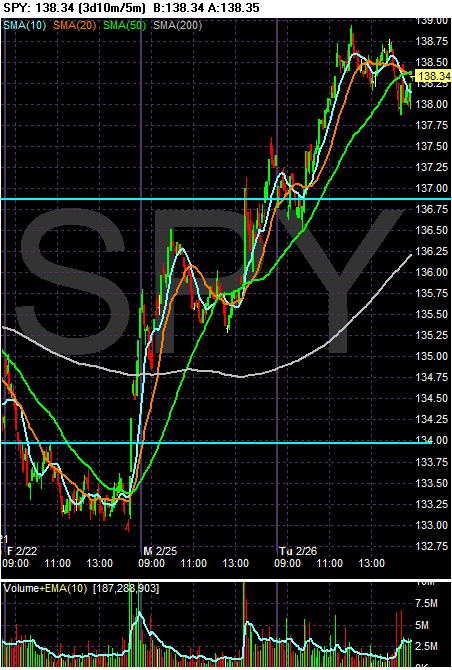


On the three day chart, notice the following.

-- Yesterday's rally started with a gap up. This is very positive.

-- There are three distinct higher high and higher low areas on since yesterday.

-- The market has been able to hold onto its gains for two days in a row.

These are all positive developments and may indicate the SPYs are moving higher.
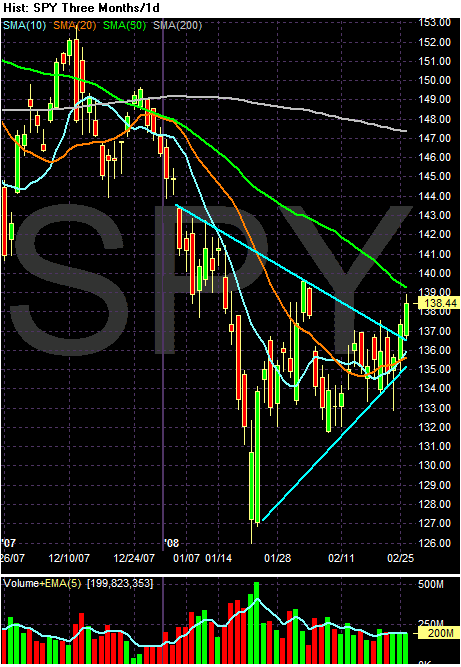


On the daily chart, notice the SPYs have clearly broken out. The question is can they maintain their momentum?
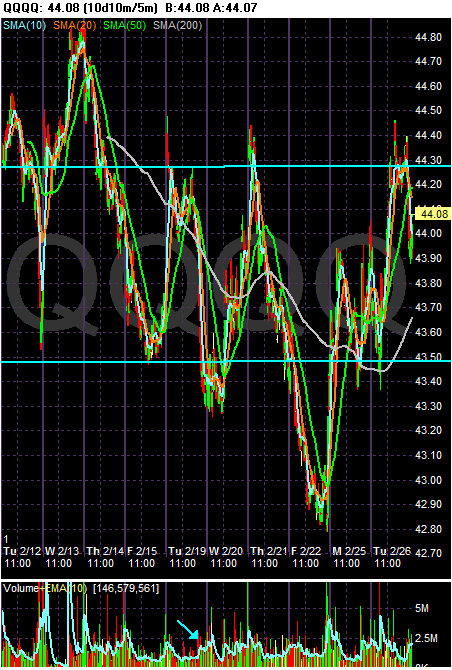


However, the QQQQs are still trading in a range.
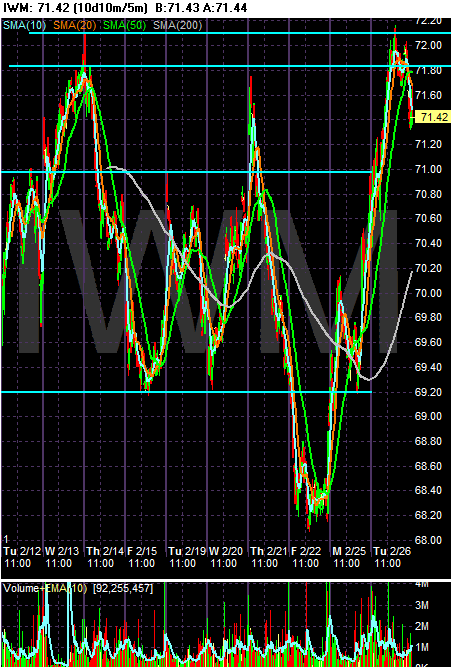


Thee IWMs are at the top of their trading range.
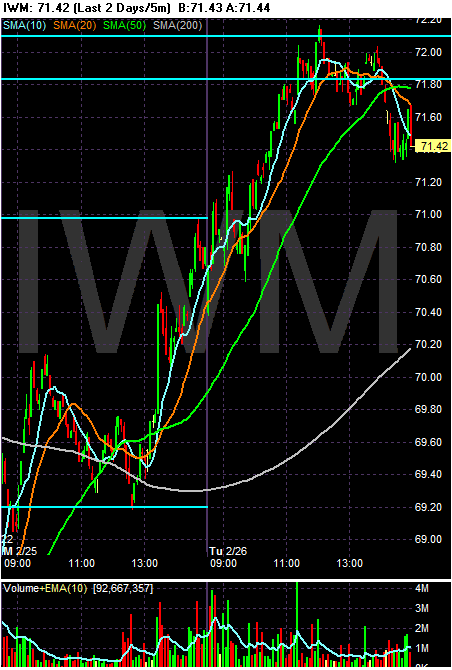


However, the last two days have seen a strong move by the IWMs. Consider the following:

-- The index has moved higher by 3.5%

-- The index has been able to hold onto its gains two days in a row.

-- At the end of trading today, notice the gap down. This would be considered a bearish move, but the index didn't crash.

I'm wondering if the upward momentum from the SPYs continues, will it bleed through to the IWMs?

9 comments:

sterno said...

Here's a question: does inflation help the market? If you've got commodity price inflation I would imagine that's harmful because it can cut into margins if prices can't be passed on to the customer. But if it's monetary supply related inflation, i.e. dollar devaluation then, presumably dollar valuated stocks should go up, non?

I mean if a stock is at 100, and the core value of what it produces remains a constant, then if the currency devalues by half, shouldn't the stock go to 200? I mean lord knows the stock market doesn't work by such simple logic, but it seems like that would have some effect. Or is that "benefit" offset in so many other places that it's effectively nullified.

Anonymous said...

Bonddad or someone,

Can you explain how the markets gained 120 points today considering the generally bad nature of ACTUAL economic data that was released? Is the housing data, for example, soemthing that is already "priced in," so to speak?

My general impression of the markets is that those involved are inherently bullish - and look for signs to buy rather than sell. Today seems evidence for this theory.

Anonymous said...

I guess to follow up on the above. The IBM buyback thing seems to me to be a rather slender reed to rally on. I've been seeing the market do a lot of this over the last several months - quick rallies based on maybe one piece of data or maybe even just a rumor.

To me, this is evidence that market actors are inherently bullish and not necessarily indicators of underlying economic conditions/strength.

I'd be interested if more informed market observers could weigh in here.

Anonymous said...

For example, against IBM today:

We have:
Home Depot posts its first ever annual sales decline

FDIC says quarterly net banking profits decline to 16 year low

More housing mess - foreclosures, but also price declines (granted some of this stuff is pretty much expected)

And, of course, inflation

Yet the market rallies based on the dealings of one company. Pretty weird.

Anonymous said...

This is a sucker's rally. The fundamentals are awful. I wouldn't touch this rally with a barge pole. However, if you're looking for a bump to get out, now's the time.

Anonymous said...

The whole move upward is so bizzare, based on what??? Maybe the hope (false?) that AMBAC and MBIA are going to be bailed out and keep their AAA rating?

CA Pol Junkie said...

Could this be the classic "bad economic data = lower interest rates" rally? In other words, maybe the markets went up for the same reason the dollar tanked.

pft said...

Sterno. If the dollar devalues, and your earnings are in dollars from a domestic dollar market, your earnings devalue as well, so no impact on the dollar price in theory.

For exporters, a devalued dollar would translate into higher dollar earnings, if the export price could be increased, or if the lower price when converted to other currencies increases demand, and so price should reflect this.

For global companies who have significant global earnings and not just dollar earnings, a devalued dollar could translate into higher dollar stock prices. A devalued dollar translates into higher earnings for Big Oil, Big Pharma, Big Agri because their products inflate in value (oil) or simply earn more when converted to dollars.

Inflation theoretically should affect stock prices in normal times, so long as there is enough money in the system. When money is tight, stocks and other tangible assets can deflate. Right now we have inflation on necessities and deflation in stocks and housing.

That said, stocks do not always follow fundamentals, not anymore (imagine the Nasdaq reaching 5000). The market makers, PPT and those naked short traders in the cayman islands selling stocks they do not own or even borrow, control the price. Only they know where the market is going. They make money, no matter it is a bear or a bull market, and even daily fluctuations in sideways trading earn them a living.

The house never loses in Vegas, and the money makers never lose on Wall Street, only the suckers who bet only on fundamentals dicating what the market will do. Roll the dice, study the charts, it matters not. You will still be surprised more often than not.

The so called fundamentals are marked cards, loaded dice, etc. CPI, GDP, unemployment, retail sales, etc. All of them are massaged, manipulated, hedonically adjusted as to be almost fraudulent. You have to look into each report and figure it for yourself and not rely on CNBC spin, or subscribe to a shadowstats.com to make sense of it. But even that is not much help for the markets, since there is a herd mentality, so if everyone feels fundamentals are good, and these are used to justify a bubble forming even though the fundamentals are a lie, the bubble will still increase until the money makers decide to pop it (after they bail out or cover themself).

Anonymous said...

In the past I've always been amazed when the market went up on bad news for consumers. One explanation for this may be that high unemployment numbers may translate into lower costs for business and hence more chance of profits.

But to have the market go up when there is wall to wall bad news for businesses, consumers and the economy in general makes no sense whatsoever!

Are they taking crazy pills on Wall Street or what?