


Pushed to the brink of collapse by the mortgage crisis, Bear Stearns Cos. agreed -- after prodding by the federal government -- to be sold to J.P. Morgan Chase & Co. for the fire-sale price of $2 a share in stock, or about $236 million.
Bear Stearns had a stock-market value of about $3.5 billion as of Friday -- and was worth $20 billion in January 2007. But the crisis of confidence that swept the firm and fueled a customer exodus in recent days left Bear Stearns with a horrible choice: sell the firm -- at any price -- to a big bank willing to assume its trading obligations or file for bankruptcy.
"At the end of the day, what Bear Stearns was looking at was either taking $2 a share or going bust," said one person involved in the negotiations. "Those were the only options."
To help facilitate the deal, the Federal Reserve is taking the extraordinary step of providing as much as $30 billion in financing for Bear Stearns's less-liquid assets, such as mortgage securities that the firm has been unable to sell, in what is believed to be the largest Fed advance on record to a single company. Fed officials wouldn't describe the exact financing terms or assets involved. But if those assets decline in value, the Fed would bear any loss, not J.P. Morgan.
.....
Former Treasury Secretary Robert Rubin last week described the situation as "uncharted waters," a view echoed privately by top government officials. Those officials have been scrambling to come up with new tools because the old ones aren't suited for this 21st-century crisis, in which financial innovation has rendered many institutions not "too big too fail," but "too interconnected to be allowed to fail suddenly."
The Federal Reserve, struggling to prevent a meltdown in financial markets, cut the rate on direct loans to banks and became lender of last resort to the biggest dealers in U.S. government bonds.
In its first weekend emergency action in almost three decades, the central bank lowered the so-called discount rate by a quarter of a percentage point to 3.25 percent. The Fed also will lend to the 20 firms that buy Treasury securities directly from it. In a further step, the Fed will provide up to $30 billion to JPMorgan Chase & Co. to help it finance the purchase of Bear Stearns Cos. after a run on Wall Street's fifth-largest securities firm.
``It is a serious extension of putting the Federal Reserve's balance sheet in harm's way,'' said Vincent Reinhart, former director of the Division of Monetary Affairs at the Fed and now a scholar at the American Enterprise Institute in Washington. ``That's got to tell you the economy is in a pretty precarious state.''
The move is Chairman Ben S. Bernanke's latest step to alleviate a seven-month credit squeeze that's probably pushed the U.S. into a recession. The dollar tumbled to a 12-year low against the yen and Treasury notes rallied as traders increased bets that officials will reduce their main rate by 1 percentage point when they meet tomorrow.
`Race to the Bottom'
``Clearly, the Fed is trying to provide more liquidity to prevent a more vicious cycle and race to the bottom,'' said Gary Schlossberg, senior economist at Wells Capital Management in San Francisco, which oversees $200 billion. ``The problem is there's so much concern about credit quality that now there are solvency issues, and it's something the Fed has a more difficult time dealing with.''
This week Bear, Goldman Sachs (GS), Lehman Brothers (LEH) and Morgan Stanley (MS) are slated to report results for their first quarter, ended in February. The results won't be pretty.
Lehman Brothers Holdings Inc. Monday said the bank's liquidity position remains strong, as the fire sale of Bear Stearns to J.P. Morgan to prevent bankruptcy increased speculation that other big U.S. brokerages would come under pressure.
"Our liquidity position is and continues to be strong," said Matthew Russell, head of corporate communications for Lehman Brothers Asia Pacific.
His statement came after people familiar with the situation said DBS Group Holdings, Southeast Asia's biggest bank by market capitalization, has asked several traders not to enter new transactions with Lehman Brothers.
"DBS has sent an internal e-mail saying it would not deal with Lehman Brothers from now on. It said DBS shouldn't enter into new dealings with Lehman or Bear Stearns," one person said. Another person said that the email didn't mention anything about closing existing positions with Lehman, which appear to remain in place for now.
DBS's move follows the near-collapse of Bear Stearns Cos. Friday, a similar pullback by counterparties caused the bank's liquidity to dry up. J.P. Morgan Chase & Co. Monday agreed to buy Bear Stearns for $2 a share in a bid to avert a bankruptcy by the U.S. investment bank. (See related article).
The crisis will leave many casualties. Particularly hard hit will be much of today’s financial risk-valuation system, significant parts of which failed under stress. Those of us who look to the self-interest of lending institutions to protect shareholder equity have to be in a state of shocked disbelief. But I hope that one of the casualties will not be reliance on counterparty surveillance, and more generally financial self-regulation, as the fundamental balance mechanism for global finance.


If you think the cost of gassing up your car is outrageous, wait until you need to restock your pantry.
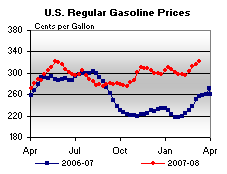
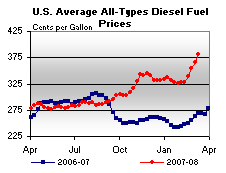
The price of wheat has more than tripled during the past 10 months, making Americans' daily bread -- and bagels and pizza and pasta -- feel a little like luxury items. And baked goods aren't the only ones getting more expensive: Experts expect some 80 percent of grocery prices will spike, too, and could remain steep for years because wheat and other grains are used to feed cattle, poultry and dairy cows.
"It's going to affect everything ... impact on every section of the grocery store," said Michael Bittel, senior vice president of King Arthur Flour Co. in Norwich, Vt.
.....
The wheat market has been pushed higher by a combination of agricultural, financial and energy issues.
Poor wheat harvests in Australia and parts of Europe and the U.S. have caused China and other Asian countries to buy up more American crops, which are especially attractive because of the weak U.S. dollar.
At the same time, the American crop is shrinking because of federal incentives to grow corn for ethanol. And skyrocketing gas prices make it costlier to get any wheat to market. Those same pressures have also made it more expensive to supply feed grains for livestock.
.....
Wheat historically trades at $3 to $7 a bushel.
But this week, futures of spring wheat -- which produces the flour used in hearth breads, rolls, croissants, bagels and pizza crust -- were close to $18 a bushel on the Minneapolis Grain Exchange. They climbed as high as $24 in late February.
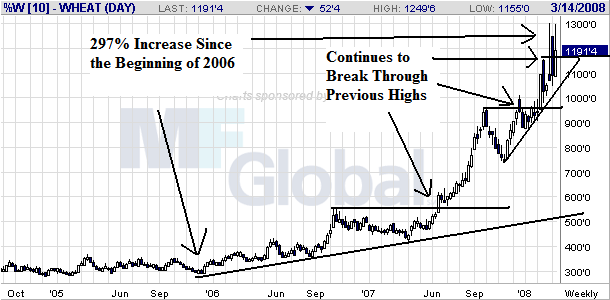
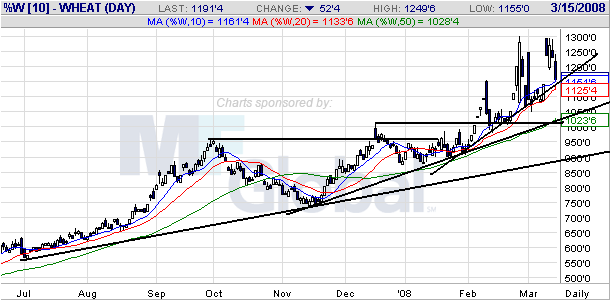
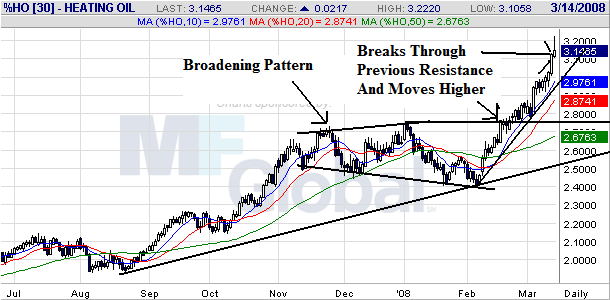
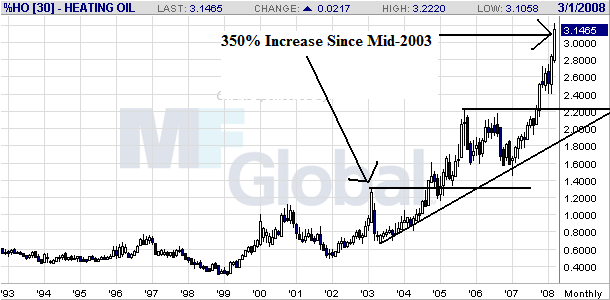
The rally in energy prices gained momentum Friday, with retail gas prices rising further into record territory and diesel and heating oil futures setting records of their own amid concerns about strong global demand and tight supplies.
Crude oil prices fell modestly as a sharp downturn in the stock market and worries about the economy prompted some profit-taking. But with the Federal Reserve expected to cut interest rates again next week, analysts expect the dollar to weaken further, propelling crude to new records.
At the pump, gas prices set records for the fourth straight day, rising 1.3 cents Friday to a national average price of $3.28 a gallon, according to AAA and the Oil Price Information Service. Average prices are nearing $4 in some parts of Hawaii.
Diesel, meanwhile, rose 2.9 cents to a new record national average of $3.938 a gallon. Heating oil, a fellow distillate and close cousin of diesel, jumped to new records on the New York Mercantile Exchange.
Diesel, used by trucks, trains and ships, is used to move the vast majority of the world's goods. While the U.S. economy appears to be slowing, the global economy continues to grow.
"Demand for diesel worldwide has been incredible," said Phil Flynn, an analyst at Alaron Trading Corp., in Chicago.
April heating oil futures rose 2.17 cents to settle at a record $3.1465 a gallon after earlier setting a new trading record of $3.222 a gallon.
Gasoline prices rose in all regions of the country, with the U.S. average retail price reaching its highest point in history, 322.5 cents per gallon. That was an increase of 6.3 cents from the previous week and 66.6 cents more than the price a year ago. Prices on the East Coast increased by 2.6 cents to 319.4 cents per gallon, 66.1 cents per gallon more than the price last year. Once again, the average price in the Lower Atlantic was at an all-time high increasing by 3.1 cents, to 320.8 cents per gallon. Unlike last week when the Midwest was the only region of the country where the average price was unchanged, this week the price there surged by 11.1 cents to 319.1 cents per gallon, up by 70.4 cents per gallon from a year ago. The Gulf Coast average gasoline price shot up by 4.3 cents to 313.1 cents per gallon, the highest price in history for the region and 3.9 cents per gallon above the previous record reached May 21, 2007. Although the price in the Rocky Mountains increased by 2.1 cents, to 310.9 cents per gallon, the average price there was the lowest of any region. The average price on the West Coast remained the highest of any region in the country, jumping 7.1 cents to a reach a new all-time high for the second week in a row. The average price of 345.7 cents per gallon was 53.7 cents higher than a year ago. In California, the average price for regular grade jumped by 7.8 cents to 353.7 cents per gallon. While this was just 46.9 cents above the price a year ago, it surpassed the previous all-time high price set May 7, 2007 by 7.6 cents.
For the fourth week in a row, the U.S. average retail diesel price continued its rapid rise surging up by 16.1 cents to 381.9 cents per gallon, and reaching an all-time high for the third consecutive week. The price was 113.4 cents above the price a year ago. On a regional basis, prices remained at all-time high levels in all regions of the country. On the East Coast, the average price shot up 17.0 cents to 387.0 cents per gallon, 120.1 cents per gallon above last year. In the Midwest, the price jumped by 14.5 cents to 378.4 cents per gallon, up by 111.1 cents from a year ago. The price in the Gulf Coast surged, shooting up by 18.9, to reach 379.8 cents per gallon, the largest increase of any region. Once again, the average price in the Rocky Mountains remained the lowest of any region. Nonetheless, the price there jumped up to 373.2 cents per gallon, an increase of 15.9 cents, 99.6 cents per gallon above last year. On the West Coast, the average price shot up by 14.9 cents to 388.5 cents per gallon, 107.4 cents above the price a year ago. The average price in California grew by 15.2 cents to 395.5 cents per gallon, 105.6 cents higher than last year.




Bear Stearns Cos. shares plummeted a record 53 percent after the New York Federal Reserve and JPMorgan Chase & Co. stepped in to rescue the fifth-largest U.S. securities firm with emergency funding.
After denying earlier this week that access to capital was at risk, Bear Stearns said today that its cash position had ``significantly deteriorated'' in the past 24 hours. The New York Fed agreed to provide financing through JPMorgan for up to 28 days, the bank said in a statement today.
The regulator stepped in to prevent the collapse of the second-biggest underwriter of U.S. mortgage bonds and forestall a potential market panic as losses by banks and brokers reached $195 billion and stocks plunged for a third day this week. JPMorgan, which has suffered fewer losses than rivals during the credit crisis, may end up owning all or part of Bear Stearns, analysts speculated.
``I don't think they can afford to let Bear go,'' said Charles Geisst, the author of ``100 Years on Wall Street,'' referring to the New York Fed bailout. ``At this particular moment in time, it would be a devastating blow to the markets.''
Bear Stearns acted in response to ``market rumors'' of a liquidity crisis, Chief Executive Officer Alan Schwartz said in a separate statement. He said earlier this week that the company's ``liquidity cushion'' was sufficient to weather the credit-market contraction. Traders have been reluctant to engage in long-term transactions with Bear Stearns as the counterparty, the Wall Street Journal reported yesterday.
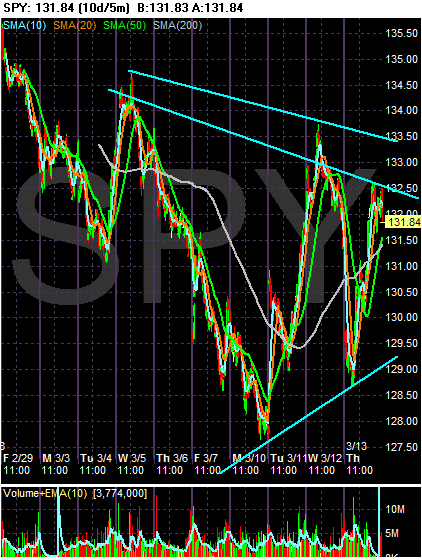
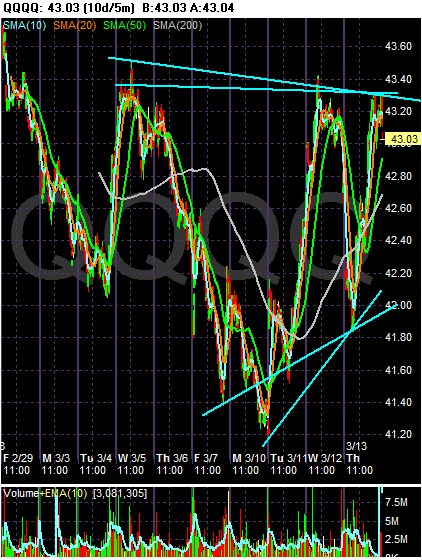
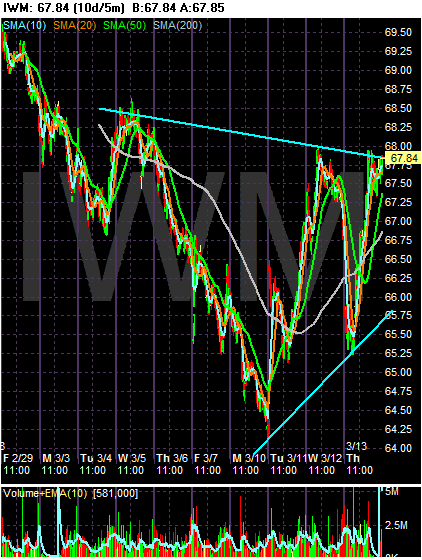
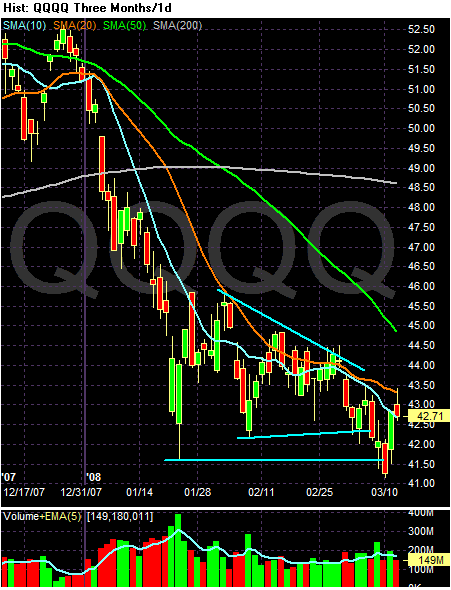
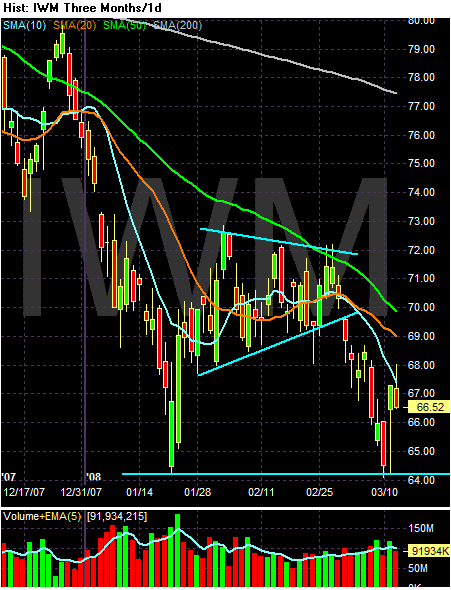
Since marking a new low in below-average volume Monday, the Nasdaq has avoided sinking beneath that 2168 level. A 4% pop Tuesday kicked off a new attempted rally, fueled by the Fed's $200 billion plan to trade high-quality Treasuries for subprime debt.
Thursday was Day 3 of the rally attempt. Should the indexes surge to big gains in increased volume Friday and beyond, that would mark a follow-through day, which confirms that a rally is under way.
The past two follow-through days, however, have gone nowhere.
One secondary factor that has changed, though, is the Accumulation/Distribution Ratings for the indexes. The past two failed follow-throughs did not have a major index with a rating of B- or better.
The Aug. 29 follow-through, which worked, had a B+ in Accumulation for the Nasdaq. The composite now has a B- rating.
Another factor that has changed is the surge in bearish newsletters. For the first time since October 2002, the ultimate bottom of the bear market, bears outnumbered bulls in the weekly Investors Intelligence survey. That crossover often occurs near a bottom, though it's not a precise timing tool.
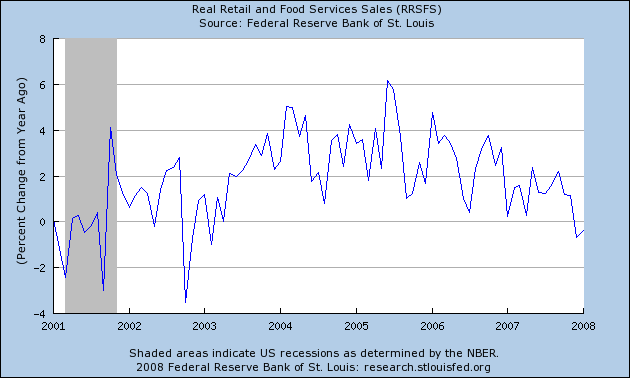
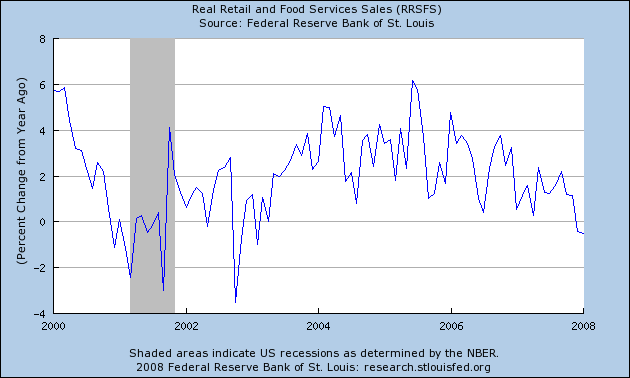
Retail sales decreased by 0.6%, the Commerce Department said Thursday. Sales went up a revised 0.4% in January. Sales that month were originally seen rising 0.3%. Sales in December dropped 0.7%.
Economists surveyed by Dow Jones Newswires estimated a 0.1% increase in February retail sales.
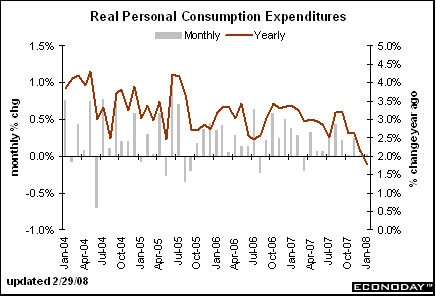
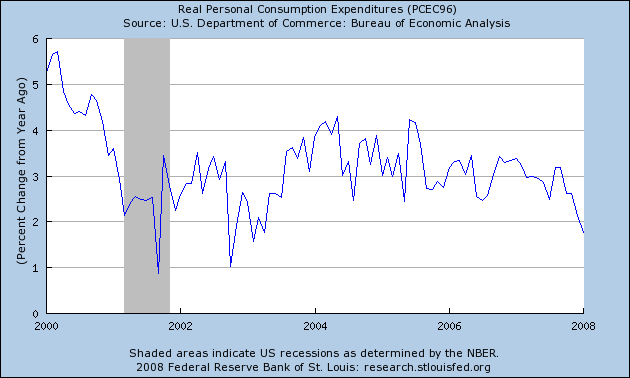
The sales report is a key indicator of U.S. consumer spending. Consumer spending makes up about 70% of gross domestic product, the broad measure of economic activity in the U.S.
High prices for gasoline, the credit crunch, falling home values and drops in other asset prices are seen as factors depressing spending. Another worrisome sign for spending -- and the economy -- is a soft job market. Non-farm payrolls declined by 63,000 jobs in February, the government reported last Friday, an omen that raised chatter about recession.

Import prices ticked up 0.2 percent in February following a 1.6 percent increase in January. The index advanced 13.6 percent over the past year. Petroleum prices fell for the second time in three months in February, declining 1.5 percent after rising 4.8 percent in January. Prices increased 60.9 percent for the year ended in February. Nonpetroleum prices advanced 0.6 percent in February after a 0.7 percent increase the previous month. The price index for nonpetroleum prices was up 4.5 percent over the past 12 months.
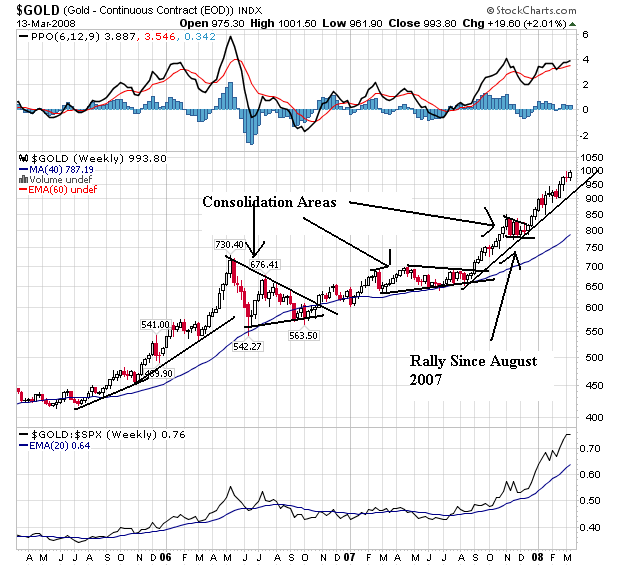
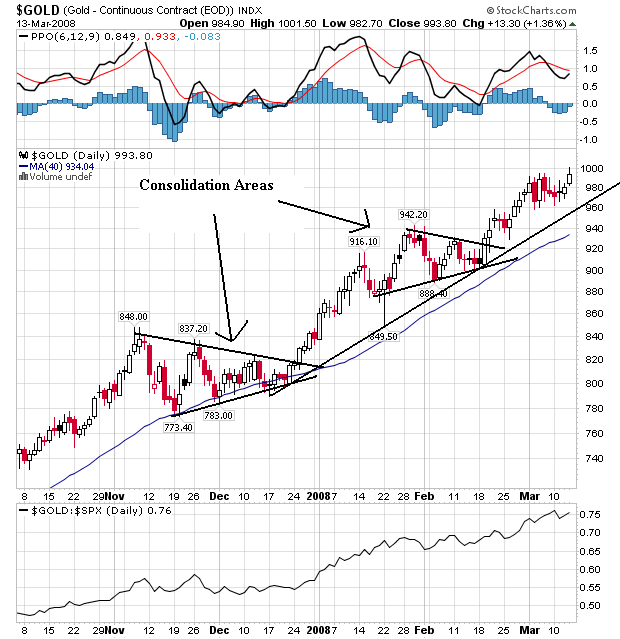
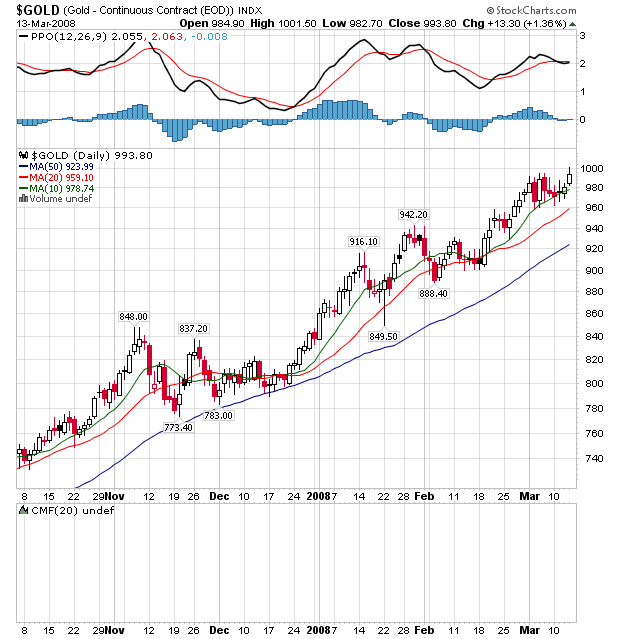
Gold futures broke above the psychologically key level of $1,000 an ounce Thursday, propelled by ongoing dollar weakness and bleak news from the financial sector.
Early Thursday, gold for April delivery soared to a record high of $1,001.50 an ounce on the New York Mercantile Exchange. This was the first time that gold surpassed $1,000 an ounce. Graphic: Timeline of gold's march to $1000.
Later in the session, the gold contract gave up some of its gains and ended up $13.30 at $993.80 an ounce.
"Today's spike will likely become known as the Carlyle/Drake rally," said Jon Nadler, senior analyst at Kitco Bullion Dealers, in a research note.
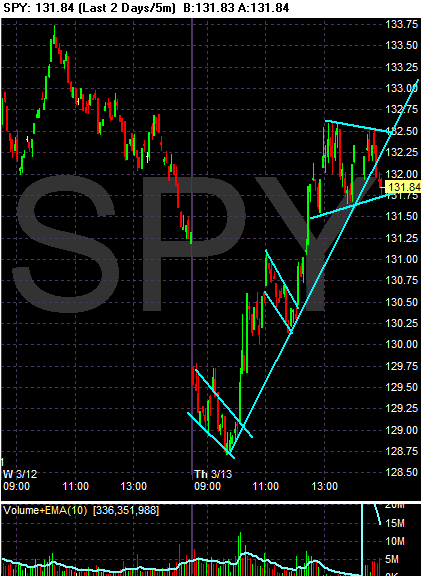
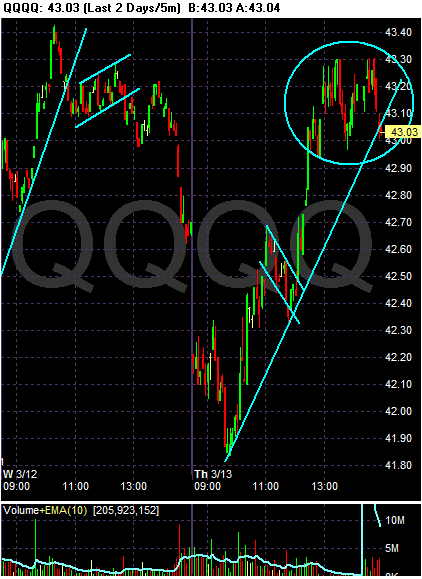
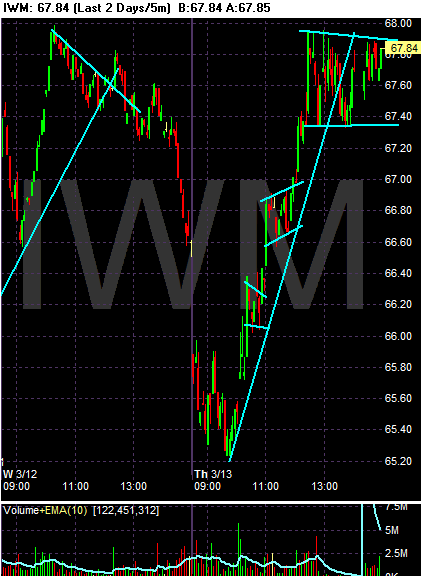
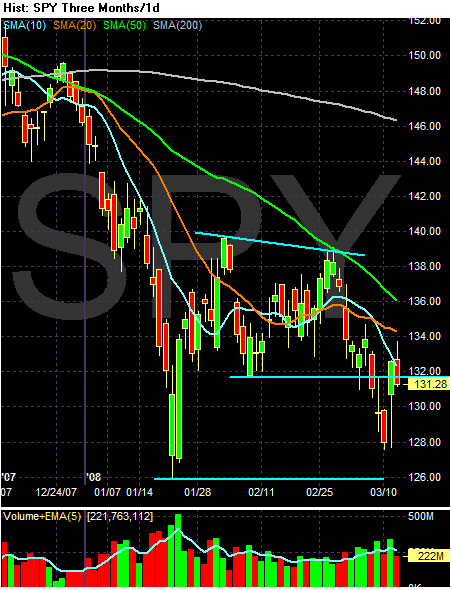
Standard & Poor's helped stocks rebound by saying that an end to subprime mortgage writedowns is in sight for large financial institutions.
The market also was cheered by new legislation unveiled in the House that would facilitate the buying up of distressed mortgages with the help of the Federal Housing Administration.
S&P said subprime writedowns could reach $285 billion, though it added that some writedowns are larger than any reasonable estimate of actual losses. A company typically takes a writedown when it expects to post a loss from a particular line of business, though the amount is often just an estimate.
"We believe that the largest players, such as Merrill Lynch & Co Inc and Citigroup have rigorously and conservatively valued their exposures to subprime asset-backed securities such that most of the damage should be behind them,'' S&P said in a statement.
Analysts name the weak dollar as one of the reasons for the hot money that has flooded commodities this year. Since raw materials are basically traded in the U.S. currency, any weakening of the currency is usually followed by an upward adjustment in prices.
Economists have said that if the dollar were to strengthen, and the ailing U.S. stock market to rebound as well, some of the money in commodities could return to currency and equity markets. So far there's been little evidence of that happening, even with Tuesday's Federal Reserve plan to provide $200 billion to cash-starved credit markets.
For a second straight day, the Fed's plan to allow banks and bond dealers to swap mortgage-backed securities that they can't currently sell for highly liquid Treasurys affected financial markets. After the move was announced Tuesday, the Dow posted a gain of nearly 417 points, its biggest single-day jump in more than five years.
After such a large move, stocks typically enjoy a mix of follow-through buying, turnaround selling by investors looking to book a quick profit and, in general, a round of reflection among participants trying to figure out how the long-term underpinnings of the market have shifted.
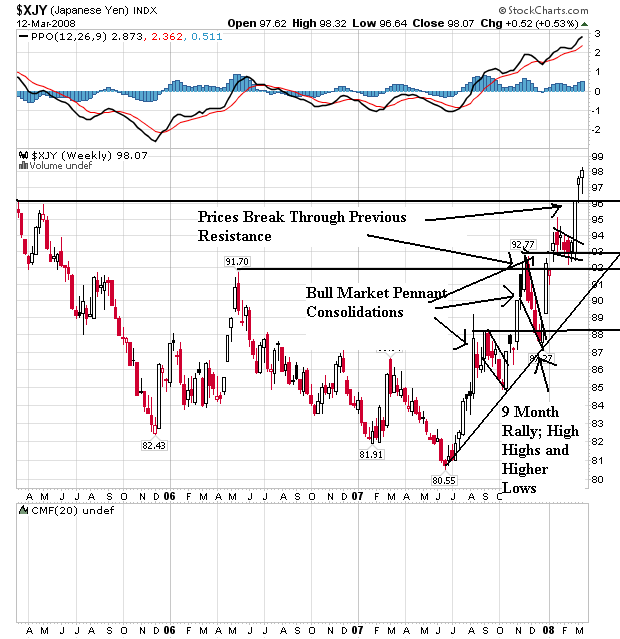
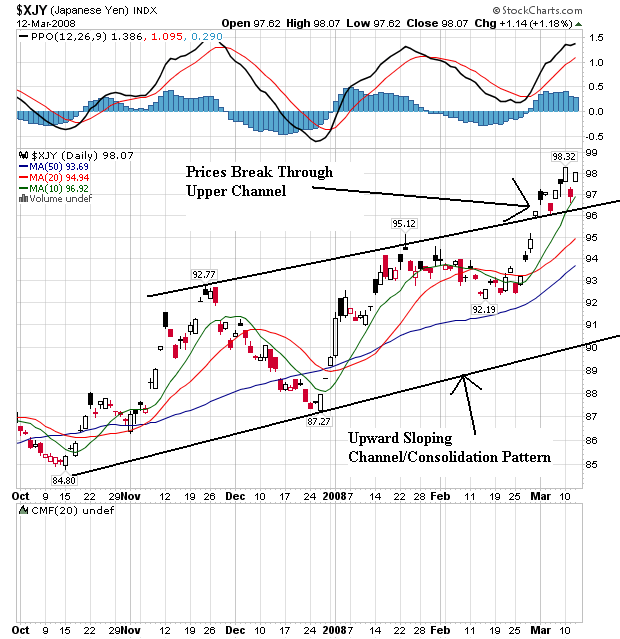
The dollar plummeted to below ¥100 for the first time since 1995 and hit record lows versus the euro and the Swiss franc in Asia Thursday, as suspicions grew that the latest attempt by central banks to save the sliding U.S. economy won't work.
Market participants ranging from hedge funds to bankers to Japanese exporters sold the dollar for yen, sending it as low as ¥99.77 on the EBS trading platform, before bouncing back to ¥100.18. That was the lowest level since ¥99.94 on Nov. 10, 1995.
The dollar also sank to all-time lows of $1.5587 per euro and 1.0090 versus the Swiss Franc. Against the British pound, the U.S. currency fell to $2.0321 -- the lowest since Dec. 14, 2007.
The dollar fell so quickly that Japan's finance minister and his top subordinate warned the markets against causing "excessive" moves in the dollar-yen rate -- a language that indicates they are increasingly concerned about the rising yen damaging Japan's slowing economy.
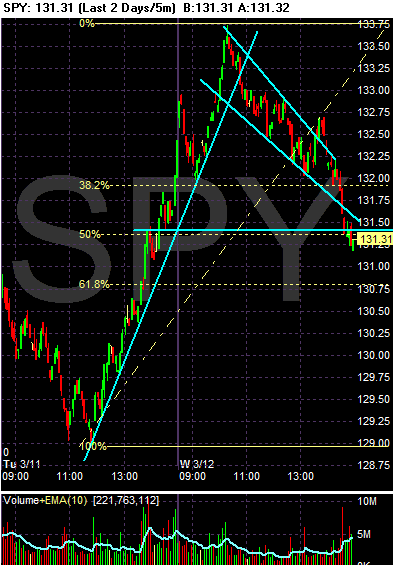
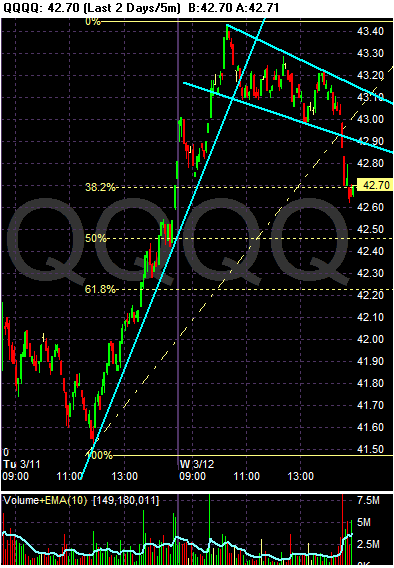
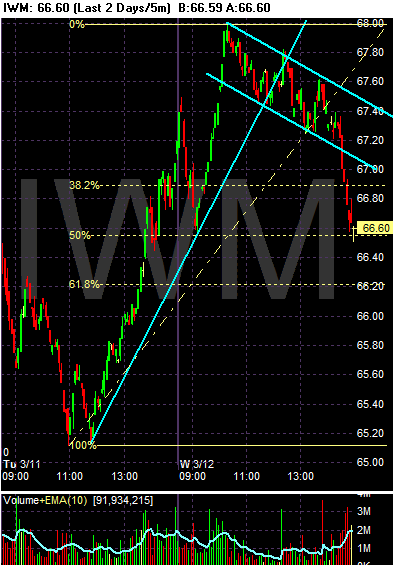
There is a marked difference between economic growth and debt-induced demand. Instead of letting the market take its medicine and enter recession in 2001, the powers that be injected fiscal and monetary drugs to dull the pain and induce stock gains.
The Federal Reserve understands the market is the world's largest thermometer and the driver of a finance-based economy. On the back of the tech bubble, in the aftermath of 9/11, following the invasion of Iraq and into the election, they administered stimulants with hopes that a legitimate expansion would take root.
Is this a conspiracy theory from tin-foil types sitting on a grassy knoll? The only difference between intervention and manipulation is communication, as we're apt to say, a fine line that's been all but erased in recent years. Hank Paulson recently highlighted The Working Group as a policy tool, an admission that effectively exposed the wizard behind the curtain. See article
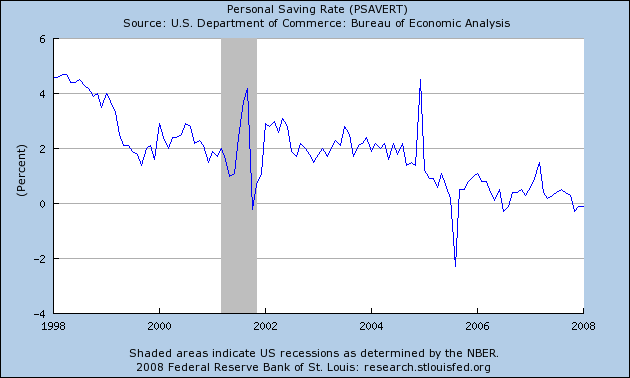
While government policy set the stage for the underlying imbalances, our immediate-gratification mindset exacerbated them.
Consumers bought goods with no money down and financed those obligations at zero percent.
Many used homes as collateral and flipped into adjustable-rate mortgages at the urging of Alan Greenspan.
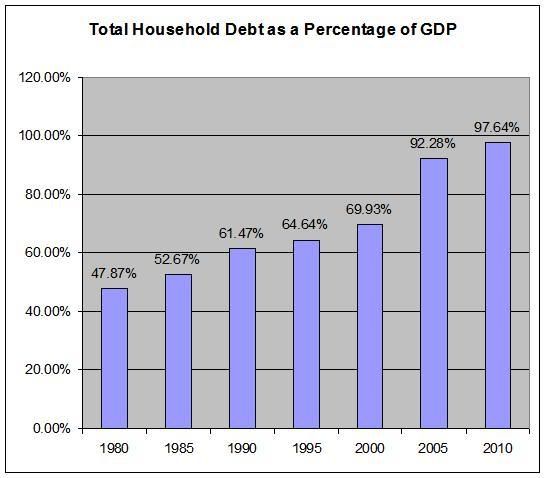
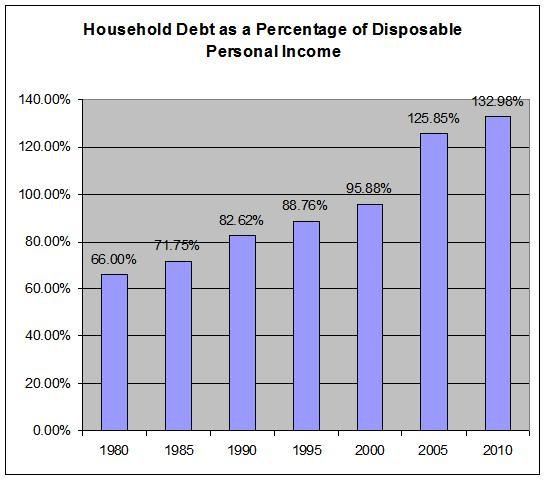
Total debt in this country rose to more than 400% of GDP as societal spending habits lost all semblance of consequence.
As Americans raced to keep up with the Dow Joneses, seeds of discontent percolated under the seemingly calm financial surface. All the while, the cumulative imbalances grew as society chased the bigger, better thing.
Federal investigators probing the business practices of Countrywide Financial Corp. are trying to figure out what Countrywide knew -- or in some cases didn't know -- about the incomes and assets of thousands of its borrowers.
The investigators are finding that Countrywide's loan documents often were marked by dubious or erroneous information about its mortgage clients, according to people involved in the matter. The company packaged many of those mortgages into securities and sold them to investors, raising the additional question of whether Countrywide understated the risks such investments carried.
Countrywide, long the No. 1 mortgage company in the U.S. in terms of dollar value of loan originations, also was considered among the most aggressive in finding ways to make home loans to consumers whose qualifications couldn't be proved or seemed questionable, mortgage industry executives and analysts said. The Federal Bureau of Investigation has begun looking into its practices in pursuing such business, according to people close to the matter.