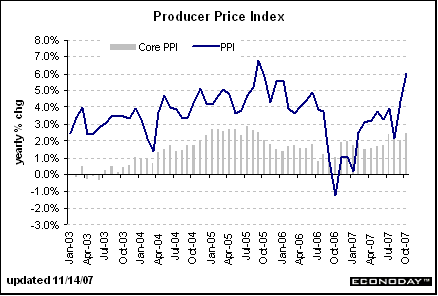
I don't see any inflation -- or any kind of inflationary trend. Do you?


Bear Stearns expects to write down $1.2 billion of assets linked to mortgages in the fourth quarter, but the worst of the bank's mortgage writedowns is over, Bear's chief financial officer said.
Goldman Sachs Chief Executive Officer Lloyd Blankfein told a New York conference yesterday that the largest U.S. securities firm by market value doesn't plan ``significant'' writedowns from subprime-mortgage securities. Bank of America said its losses will be restricted to $3 billion next quarter and UBS AG analyst Glenn Schorr said the potential for losses at Lehman Brothers Holdings Inc. is ``negligible.''
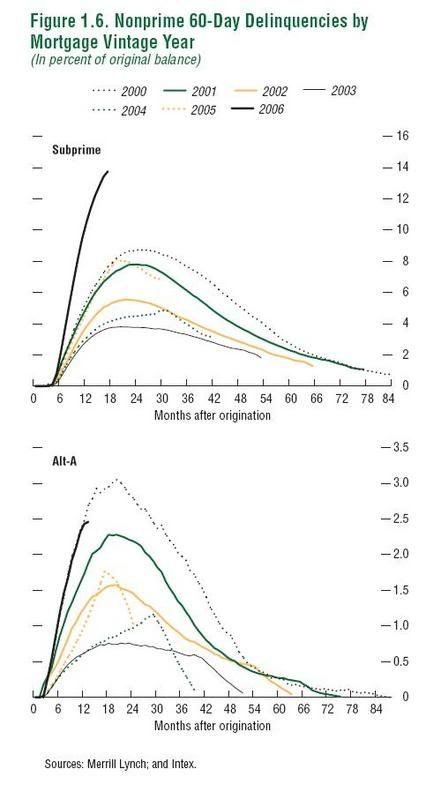
HSBC Holdings Plc, Europe's biggest bank by market value, said emerging-market lending lifted third- quarter profit, offsetting losses in U.S. mortgages that are spreading to credit-card and unsecured loans.
Shares of the London-based bank rose 3.7 percent after HSBC said in a trading statement that its securities unit has ``very little direct exposure to U.S. subprime mortgage-backed collateralized debt obligations.'' HSBC set aside $3.4 billion to cover U.S. defaults, $1.4 billion more than it forecast in July.
``Given that they have increased provisions by more than $1 billion, for them to say pretax profit in the third quarter is ahead is little short of amazing,'' said Alex Potter, a London- based analyst at Collins Stewart Plc who rates the shares ``buy.''
HSBC's consumer lending in the Middle East, Hong Kong and China are ``strongly ahead'' of last year, the bank said without providing specifics. That's helping Chairman Stephen Green counter a ``broader deterioration'' in U.S. housing and credit markets than he forecast four months ago. The bank said it will take a $55 million charge to close an additional 260 consumer finance branches in the U.S.
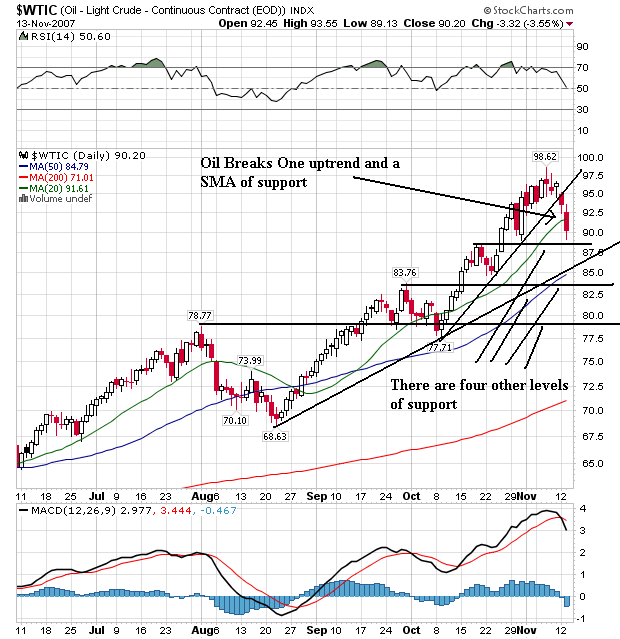
Over the next few years, supplies are likely to be tight and demand is expected to keep rising. A security scare, cutoff in supply or shift in sentiment could send prices soaring again. But traders have begun taking into account other factors that could complicate the near-term outlook.
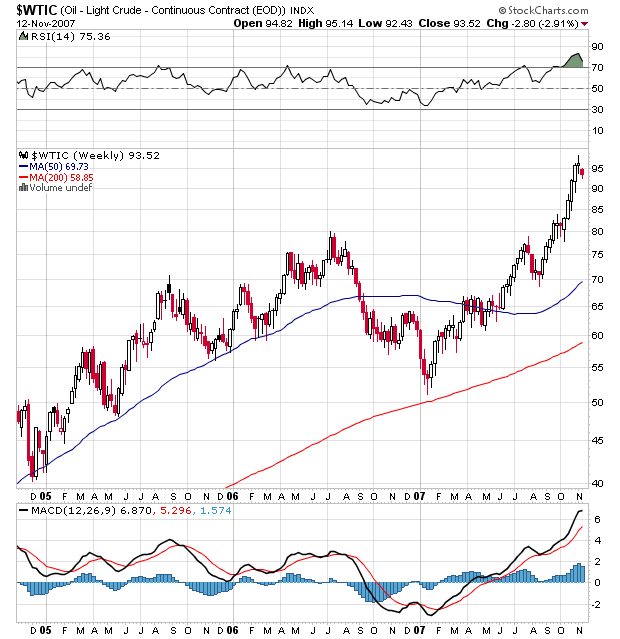
The International Energy Agency, the industrialized world's energy watchdog, said yesterday it was lowering its prediction for global demand growth for the fourth quarter, easing fears of a short-term supply crunch. Meanwhile, some officials at the Organization of Petroleum Exporting Countries have said it may consider raising its production ceiling next month.
Wall Street's speculators, who contributed to oil's 49% rise since the beginning of the year, have shifted direction this week. Yesterday marked the expiration of a key deadline in the crude-oil options markets. As it became clear that oil wouldn't hit $100 a barrel by the deadline, a chain reaction of selling ensued as traders unwound bets pegged to the risk of $100 oil.
In Riyadh, the de facto leader of OPEC, Saudi Arabian oil minister Ali Naimi, argued strenuously against "the pessimists," who he said have driven up prices by predicting supply shortages as demand in emerging markets soars.
Repeating a frequent lament of oil-industry officials, Mr. Naimi told reporters, "The price today has really no reflection whatsoever with the fundamentals" of supply and demand.
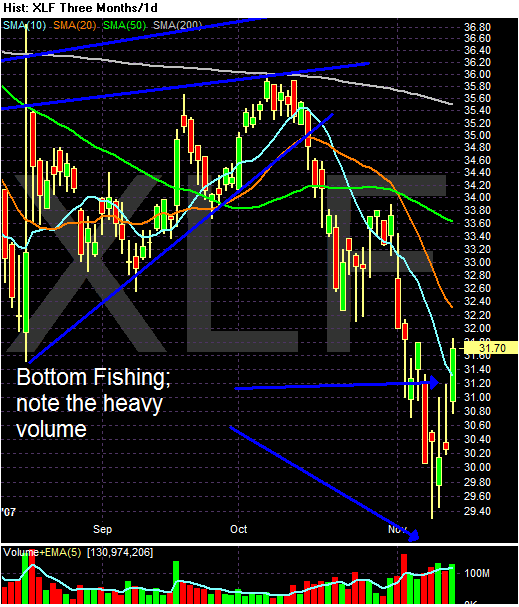
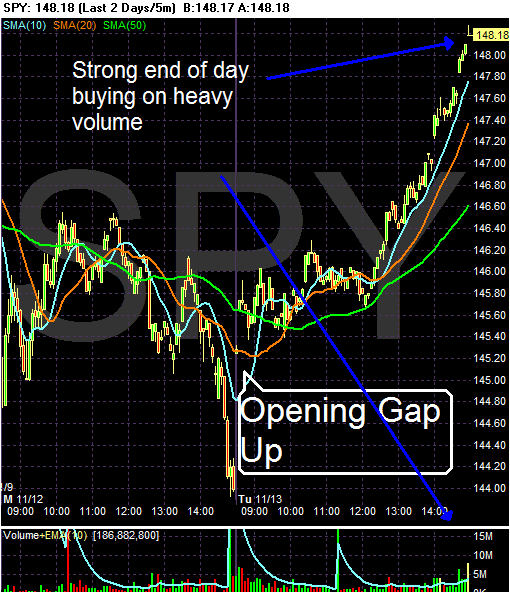
At the investor conference in New York, sponsored by Merrill Lynch & Co., Blankfein said Goldman, the world's most profitable investment bank, doesn't plan to take any significant writedowns on mortgage-related assets. Goldman shares rose 8.5 percent to $233.04 at 4 p.m. in New York Stock Exchange composite trading, and other financial stocks also climbed.
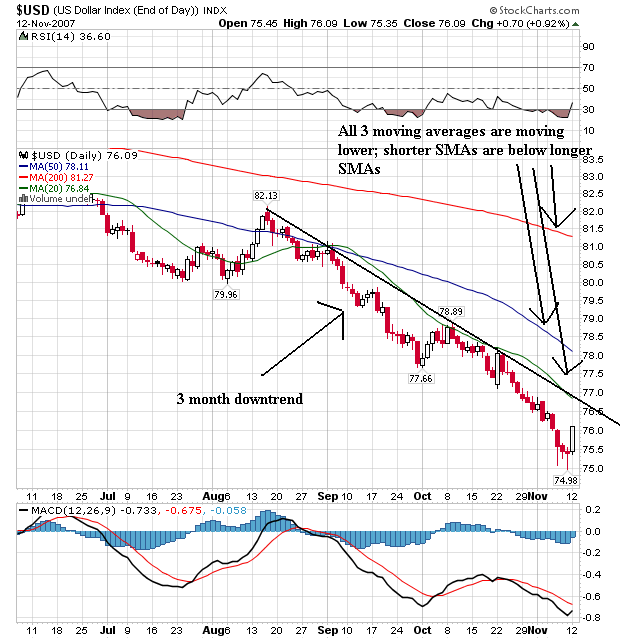
As U.S. Treasury Secretary Henry Paulson prepares to meet counterparts representing the world's biggest economies, he carries some extra baggage on the plane to Africa.
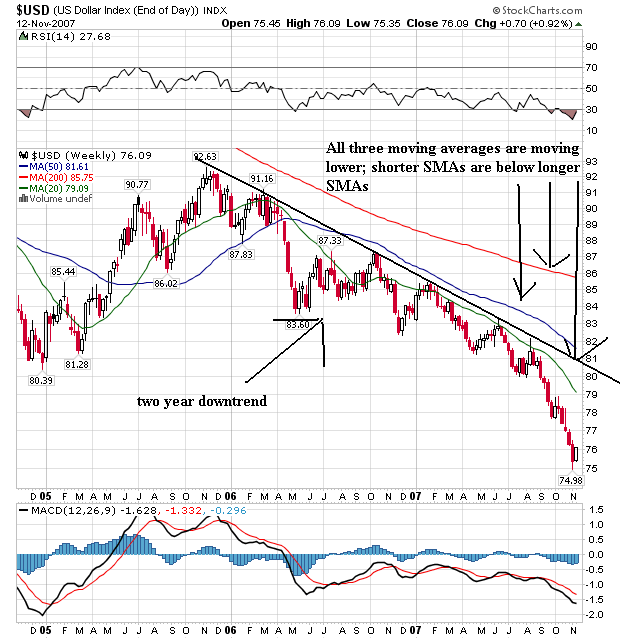
It's the 13-year-old ``strong'' dollar mantra.
Paulson, like his four predecessors, has stuck with former Treasury chief Robert E. Rubin's phrase that a ``strong'' dollar is in the U.S. interest. Officials repeated the phrase whether the dollar was rising or falling. Now, Paulson is under pressure from European policy makers to more forcefully defend the currency after it fell to a record low last week.
``It's increasingly urgent that the U.S. bolsters its rhetorical position,'' said Ernest-Antoine Seilliere, president of BusinessEurope, the European Union's employers' federation. Paulson should avoid a ``collapse of the U.S. dollar,'' he said.
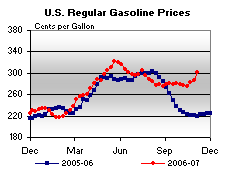
The U.S. Department of Energy's top forecaster expects gasoline prices to climb an additional 20 cents a gallon by December and said prices could go still higher if OPEC doesn't increase production.
The estimate came as mixed signals on the intentions of the Organization of Petroleum Exporting Countries contributed to a drop in oil prices on futures markets. The drop, coming after several weeks of new oil-price highs, signals increasing volatility in oil markets as the price has approached $100 a barrel.
Yesterday, the national average retail price for a gallon of regular gasoline was $3.10, according to the AAA, formerly the American Automobile Association. Guy Caruso, who heads the department's Energy Information Administration, said the price of gasoline will continue to rise even if crude oil prices don't because the past jump in crude prices hasn't been fully passed on to gasoline consumers by oil refiners.
For one thing, people's cost of living is soaring. Most households are suffering from a vicious combination of higher food and energy prices and the skyrocketing cost of health care.
Consumers' buying power has failed to keep pace with the rising cost of these essentials - and this includes the past year, when job creation was strong and the unemployment rate dipped to as low as 4.4%.
However, by October of this year, there were fewer people at work (as measured by the household survey) and only a jump in the number of people leaving the labor force kept the jobless rate steady at 4.7%.
To make matters worse, the value of people's two biggest assets, their homes and their investments, are falling. Many households have little or no savings to fall back on, having spent more than they have earned for at least the past two years.
As for borrowing, forget about it! The credit squeeze has made banks increasingly wary of lending money - not just to consumers, but to businesses as well.
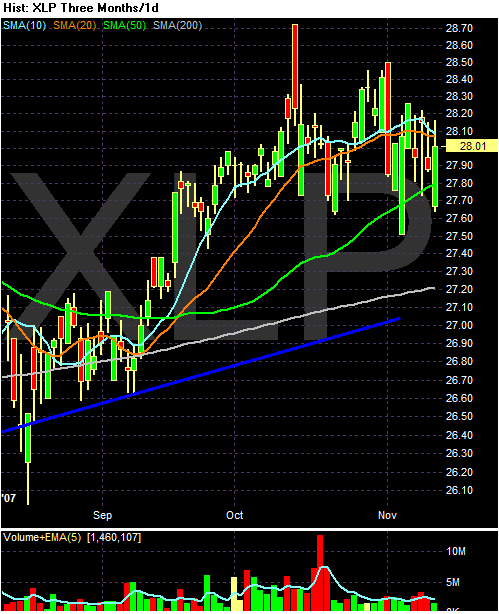
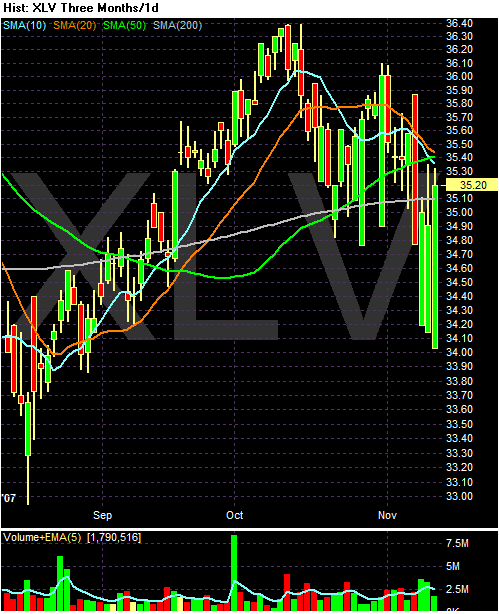
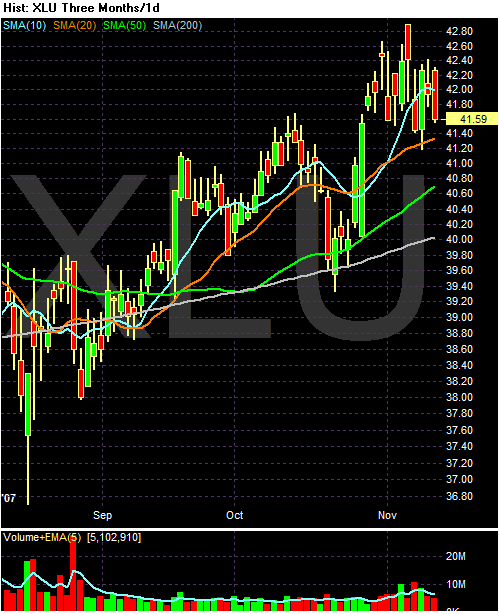
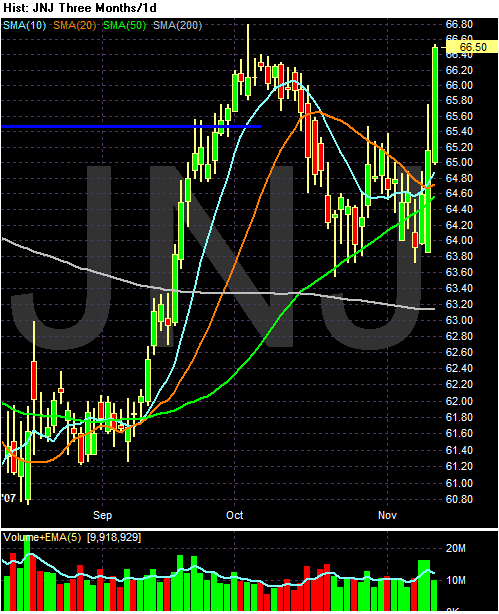
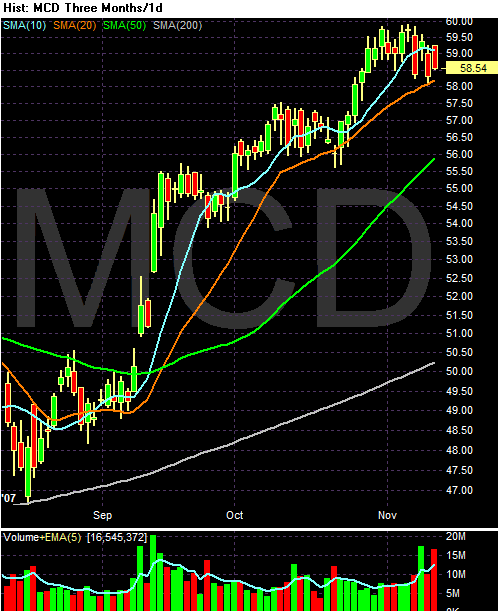
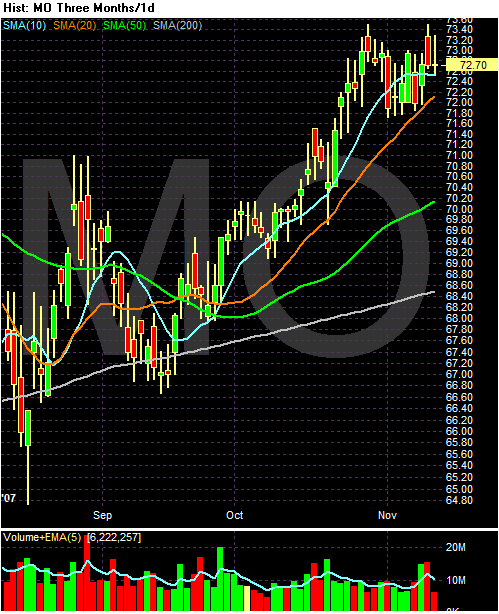
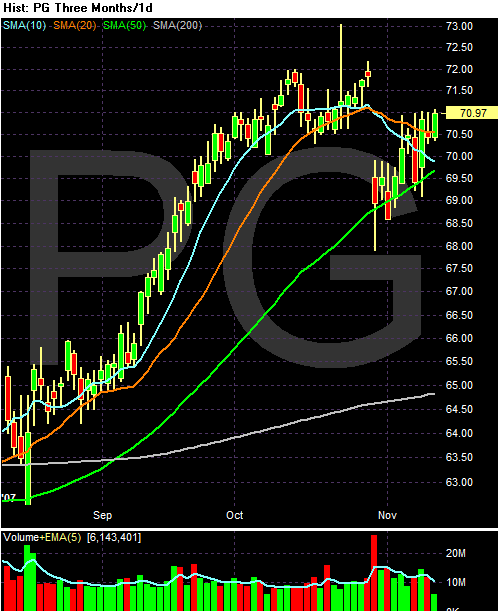
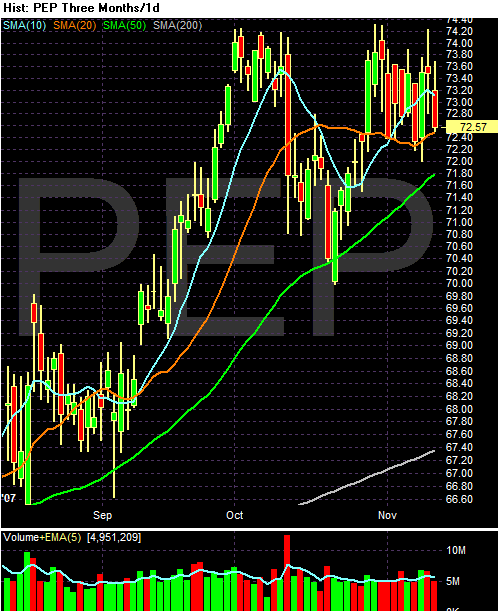
What I find most disturbing is the leadership being offered by stocks like Proctor and Gamble (PG), Coca Cola (KO) and Pepsi (PEP). These are great companies to be sure but also a clear indication that investors are losing their appetite for risk. Is a recession far off? I’ll leave that to the economists but market action is sure pointing in that direction.
Embattled mortgage lender Countrywide Financial Corp. in a regulatory filing conceded that if its credit ratings fall below investment grade, its access to the public corporate-debt markets "could be severely limited."
Additionally, ratings agencies cutting its debt to junk status would lead to higher rates when the company renegotiates its financing arrangements beyond current maturity dates.
......
The three ratings agencies -- Moody's, Standard & Poor's and Fitch -- currently have investment-grade ratings on Countrywide, but they all have affixed the ratings with some form of negative outlook, Countrywide said. S&P and Fitch both rate Countrywide's long-term debt BBB+, while Moody's has a Baa3 rating. The cutoff for investment grade is considered a long-term rating of BBB- , or Baa3 from Moody's. Bonds rated below BBB- are considered junk.
As of Sept. 30, up to $5.5 billion of Countrywide's custodial deposit accounts on deposit with the bank could be affected if the credit rating fell into junk status, according to the filing.
Tyson Foods Inc. said Monday it swung to a fourth- quarter profit from a year ago, helped by cost cuts and operating profits in its chicken and beef businesses.
Still, Tyson shares slipped to a new 52-week low on a bleak forecast for fiscal 2008. The world's largest producer of chicken and beef warned it faces $300 million in increased grain costs for its chicken unit and "extremely difficult" conditions in its beef business.
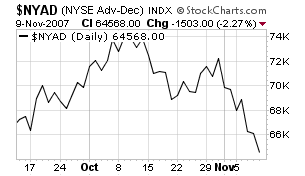
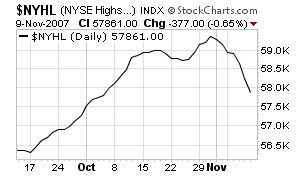
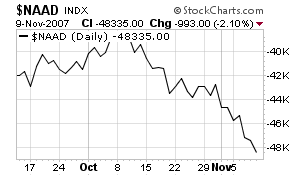
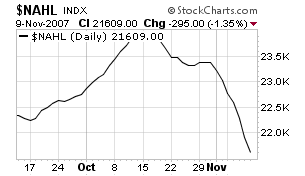
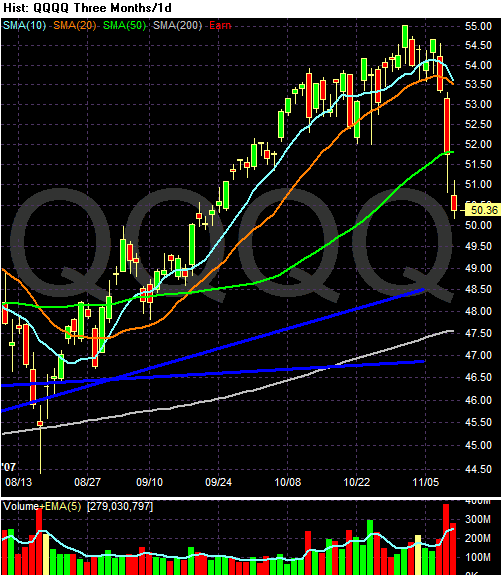
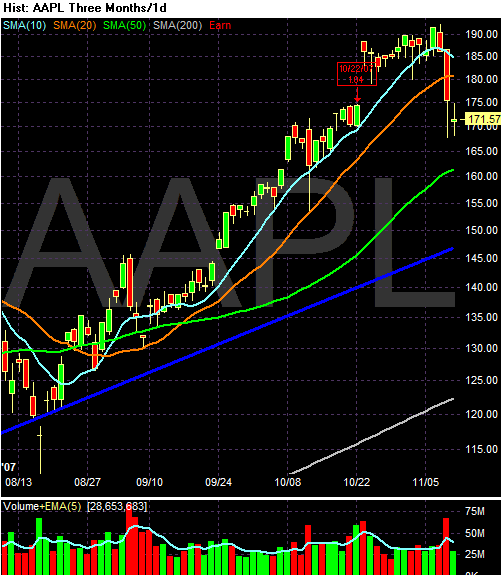
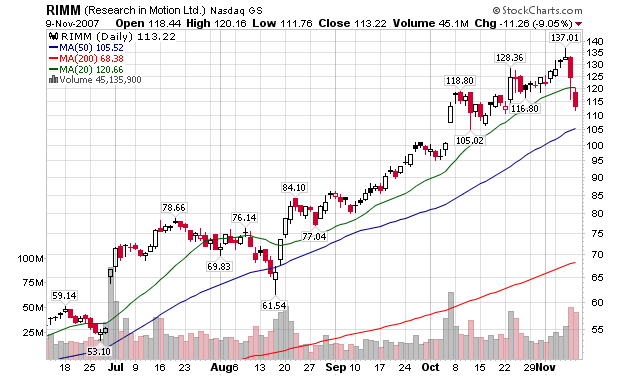
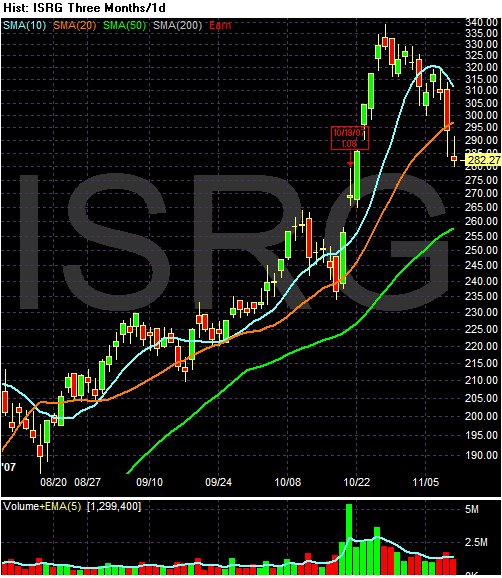
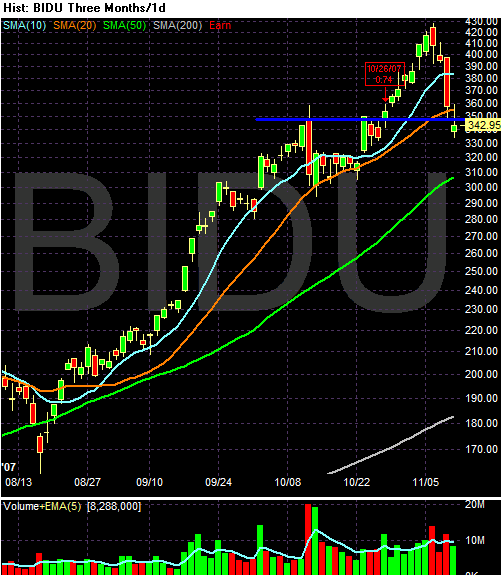
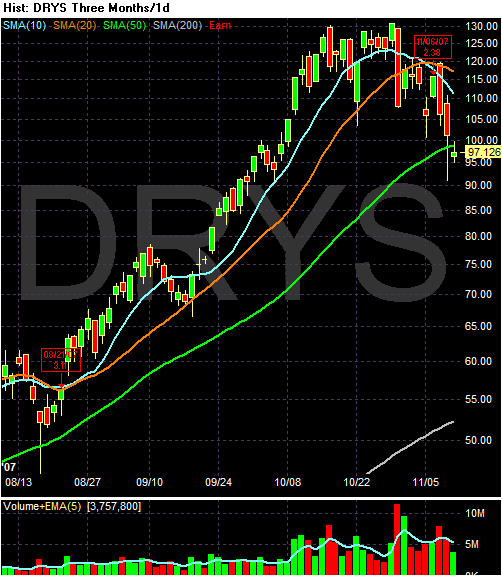
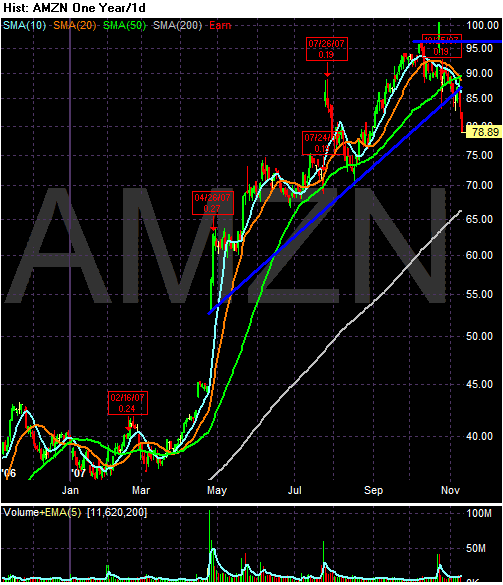
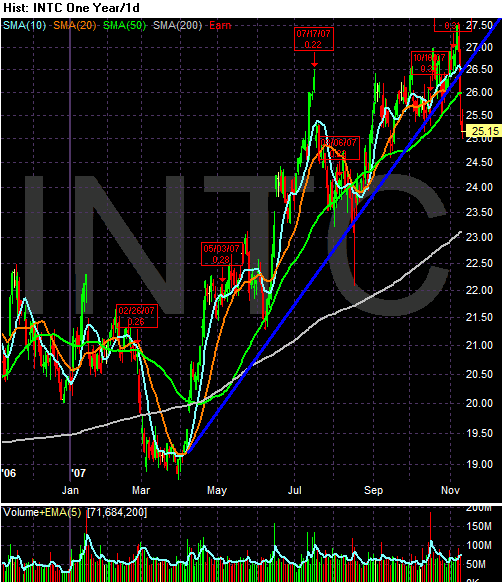
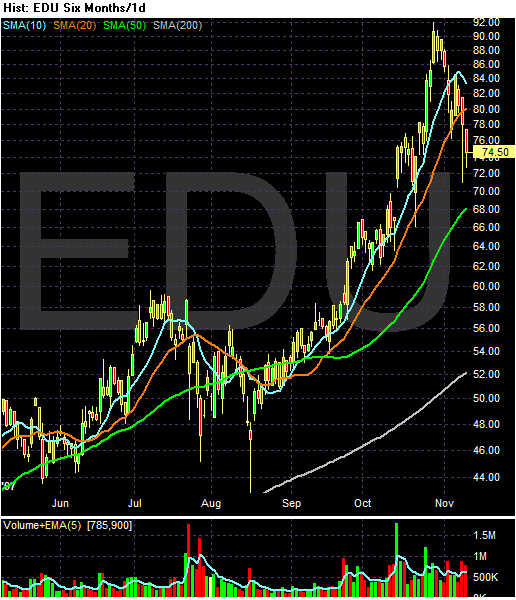
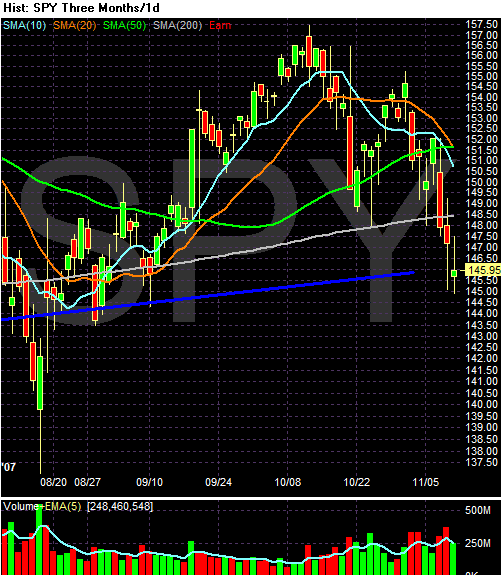
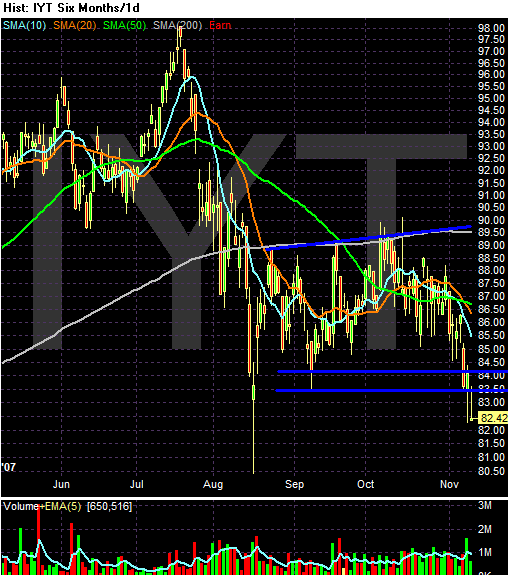
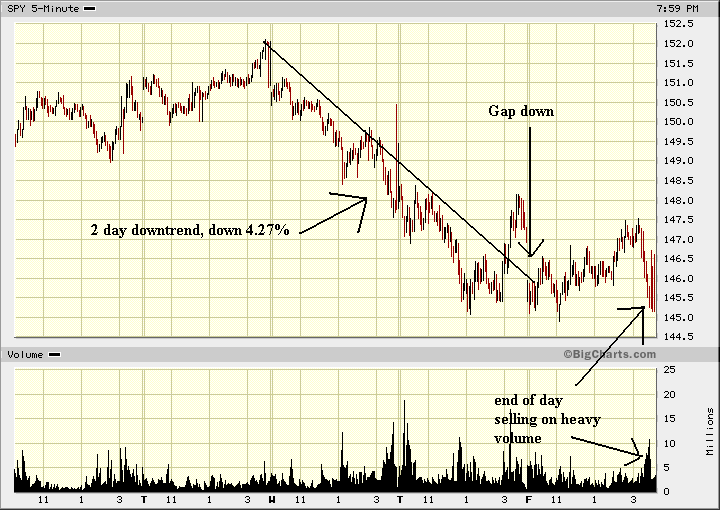
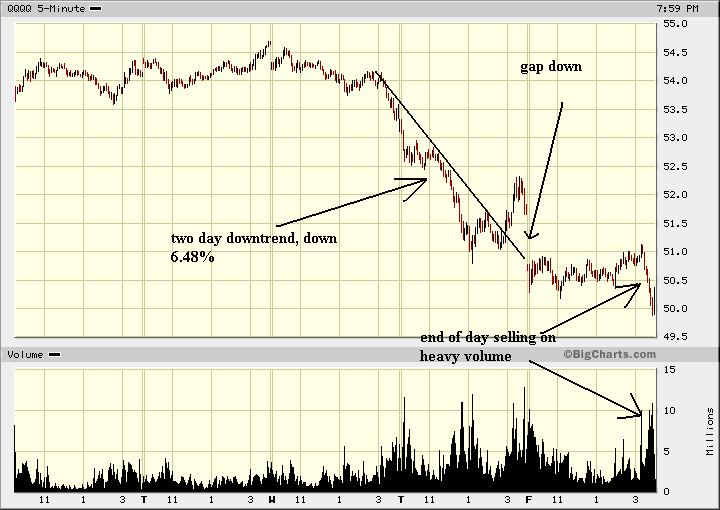
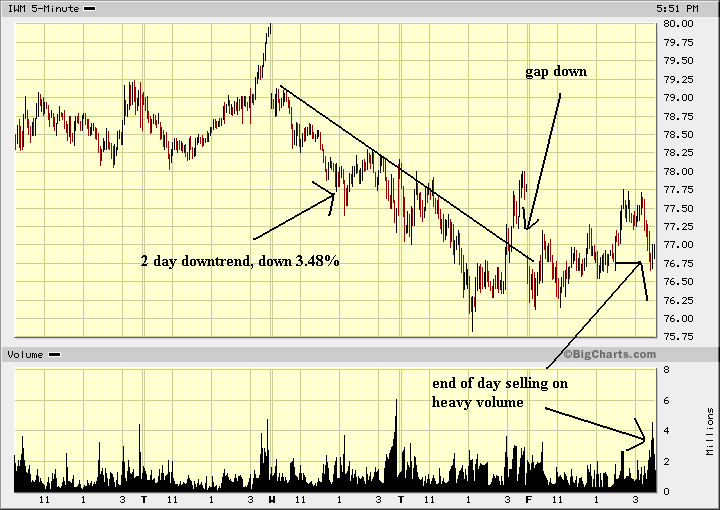
Back around 2000, when the cracks first appeared in the big-cap technology shares that had been the source of great fanfare for quite a time, one of the popular views that surfaced was that these stocks — after enduring a harsh selloff — were cheap simply because they had fallen so far from their previously lofty heights. Of course, that proved to be a fool’s game.
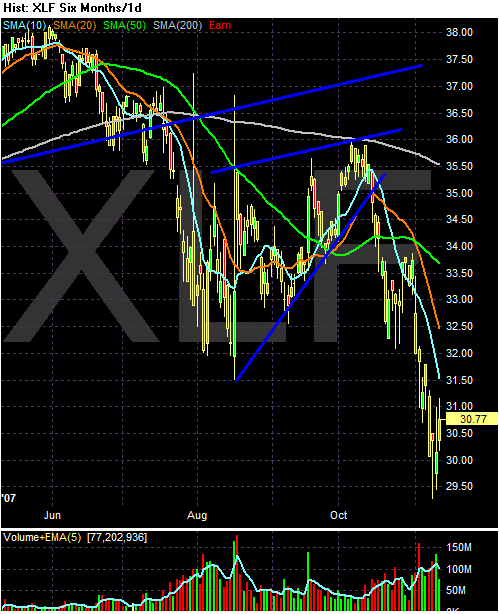
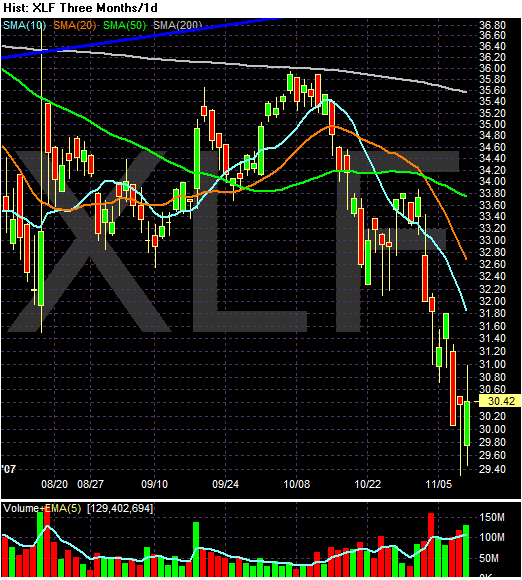
This phenomena has resurfaced, somewhat disconcertingly, with the financial sector, as the sharp falloffs in the names everybody knows — Citigroup, Merrill Lynch, Washington Mutual — has produced some sniffing around simply because the stocks are off as far as they are. Banks may indeed be cheap. But they’re not cheap because of where they were a month ago.
A number of commentators have mentioned the idea of getting into the banking stocks now based on the sharp pullback, but with certain reservations. “People with a longer-time horizon and higher risk tolerance might want to start looking at some of these banks,” says James Simos, managing principal at Infinity Securities, noting the declines in the financials.