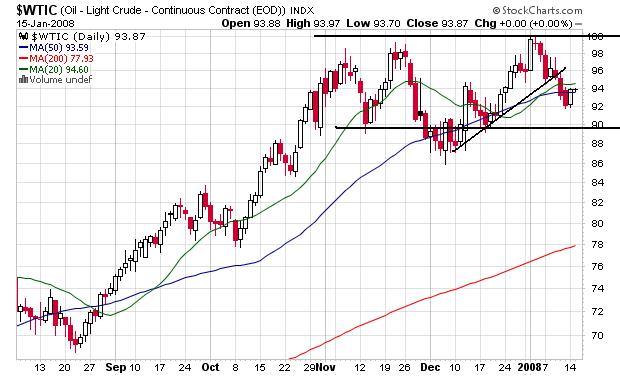
On the daily chart, we have a clear consolidation pattern between roughly $90 and $100. On the bullish side we still have (and will continue to have for the foreseeable future) a huge increase in demand as India and China continue to grow. On the bearish side we have a possible US recession. However, I have to wonder
1.) How much a US recession would really impact US demand, and
2.) If the increased demand from India and China would compensate for the decrease demand from the US if we have a recession.
I don't have a firm answer to #2, but I have a sneaking suspicion that the answer is the new demand would be pretty strong.
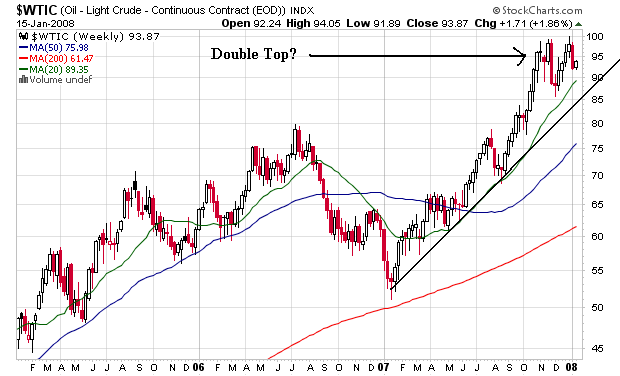
On the weekly chart, we still have an uptrend but a possibility of a double top forming. I don't think a retreat from this level would represent the fact that demand is dropping as much as it would represent profit taking.
3 comments:
It defenetly looks like double top. However second top is higher high (i think second hit $100), so it should be no double top.
In EUR/USD there are similar double top forming, with second high (top) lower.
Today I am trying to buy PBR @ $100 mark.
Not included in your pondering is the questions: How much higher is the price of oil as a result of the bellicose threats made toward Iran by our Incredibly Stupid Bushleague President and his sidekick, Deathlord Dick Cheney?
Nothing like a little saber rattling to keep those prices up there and the Bush friends happy, happy, happy!
There is no shortage of oil on the market. OPEC has said this repeatedly. If you want oil, it is there to buy. The price has been manipulated up by speculative futures trading on the NY Mercantile Index with the approval of the PPT. This is due to various reasons, in part due to the devaluation of the dollar. Also, to make alternative energy more economically feasible. The powers that be obviously prefer to keep the price in the 90-100 dollars a barrel range for the time being. They can drop the price or increase it at will. It can not be predicted by fundamentals alone. It is anything but a free market.
Post a Comment