The latest comments form Federal Reserve Bank of Kansas City President Thomas Hoenig also will be scrutinized, as he said late Tuesday that rising inflationary pressures are "troublesome" and a "serious" matter, and now stand at "unacceptably high levels." Hoenig isn't a voting member of the FOMC.
Let's take a look at some of the inflation measures to see how they're doing:
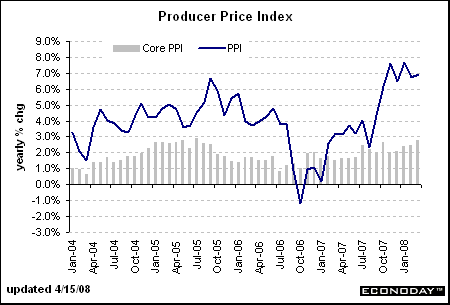
Although it has stabilized, PPI is still at high levels.
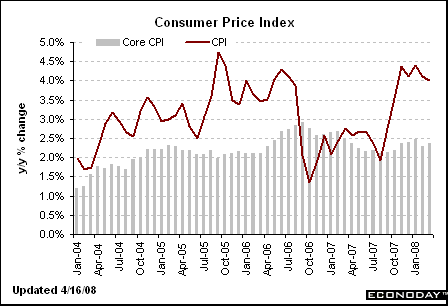
CPI has also stabilized, although at high levels as well.
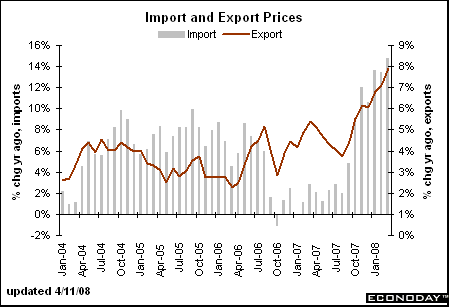
Import prices are spiking. So long as oil is in a rally, expect this trend to continue.
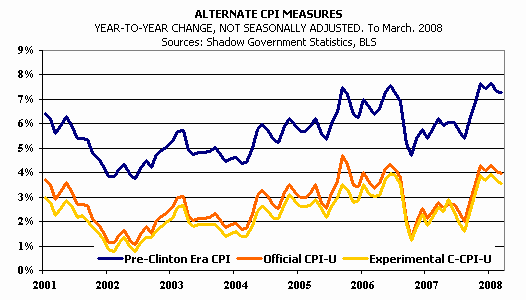
And now for the Shadow Stats alternate CPI measures, just to show you that yes, there is probably more inflation in the system than the Fed wants to admit.
So - who is right? I'm not a statistician so I can't speak to the validity or non-validity of any of these numbers. However, I can tell you there has been a tremendous amount of debate about the US CPI calculation which leads me to believe there is a problem somewhere. However, where it is and to what degree it is impacting the current situation I don't know.
I will add my own observations. I have noticed big food price increases over the last few years. Nothing concrete -- no "prices have increased by x%" -- but I know my food bill is going up and my eating habits have not changed. FWIW.

