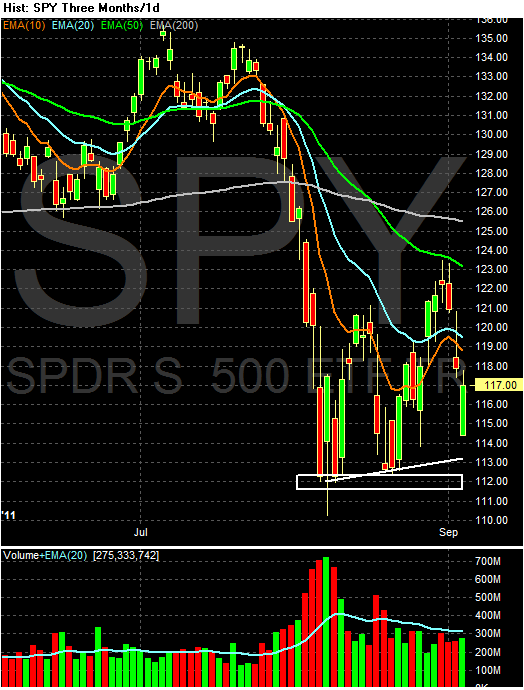
The above charts show all the major average ETFs and the transports. All confirm that the two year bull run is over, as all have broken uptrend lines in place for over two years.


"The NMI registered 53.3 percent in August, 0.6 percentage point higher than the 52.7 percent registered in July, and indicating continued growth at a slightly faster rate in the non-manufacturing sector. The Non-Manufacturing Business Activity Index decreased 0.5 percentage point to 55.6 percent, reflecting growth for the 25th consecutive month, but at a slower rate than in July. The New Orders Index increased by 1.1 percentage points to 52.8 percent. The Employment Index decreased 0.9 percentage point to 51.6 percent, indicating growth in employment for the 12th consecutive month, but at a slower rate than in July. The Prices Index increased 7.6 percentage points to 64.2 percent, indicating that prices increased at a faster rate in August when compared to July. According to the NMI, 10 non-manufacturing industries reported growth in August. Respondents' comments remain mixed. There is a degree of uncertainty concerning business conditions for the balance of the year."The report also showed a majority of industries expanding verses contracting (10 were expanding; were contracting).




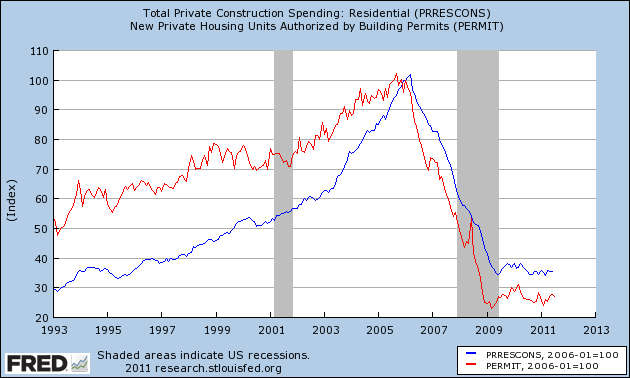
The problem with the debt deal is it took government action off the table at a time when governmental action is needed. Instead of borrowing at insanely low rates, investing massively in a degrading US physical and intellectual infrastructure, Congress is taking action off the table. Remember that governmental spending is a component in the GDP equation -- a fact lost in Washington policy debates, as is the different between consumption and investment. In short, Washington is focused on exactly the wrong thing at exactly the wrong time and as such should bear the brunt of any economic slowdown we face.But now it's more than just taking government action off the table; it's that both parties have now proven they are utterly inept, albeit it in different ways. And frankly, that is deeply troubling, especially considering that the economy is now hanging on by a thread.
The sharp slowdown in the euro-zone economy during the second quarter was due to a combination of government spending cuts and a drop in consumer spending, raising doubts about the wisdom of pushing ahead with austerity programs and further increases in the European Central Bank's key interest rate.I realize I'm preaching to the choir here, but news reports continually note that a decrease in government spending -- AKA austerity -- is a big contributing factor to the economic slowdown in Europe. I find it so completely amazing that no one in Washington is even thinking about major programs -- especially at a time of weak growth and negative real interest rates on the 10-year Treasury.
Democrats and Republicans say job creation is a top priority as they return to work this week, but there is a growing body of evidence that Congress is actually hurting the economy.
A protracted budget stalemate in the first half of the year caused nervous federal agencies to sit on billions of dollars that should have been circulating through the economy.
A vitriolic debate over raising the debt ceiling this summer spooked consumers, caused turmoil in financial markets and led to a first-ever downgrade of the United State's credit rating by Standard & Poor's.
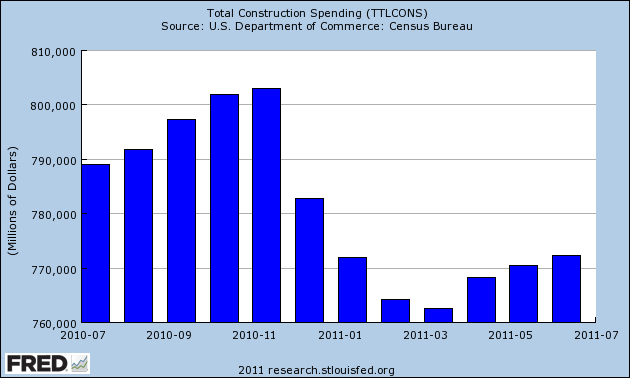
A spat over subsidies for rural air serices in late July idled airport construction projects across the country and threw thousands temporarily out of work for several weeks.
Businesses that had to suspend their airport construction projects are still trying to recover from the disruption.