- by New Deal democrat
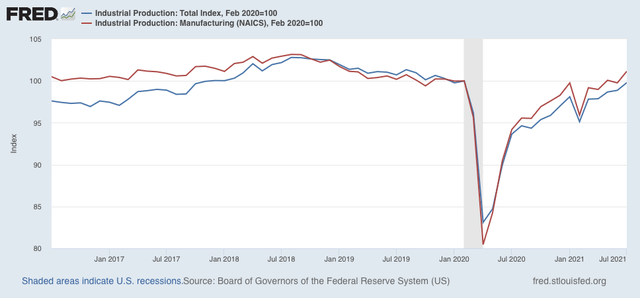
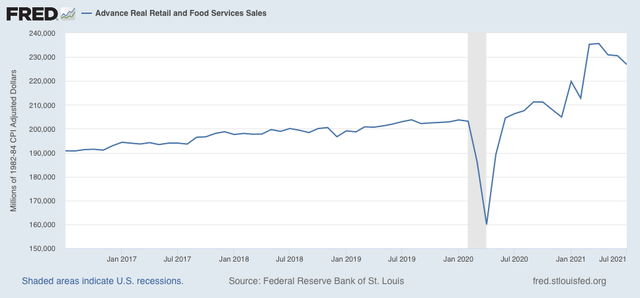
This morning brought the July report for the King of Coincident Indicators, industrial production, as well as one of my favorite consumer side indicators, retail sales. Let’s take a look at each.


- by New Deal democrat
This morning brought the July report for the King of Coincident Indicators, industrial production, as well as one of my favorite consumer side indicators, retail sales. Let’s take a look at each.


- by New Deal democrat
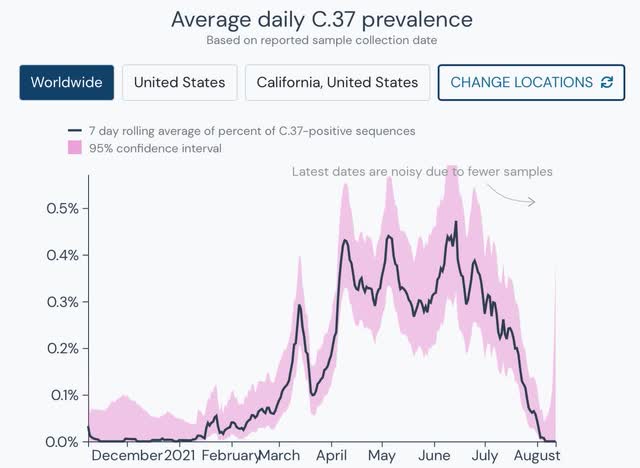
The Lambda variant is going out like a lamb. (from the hard to find pandemic good news list) https://outbreak.info/situation-reports?pango=C.37… It can't compete with Delta.


- by New Deal democrat
My Weekly Indicators post is up at Seeking Alpha.
For the first time, there are some significant if still minor impacts on the economy showing up due to the Delta wave.
As usual, clicking over and reading will bring you up to the virtual moment as to the economy, and help me out a little bit with my lunch money.
- by New Deal democrat
I want to follow up on a comment I made yesterday in connection with Wednesday’s consumer price report.


- by New Deal democrat
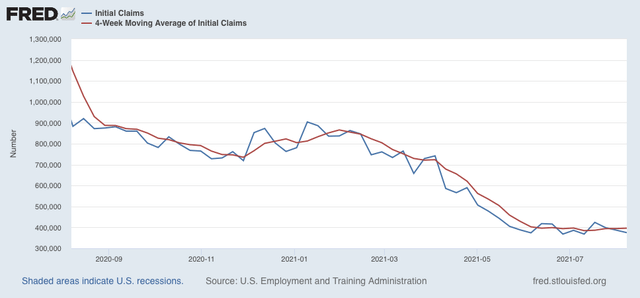
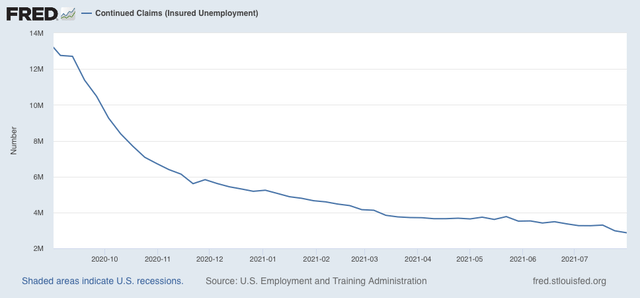
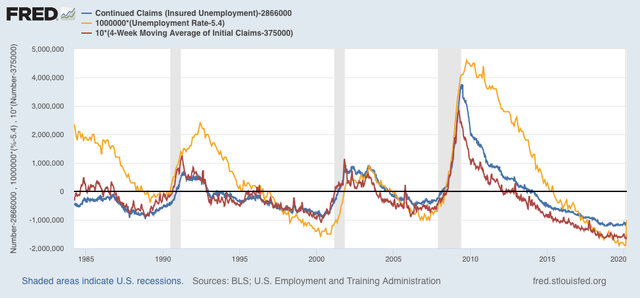
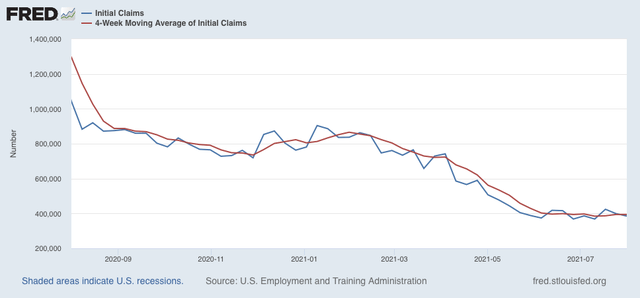
Initial jobless claims declined 12,000 this week to 375,000, still 7,000 above their best pandemic levels of 368,000 set on June 26 and July 10. The 4 week average of claims increased by 1,750 to 396,250, 11,750 above its pandemic low of 384,500 set on July 10:


- by New Deal democrat
For the last two months my theme has been that if the spike in inflation only lasted two or three months, it was not a big deal, but if the trend were to continue longer, it would begin to impact consumer spending, and it will get the Fed’s attention.
In that regard, the “good” news is that in July consumer inflation was “only” 0.5%. The bad news is that for the last 5 months alone, consumer prices have risen 3.5%. Further, while inflation was only confined to a few sectors, those sectors were houses andcars - the two most important purchases made by most consumers - and the gas with which to power those cars, the most visible of all prices.
Let’s break it down.
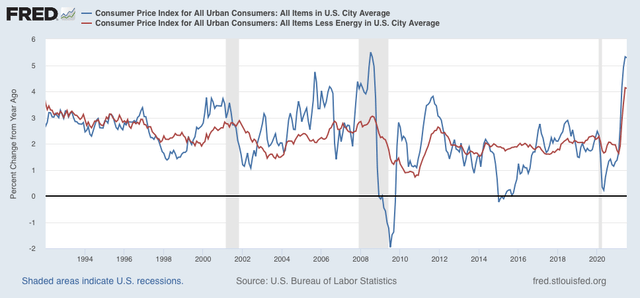
While YoY inflation was 5.3% (blue in the graph below), typically it has not been a concern unless inflation ex-gas (red) has been in excess of 3.0%. Since it is now over 4%, unless it ramps down shortly, as in 2011, this is indeed a concern:

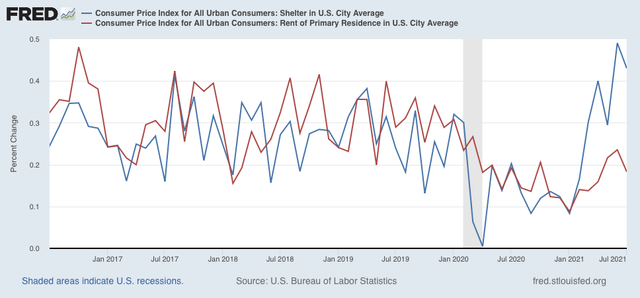
Inflation in shelter (blue in the graph below) has risen sharply m/m for the past 6 months. In the past 4 months, the trend in rent increases (red) have also increased m/m (although they are not up nearly as much as they were before the pandemic):

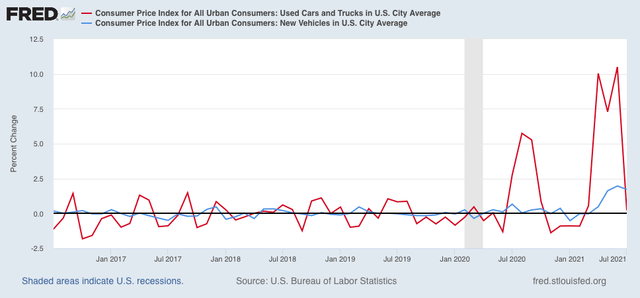
New car prices have increased sharply each month for the past few months, while in July used car prices may finally have hit a wall:

The building of new houses, and the manufacture of new vehicles are the two most forward looking, learning sectors of the “real” economy. That price pressures are now constraining both is not good for the economy going forward into 2022.
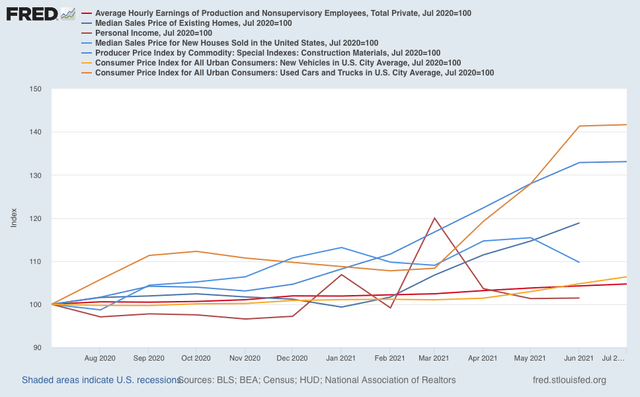
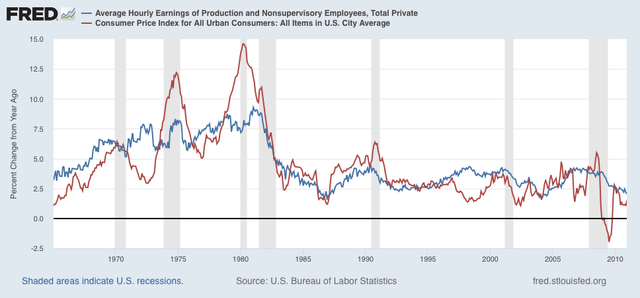
Returning to inflation ex-energy, now over 4% YoY, If this number goes back down below 3% quickly, then consumers can live with that. If not, however, and particularly if wages fail to keep up, then consumers may cut back on other purchases. In fact, wages (more broadly, household income) failing to keep pace with inflation has been one of the tradition “real” harbingers of a recession. Here the news is mixed.
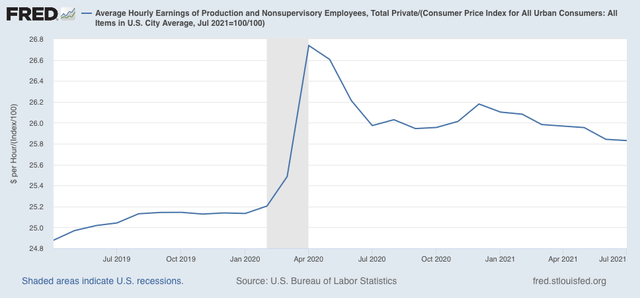
Real hourly wages, I.e., wages deflated by consumer prices, declined slightly in July. Further, while real wages have been more or less flat in the past year, they are down over 1% from their pandemic peak. But on the other hand, they are still up over 1.5% since before the pandemic began:

The big fly in the ointment here is the expiration of many emergency pandemic programs, even as the Delta wave rages.
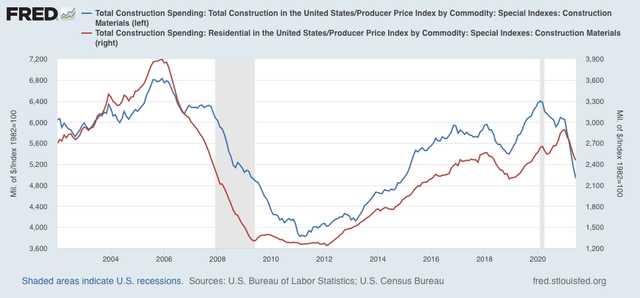
We really need to see the main drivers of this so-far transitory inflation spike subside: microprocessors for vehicles, and construction materials for houses. The latter will be reported for July as part of the PPI which will be released tomorrow.
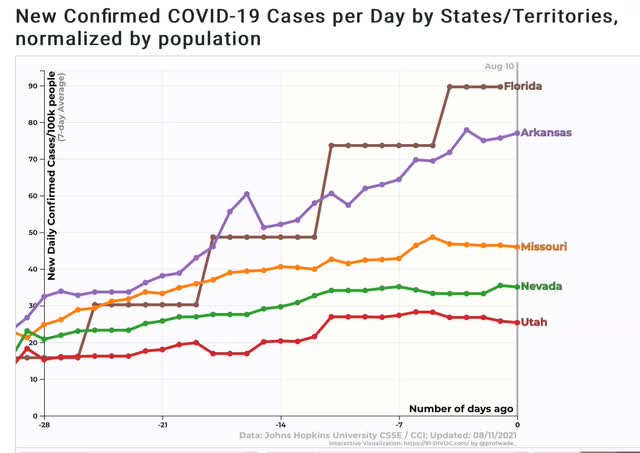
The other two important variables are the course of the pandemic, and whether or not emergency measures are renewed if the pandemic does not subside. So far the bond market does not seem concerned, and bank credit as I reported recently has been expanding. If that continues, the economy should continue to do well. But if the pandemic itself, or an inept government response to it cause a crash landing, all bets are off.
Addendum: I note where, inter alia, Paul Krugman lauds this report as demonstrating that inflation has indeed been transitory. I demur. For example, used car prices only increased 0.2% in July. But they are still up 41.7% YoY! Truly transitory inflation in a resource-constrained boom shouldn’t just plateau after a huge price increase, it should ramp right back down, as lumber prices in housing have done, plummeting all the way back down to 2018 prices. It is this ramping back down which was missing in yesterday’s consumer inflation report.
- by New Deal democrat
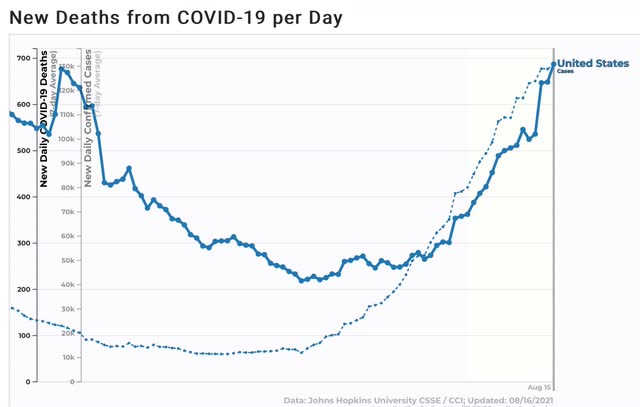
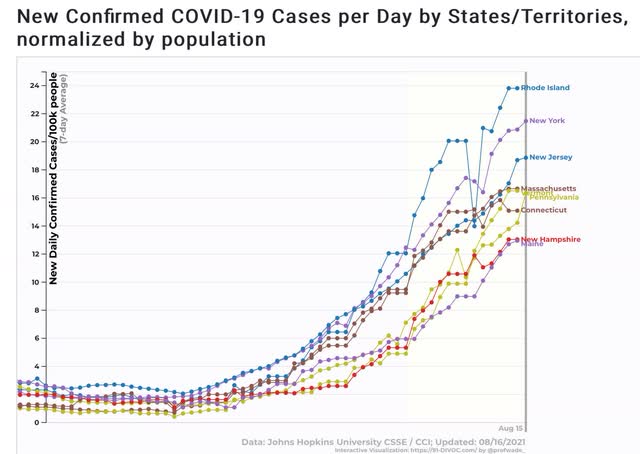
My framework of analyzing the economy via leading, coincident, and lagging indicators continues to come in handy at looking at the course of the pandemic.


- by New Deal democrat
[Note: I haven’t put up a Coronavirus dashboard in almost a week. I’ll try to get around to that later today or tomorrow. It isn’t *all* bad news.]


- by New Deal democrat
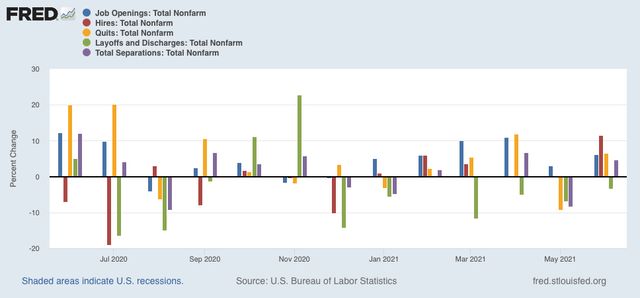
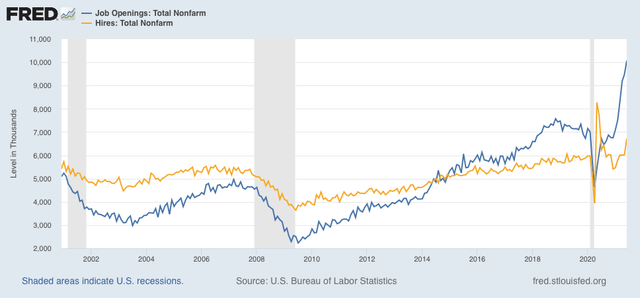
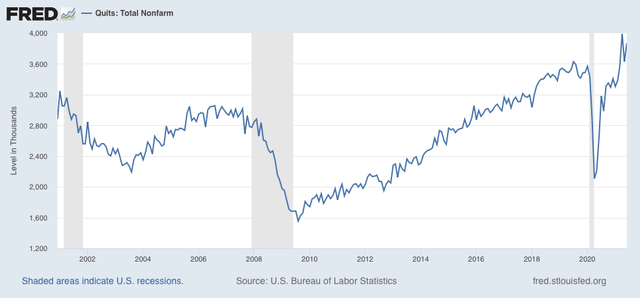
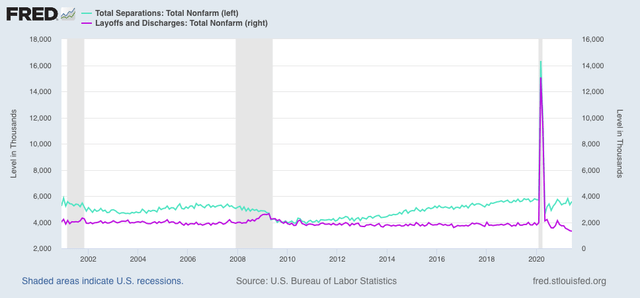
This morning’s JOLTS report for May was the best we have seen since the immediate rebound from the pandemic lockdowns. There was yet another record level continued all of unfilled job openings, yet another new record low in layoffs and discharges, an enhanced number of people quitting their jobs, and finally - for the first time this year - a huge number of new hires, setting a new m/m record high outside of the immediate lockdown rebound last year.
Here are the month over month percentage changes for each of those metrics:

As noted above, headline job openings (blue), which have been making new all-time records for month, were finally joined by a nearly 700,000 gain in actual hires (gold):


- by New Deal democrat
The June JOLTS report will be posted at 10 am eastern time.
- by New Deal democrat
My Weekly Indicators post is up at Seeking Alpha.
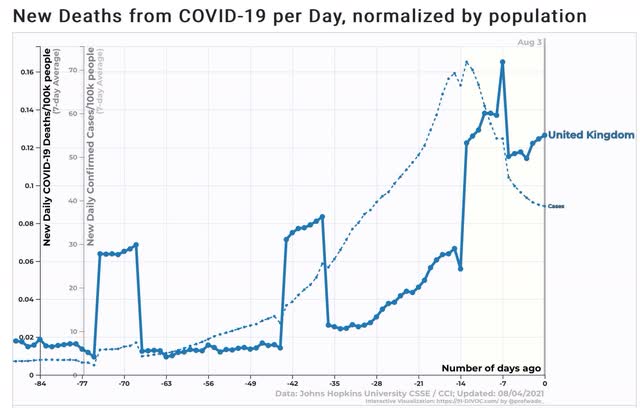
Although the Delta wave is raging, so far neither producers nor consumers appear to have altered their behavior in any significant way at all.
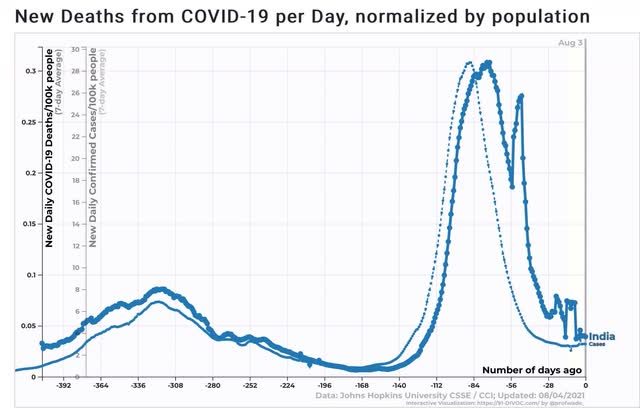
As usual, clicking through and reading will bring you right up to date on the economy, and bring me a little pocket change for my efforts.
- by New Deal democrat
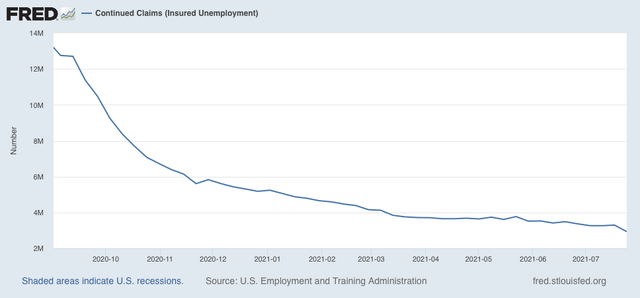
Initial jobless claims declined another 14,000 this week to 385,000, still 17,000 above their best pandemic levels of 368,000 set on June 26 and July 10. The 4 week average of claims declined by 250 to 394,000, also 9,500 above its pandemic low set on July 11:


- by New Deal democrat


- by New Deal democrat
August data started out mixed.


- by New Deal democrat
My Weekly Indicators post is up at Seeking Alpha.
Ironically, as the bond market smells weakness ahead, driving long term rates down, it also sets up a rebound from that weakness further out. In the meantime, Q2 corporate profits are through the roof.
As usual, clicking over and reading should bring you up to the virtual moment, and bring me some change for a libation or two.