
Real PCEs are now above their peak from the previous recession.

Real service expenditures (which account for about 65% of PCEs) dropped during the recession, but are now right at their previous highs from the previous expansion.

Real non-durable PCEs (which account for 22.18% of PCEs) are now at levels above previous highs. Also note they have bounced back strongly from their lows.
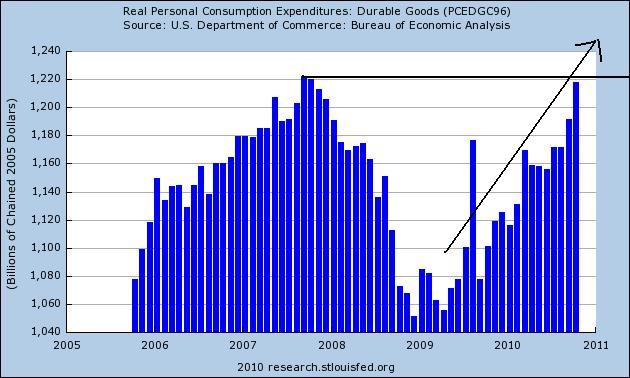
Real durable goods (which account for 12.61% of PCEs) are now approaching their highs from the previous expansion.
Let's look at this data from another perspective: real retail sales:

As this chart shows, real retail sales have also been increasing at a strong rate. Let's compare this expansions recovery rate to other recoveries:

At the end of the 1990s to after the beginning of the previous expansion, real retail sales moved sideways. They started to increase about a year or so into the last expansion. Notice that in this situation, real retail sales dropped to the level of the last recession, but have bounced back faster.
Simply put, the numbers indicate the consumer is bouncing back. PCEs are near peaks seen from the previous expansion. Real retail sales are mirroring fairly closely their performance from the previous expansion as well.

