Showing posts with label Beige Book. Show all posts

Thursday, June 11, 2009

Beige Book, Pt. II

Yesterday the Fed released the Beige Book. The general tone of the report was negative/down. However, there were some signs of improvement as well.

Reports from the twelve Federal Reserve District Banks indicate that economic conditions remained weak or deteriorated further during the period from mid-April through May. However, five of the Districts noted that the downward trend is showing signs of moderating. Further, contacts from several Districts said that their expectations have improved, though they do not see a substantial increase in economic activity through the end of the year.


Let's take a look at the various districts lead paragraphs to see where the signs of improvement lie:

Boston:

Most First District business contacts report ongoing declines in sales or orders from a year earlier. Aside from biopharmaceuticals, manufacturers say business continues to drop off and they are cutting capital spending, employment or hours, and compensation. Software and information technology services firms are also seeing revenues fall from a year ago, as are staffing firms. However, a few manufacturers and staffing firms cite some stabilization or positive signs recently. Residential and commercial real estate markets remain in the doldrums, with declines in prices and sales (or rents and occupancy) continuing into March and April. Retailers are the exception, with a majority of respondents reporting modest sales increases from a year ago. Manufacturers say input costs are roughly flat, while their selling prices are flat to down. Retailers' and software firms' prices are holding steady, while temp firms' bill rates and pay rates are declining. "Uncertain" continues to be the operative word regarding the outlook, although contacts in several sectors see more reason for optimism now than six weeks or three months ago.


New York:

The Second District's economy has shown signs of stabilizing since the last report, though some sectors continued to weaken. The labor market remains exceptionally slack and has yet to show signs of leveling off. Manufacturing sector contacts indicate that activity has generally stabilized and express increasingly widespread optimism about the near-term outlook. Retailers indicate that sales improved somewhat in May and were roughly on plan but still down moderately from a year earlier. Consumer confidence rose noticeably in April and May, rebounding from a record low. However, tourism activity in New York City showed further signs of softening since the last report. Commercial real estate markets have been mixed since the last report, with Manhattan's market continuing to weaken, but most surrounding markets slack but stable. Housing markets appear to be stabilizing in much of the District but continued to weaken in New York City. Finally, bankers again report increased demand for home mortgages but steady to somewhat weaker demand in other loan categories; they also report further tightening in credit standards and continued moderate increases in delinquency rates across all segments.


Overall, the New York report is pretty good, indicating things are normalizing.

Philadelphia:

Economic activity in the Third District continued at a slow rate in May. Manufacturers, on balance, reported declines in shipments and new orders. Retailers gave mixed reports, noting gains in sales during the month at discount stores but weakening sales at stores selling higher-priced merchandise. Motor vehicle dealers indicated that sales remained sluggish. Bank loan volume has been level in recent weeks, and credit quality has continued to deteriorate. Residential real estate sales showed a slight seasonal gain in May but remained below the level of a year ago. Nonresidential real estate investment and construction activity continued to be slow. Service-sector activity has been generally slow in recent weeks. Business firms in the region reported level or falling input costs and output prices in May.

The outlook in the Third District improved slightly in May. Although contacts do not foresee substantial increases in activity in the near term, more now believe the decline in economic activity might be near a bottom. Manufacturers forecast a rise in shipments and orders during the next six months. Retailers expect sales to gain strength slowly, but auto dealers expect sales to remain slow for the rest of the year. Bankers anticipate little growth in lending. Residential real estate agents and home builders believe market conditions might be stabilizing, but they do not expect sales to move up solidly until next year. Contacts in nonresidential real estate expect leasing and purchase activity to remain weak during the balance of the year but perhaps move up somewhat during the fourth quarter. Service-sector firms expect activity to be slow during the next few months, at least.


Philly is a hopeful report -- we hope things get better and think they will. But we don't have any solid signals of late.

Cleveland:

Economic activity in the Fourth District weakened somewhat since mid-April. Reports from factories show an appreciable decline in production and new orders. Residential construction remains weak, while commercial and industrial building decreased. Commercial and residential builders reported that project financing is very difficult to obtain. On balance, sales by District retailers were stable. New motor vehicle sales slowed, while purchases of used vehicles showed a modest improvement. Coal production fell substantially, with little change noted in oil and gas output. Freight transport volume remains at low levels. Refinancing applications for residential mortgages remain very strong, though other types of consumer lending were characterized as stable. Commercial and industrial lending activity is mixed. Core deposits grew strongly.

Employment declines were seen in manufacturing, commercial construction, and energy. Staffing firms reported a falloff in job openings. Given the weak labor market, wage pressures are contained. For the most part, input and product prices were stable or declining. Capital spending has been frozen or trimmed back to mainly critical maintenance projects.


I don't expect Cleveland to get better anytime soon -- even after the recovery starts full force. The reason is Detroit and the car markets problems. So long as that problem is out there, this region will be in bad shape.

Richmond:

Although economic activity in the Fifth District remained sluggish in recent weeks, some encouraging trends are beginning to emerge. District manufacturers reported a rise in demand as new orders and shipments grew. Contacts at District ports observed weak conditions, but noted signs of potential improvement. Residential lending activity picked up as contacts noted an increase in purchase loans, while residential real estate agents also reported an overall uptick in sales activity. Commercial real estate contacts observed a modest increase in leasing activity, although vacancy rates inched up in most markets and reports of rent declines and concessions were common. Nonetheless, demand for commercial loans remained weak with some continued deterioration in credit quality. Retail revenues--including big-ticket sales--generally declined since our last report, as did revenues at services firms. Retail price growth slowed, according to contacts, while prices at services firms declined. Temporary employment activity was weak, although some agents expected improvement in the next few months.


The main positives here are a pick-up in residential real estate activity and manufacturing orders.

Atlanta:

Sixth District business contacts reported that economic activity continued to contract in late April and May, although the pace of decline had moderated in some industries and most noted that their outlook had improved. Information from retailers was consistent with sluggish consumer spending, but sales were largely in line with modest expectations. Most auto dealers noted further declines in sales, while tourism-related spending slowed further in late spring. Real estate contacts suggested that ongoing weakness in home sales had moderated in several areas and inventories of unsold single-family homes were trending down. However, most commercial construction reports remained negative as vacancy rates continued to rise. Fewer manufacturers cited reduced production and orders than in the previous report, although overall activity remained quite weak. Banking contacts remarked that general business and consumer loan demand was soft. Labor market conditions continued to be weak, although fewer firms reported layoffs than earlier in the year. Price pressures remained relatively stable throughout the District.


Note that again real estate is moderating. Manufacturing is declining at a slower rate and lay-offs were declining.

Chicago:

Overall, economic activity in the Seventh District weakened in April and May. Consumer spending decreased and the pace of business spending slowed. Construction activity continued to be weak, although residential real estate conditions showed some improvement. Both manufacturing activity and labor market conditions deteriorated further. Credit conditions improved, but remained tight for some firms. Downward pressure on prices and wages diminished. Wet weather delayed planting of both corn and soybeans in the District.


Chicago's proximity to Detroit and the industrial mid-west is a problem and will be for the foreseeable future.

St. Louis:

The economy of the Eighth District has weakened further since our previous report. Activity in the manufacturing and service sectors declined further. Retail and auto sales in April and the first half of May were down from a year ago. Residential and commercial real estate markets continue to be weak. Overall lending at a sample of large District banks decreased moderately during the first quarter of 2009.


Minneapolis:

The contraction in the Ninth District economy moderated since the last report. Modest decreases in activity occurred in the consumer spending, services, residential construction and real estate, agriculture and manufacturing sectors. More substantial drops in activity were noted in commercial construction and real estate, and in the energy and mining sectors. Spring tourism activity was mixed, and residential real estate saw more activity. Labor markets continued to weaken, and wage increases were modest. Price increases remained subdued.


Again -- there is talk of moderation and better results in real estate.

Kansas City:

The Tenth District economy declined at a slower pace in April and May with firmer expectations of improvement going forward. Consumer spending was weak and was expected to remain soft. An uptick in manufacturing orders helped stabilize expectations for future production. Residential real estate activity strengthened with stronger sales and increased building permits. In contrast, commercial real estate market conditions deteriorated, and energy activity declined further. Crop conditions held steady while livestock producers cut herds. Bankers reported a rise in deposits and stable loan demand with no erosion in loan quality. Consumer price and wage pressures remained low. Producer prices declined at a slower pace with some firms noting that higher commodity prices boosted material and fuel costs.


Activity declined at a "slower pace"; an "uptick" in manufacturing; baking conditions are getting better as well.

Dallas:

Economic conditions in the Eleventh District remained weak from mid-April to late May, but there were increased reports of stabilization. Contacts in several industries said demand had improved slightly or had firmed since the last survey. Many characterized current conditions as bouncing along the bottom. While outlooks were slightly more optimistic than in past surveys, most contacts said they remain extremely cautious and do not expect any sustained improvement in the near term. Labor market conditions remain soft as firms continue to implement hiring freezes in the face of uncertainty.


Like Philly, this is an expectations report; we think things are going to get better but we're still "bouncing along the bottom".

San Francisco:

Economic activity in the Twelfth District slowed further on net during the survey period of mid-April through the end of May, although the reports again pointed to signs of stabilization or improvement in some sectors. Upward price pressures remained modest overall, and upward wage pressures were largely absent. Retail sales continued to be anemic, and demand softened further for service providers. Manufacturing activity generally remained at extremely low levels or eased further, although conditions continued to improve for makers of information technology products. Demand held largely steady for agricultural producers and remained somewhat weak for providers of natural resources. Home sales continued to firm in many areas, but construction activity stayed stuck at low levels, and demand for commercial real estate continued to deteriorate. Loan demand weakened further on net and credit availability remained tight.


So -- what is the general conclusion? We're still in a bad place economically, but there are signs things are stabilizing along the bottom.

Thursday, April 16, 2009

Beige Book Highlights

The Fed released the Beige Book yesterday. In general the report was negative. But there were a few glimmers of hope.

Reports from the Federal Reserve Banks indicate that overall economic activity contracted further or remained weak. However, five of the twelve Districts noted a moderation in the pace of decline, and several saw signs that activity in some sectors was stabilizing at a low level.

Manufacturing activity weakened across a broad range of industries in most Districts, with only a few exceptions. Nonfinancial service activity continued to contract across Districts. Retail spending remained sluggish, although some Districts noted a slight improvement in sales compared with the previous reporting period. Residential real estate markets continued to be weak. Home prices and construction were still falling in most areas, but better-than-expected buyer traffic led to a scattered pickup in sales in a number of Districts. Nonresidential real estate conditions continued to deteriorate. Difficulty obtaining commercial real estate financing was constraining construction and investment activity. Spending on business travel declined as corporations cut back. Reports on tourism were mixed. Bankers reported tight credit conditions, rising delinquencies, and some deterioration of loan quality.

Agricultural conditions were generally favorable across Districts, although drought conditions persisted in the Dallas and San Francisco Districts. The Districts reporting on energy said reduced demand, high inventories, and lower prices led to steep cutbacks in oil and natural gas drilling and production activity. The Minneapolis, Kansas City, and Dallas Districts noted declines in employment in the oil and gas extraction industry.

Downward pressure on prices was reported across Districts. Wage and salary pressures eased as labor markets weakened in all Districts, and many contacts continued to report job cuts and wage and hiring freezes. Employment continued to decline across a range of industries, with only scattered reports of hiring.


Assume that most of the report was terrible. However, here are some of the better data points:

The Chicago and Kansas City Districts said declines in production had slowed. The Cleveland District noted some leveling off in declines in new orders, and the New York and Dallas Districts noted that demand was beginning to bottom out following steep declines.

.....

In contrast, orders and sales of high-tech equipment firmed somewhat at very weak levels in the Dallas and San Francisco Districts. Defense firms in the Boston and Cleveland Districts reported solid activity. Food manufacturers saw sales gains in the Philadelphia and San Francisco Districts, and a food manufacturer in the St. Louis District noted plans to open a new plant. Pharmaceutical firms in the Boston and Chicago Districts continued to see solid demand; petrochemical producers in the Dallas District noted a slight turnaround in operating rates.

Manufacturers' assessments of future factory activity improved marginally over the survey period as well, with contacts in the Boston, New York, Philadelphia, Atlanta, and Kansas City Districts noting a slight upturn in the outlook for production and sales.

....

However, several Districts said sales rose slightly or declines moderated compared with the previous survey period. In particular, the Boston, Cleveland, and Chicago Districts reported an improvement in sales.

.....

.... but [car] dealers in the Cleveland District reported minimal problems with floor-plan financing. While auto dealers in the Boston, Cleveland, and Kansas City Districts noted some improvements in the outlook, those in the Philadelphia and Dallas Districts expect continued weakness.

.....

Housing markets remained depressed overall, but there were some signs that conditions may be stabilizing. Many Districts said factors such as homebuyer tax credits, low mortgage rates, and more affordable prices led to a rising number of potential buyers. The Richmond, Atlanta, Minneapolis, Kansas City, and San Francisco Districts noted a modest improvement in sales in some areas.

.....

Most Districts reported weaker loan demand overall, but the reports were mixed across loan categories. In particular, the New York, Richmond, and Kansas City Districts noted an increase in residential real estate loans. Additionally, residential refinancing activity remained brisk, although the loan process was taking longer due to more stringent appraisals and underwriting standards.

.....

In contrast, Districts including Cleveland, Chicago, and Minneapolis reported some hiring in healthcare. Contacts in the Richmond District noted solid demand for technically-skilled professionals and IT and office-support workers. The Chicago and Dallas Districts saw a slight uptick in hiring of finance personnel due to the sharp increase in mortgage refinance activity. The St. Louis District reported that a food manufacturer and some wood and plastic manufacturers planned on expanding their operations and hiring additional staff (however, conditions are still "bleak").


It's not much, but it's something.

Thursday, January 15, 2009

Beige Book Paints A Dim Picture

The Fed Released the Beige Book a yesterday. I paints a very grim picture of the economy. Here are some highlights:

District reports indicate that retail sales were generally weak, particularly during the holiday season. A majority of Districts noted deep discounting during the holiday sales season. Vehicle sales were also weak or down overall in the Districts reporting on them. Manufacturing activity decreased in most Districts. Declines were noted in a wide range of manufacturing industries, with a few exceptions. Services sector activity generally declined across the Districts, with exceptions in some sectors of the Boston, Richmond, and Chicago Districts. Additionally, several Districts noted weaker conditions in transportation services and slow or decreased demand in tourism activity. Conditions in residential real estate markets continued to worsen in most Districts. Reduced home sales, lower prices, or decreases in construction activity were noted in many Districts. Commercial real estate markets deteriorated in most Districts, with weakening construction noted in several Districts. Overall lending activity declined in several Districts, with tight or tightening lending conditions reported in most Districts. Credit quality remained a concern in several Districts. Agricultural conditions were mixed in response to varying weather conditions across the Districts. Mining and energy production activity generally declined since the previous report.


Read the whole report -- but only if you have a strong stomach.

Wednesday, November 28, 2007

Beige Book + Charts

In this article, I'm going to combine the Fed's Beige Book with some relevant charts to see how the markets and the Fed are lining up. The Fed's writing will be off set and italicized.

Reports on retail spending were downbeat in general, with several significant exceptions. Most Districts characterized sales as weak or indicated that they had softened, with a few reporting that the volume of sales had fallen relative to the preceding survey period or a year earlier. However, the Boston, Philadelphia, Minneapolis, and Kansas City Districts highlighted a pickup in retail sales relative to the preceding survey period. Among product categories, several Districts noted continued solid growth in sales of consumer electronics, while a few also noted that demand for luxury goods continued to rise at a healthy pace. By contrast, sales of automobiles and light trucks were flat to down, with contacts from several Districts expecting declines going forward.


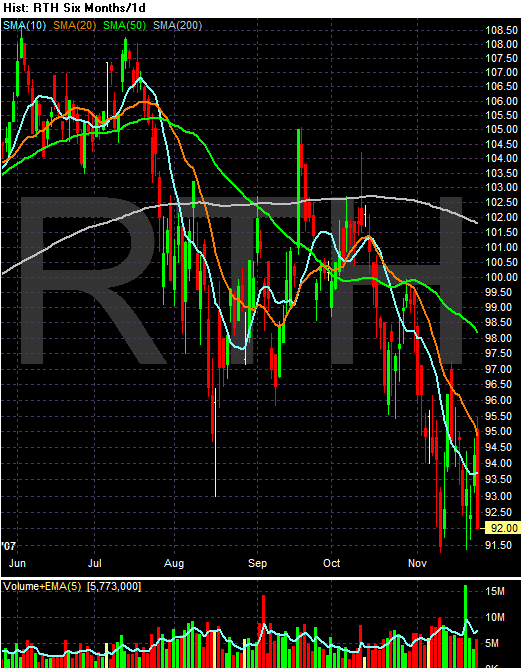
The retail ETF is clearly in a bearish posture. Prices are below the 200 day SMA by 9.3%. All of the shorter SMAs are moving lower, the shorter SMAs are below the longer SMAs and prices are below all the SMAs. This is a chart that says "sell me."


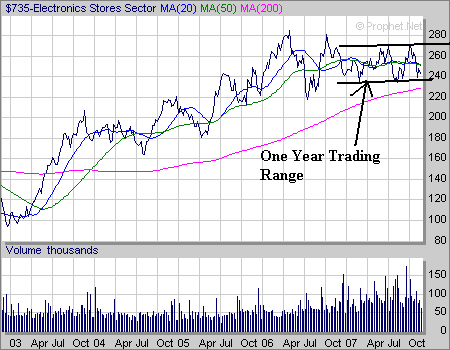
The electronic stores sector is at least above the 200 day SMA. But it has been in a trading range for the better part of a year. Also notice the shorter SMAs are bunched-up indicating a lack of direction.


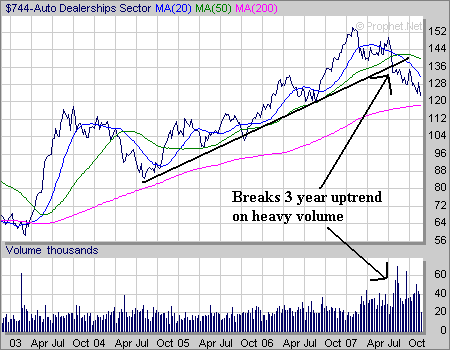
While the auto dealership sector is still above the 200 day SMA, it broke a three year uptrend on heavy volume earlier this year. That indicates this sector is in the middle of a trend reversal.

Reports on nonfinancial services generally were consistent with expanding economic activity, with the primary exception of transportation services. Several Districts pointed to continued strong demand growth for health-care services, while the Richmond, St. Louis, and Minneapolis Districts noted an ongoing expansion for providers of legal and other professional services. The Dallas District reported steady demand for legal services but noted a shift toward litigation related to bankruptcy filings, which may signal a slowing economy. In the San Francisco District, demand for advertising services was held down by weak demand from sellers of automobiles and home furnishings. Providers of temporary staffing services saw strong demand in the Richmond District as well as a pickup from the legal and financial industries in New York City, but demand for temp workers was reported as "sluggish" overall by Dallas.


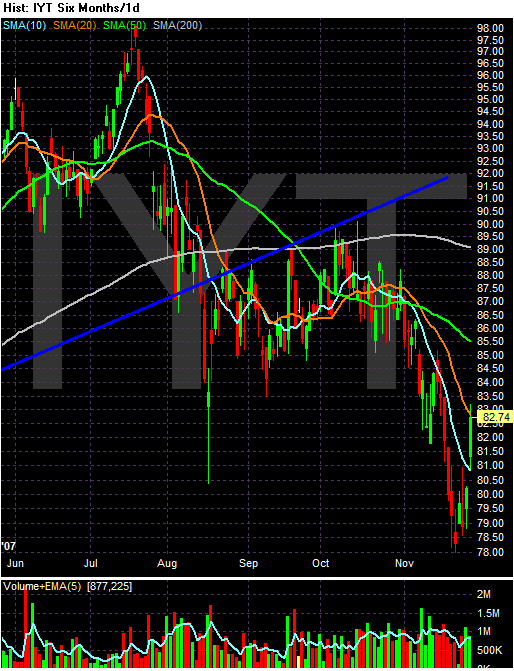
The transports are in a bear market. Prices are below the 200 day SMA. The shorter SMAs are below the longer SMAs and all the shorter SMAs are heading lower. While this index experienced a bounce yesterday, we have a long way to go before we can confirm this is a trend reversal.


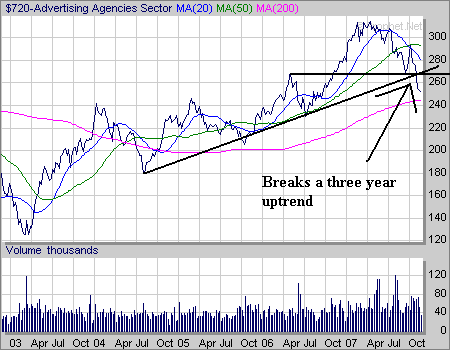
Ad agencies broke a three year uptrend recently, although they are still about the 200 day SMA.


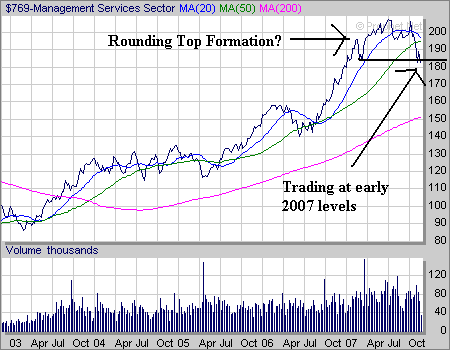
Management services formed a double top and are currently trading at important support levels. However, this sector is still in bull market territory.


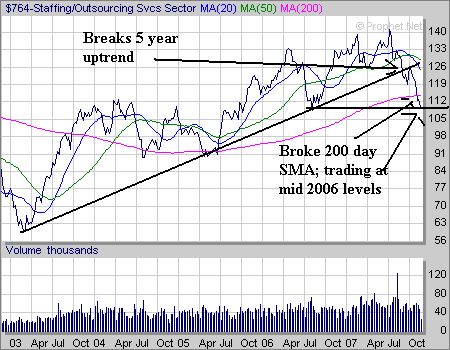
Staffing agencies have

1.) Broken a 5-year uptrend,

2.) Broken through the 200 day SMA

3.) And are trading at a technically important level. If they fall further they have a ways to go before they find additional technical support.

Manufacturing activity was mixed across subsectors but appeared to be largely stable on balance. Demand remained weak or fell further for machinery and manufactured materials related to home construction, such as lumber and concrete, and automakers have scaled back their production activities this year. By contrast, demand rose solidly for various other types of capital goods, such as non-automotive transportation equipment, information technology products, and machinery used in the agriculture, energy extraction, and mining industries. Chicago reported that steel production increased, in part because of reduced import competition of late, but Cleveland characterized steel shipping volumes as "flat" in that District. Among nondurable products, several Districts noted continued robust demand for food and significant gains for paper and plastics. However, Dallas reported "stable" demand for food and a drop in sales of corrugated boxes, and St. Louis noted that food manufacturers plan to lay off workers in that District. The reports generally indicated that increases in demand were especially strong for products and firms with significant export markets, for which sales have been boosted in part by the lower exchange value of the U.S. dollar.


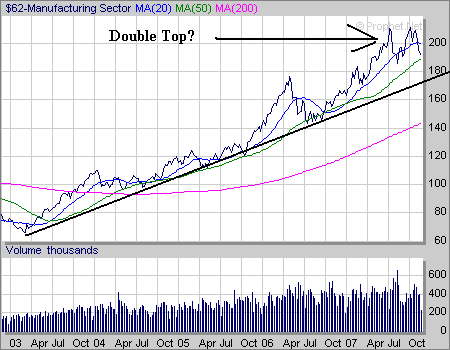
Manufacturing is still in a strong uptrend. However, it may have formed a double top over the last few months.


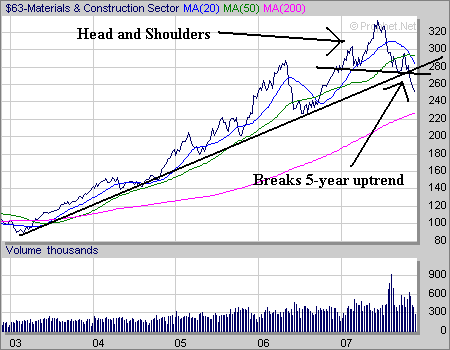
Materials and Construction formed a head and shoulders formation over 2007 and recently broke through a 5 year trend line.

Demand for residential real estate remained quite depressed, with only a few tentative and scattered signs of stabilization amidst the ongoing slowdown. Most Districts pointed to further increases in the inventory of available homes, with the earlier tightening of credit conditions for mortgage lending continuing to create barriers for some buyers. Consequently, prices on new and existing homes sold were reported to be down on a short-term or year-earlier basis in most Districts. The pace of homebuilding remained very low in general, and builders continued to shelve projects and lay off workers in many areas; contacts generally do not expect a significant pickup in homebuilding until well into next year at the earliest. Among scattered positive signs, however, co-op and condo sales in New York City picked up during the survey period, Richmond reported favorable readings on home sales in a few areas, and Kansas City reported that home inventories fell a bit in the Denver metro area. Weak home demand had mixed effects on conditions in rental markets: Chicago reported that builders' conversions of new homes to rental property put downward pressure on rents, while Dallas noted that demand for apartments picked up, in part because some potential homebuyers are unable to qualify for mortgages.


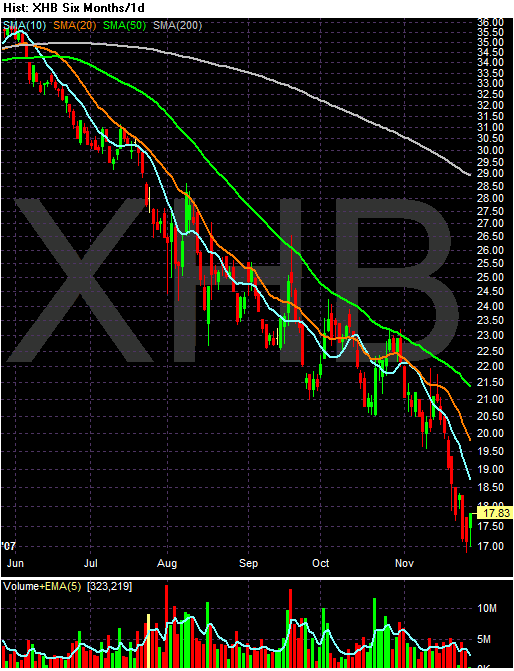
The homebuilders ETF is in a bearish chart. Prices are below the 200 day SMA; shorter SMAs are below longer SMAs; all the SMAs are moving lower and prices are below all the SMAs. It does not get more bearish than this.


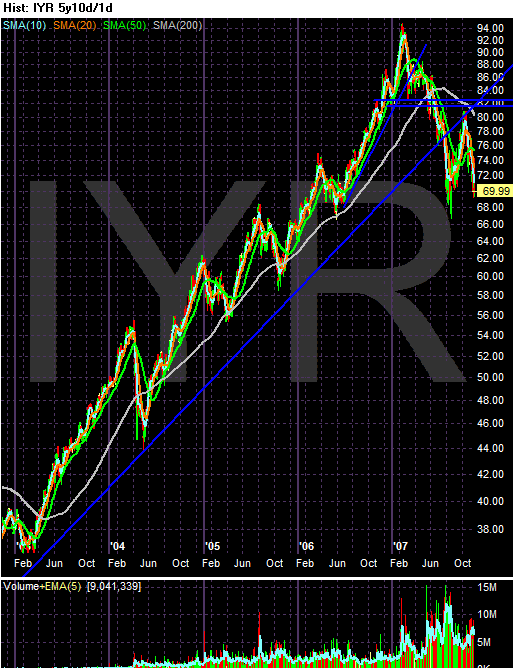
The real estate ETF broke a 5 year uptrend earlier this year.


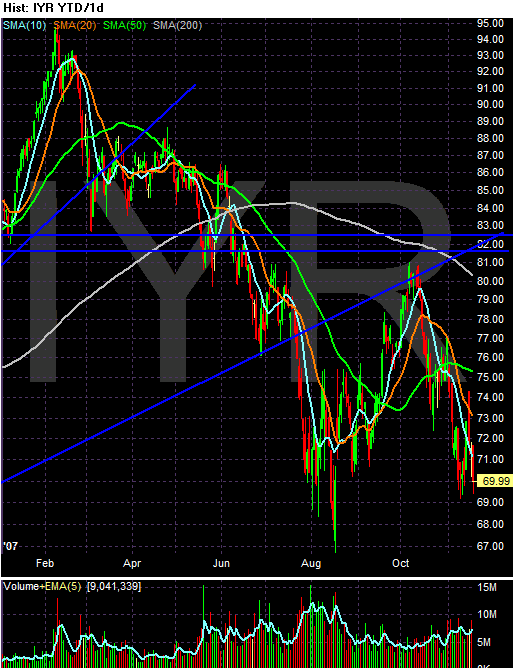
After breaking the 5-year uptrend, the ETF rallied to the previous trend line and has since traded down. Also note the index is below the 200 day SMA. Prices and the SMAs are a bit jumbled right now, indicating a lack of clear direction. Finally, this ETF may have formed a double bottom, with the first being in August and the second occurring over the last few weeks.


Lending to businesses generally was at high levels, but the reports suggested a slower rate of growth than in previous survey periods. Commercial and industrial lending activity changed little or declined in the Cleveland, Atlanta, St. Louis, Kansas City, and San Francisco Districts, although it increased noticeably in the Philadelphia District and continued to show modest growth according to Chicago. Lending standards for construction projects and commercial real estate transactions tightened further in the New York and St. Louis Districts, and they remained tight more generally and reportedly held down the volume of lending for these categories in the Boston District. The reports indicated slight increases in delinquencies on commercial and industrial loans and slightly larger increases for commercial mortgages in many areas.


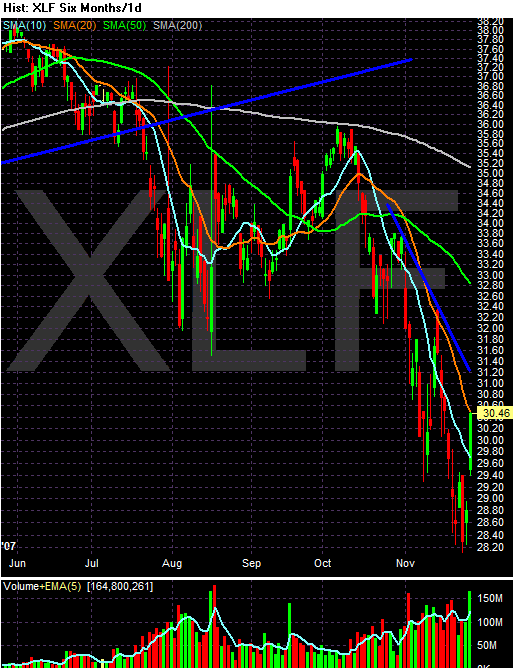
The Financial sector is in a bear market. The index is below the 200 day SMA. The shorter SMAs are below the longer SMAs. All the SMAs are headed lower. While prices have rebounded recently, it's doubtful this trend will continue. The sector is continually announcing writedowns at this point.

Reports on the natural-resources sector indicated further growth from very high levels of activity. High oil prices have stimulated expanded drilling in the Atlanta and Dallas Districts; Minneapolis reported increased activity in the energy and mining sectors since the last report; and Kansas City reported that "energy activity remained robust." However, Cleveland reported a slight decline in production of natural gas.


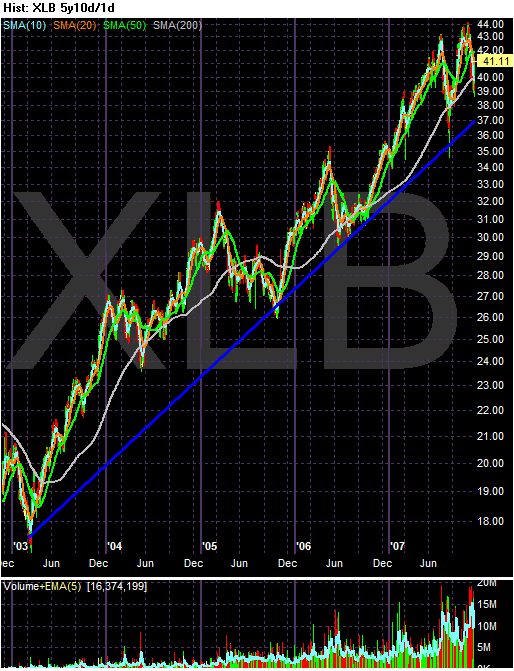
The basic materials ETF is still in the middle of a 5 year rally. However, it may have recently formed a double top.


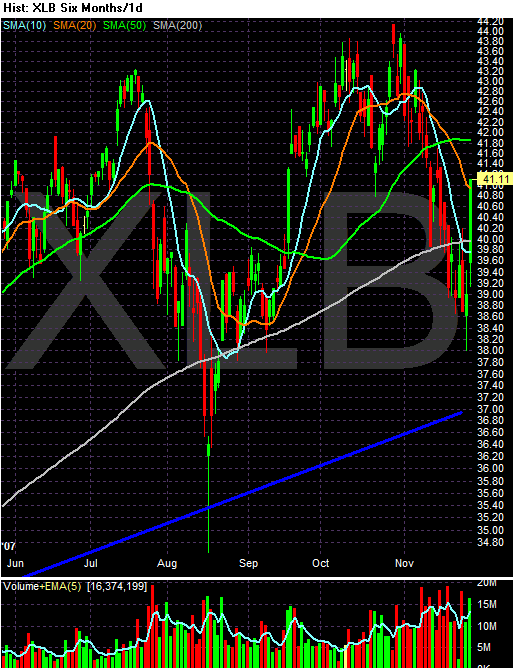
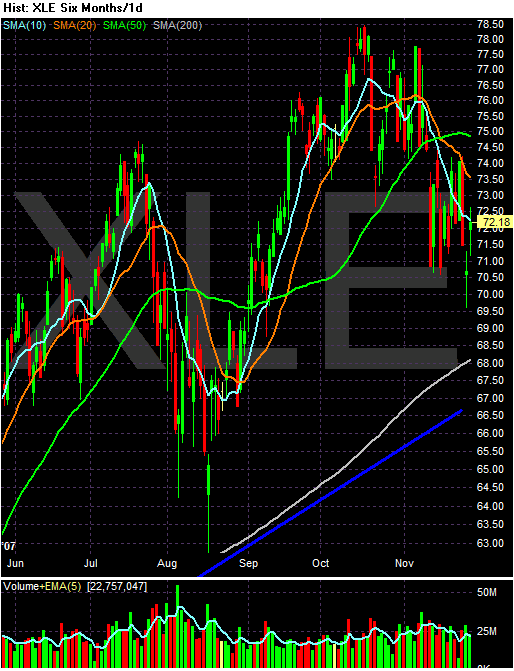
On the 6-month chart, notice prices rebounded through the 200 day SMA yesterday. While the index formed a shorter duration double top in October, yesterday's rally may have helped to kick this sector back into bullish territory.


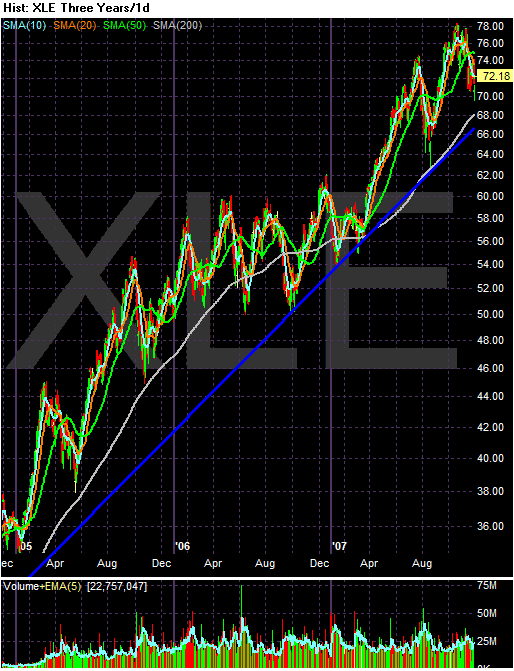
The energy sector is still in a bull market.


On 6 month chart, we have prices pulling back from a mid-October high. However, the pullback is very orderly; the chart doesn't have a lot of wild price swings. While the shorter SMAs are headed lower, the shorter SMAs in general are bunched in a tight range. Also note that prices have formed a trading range for about the last week while the market has been a but more haywire. Finally, prices are still above the 200 day SMA, indicating we're in a bull market. Until we see more volatile action or serious price drops, this chart looks to be in the middle of a standard bull market sell-off.

Thursday, September 6, 2007

Beige Book

Yesterday, the Federal Reserve released the Beige Book.

Here are some highlights.

Most Banks reported that the recent developments in financial markets had led to tighter lending standards for residential mortgages, which was having a noticeable effect on housing activity, and several noted that the reduction in credit availability added to uncertainty about when the housing market might turn around. While several Banks noted that commercial real estate markets had also experienced somewhat tighter credit conditions, a number commented that credit availability and credit quality remained good for most consumer and business borrowers. Outside of real estate, reports that the turmoil in financial markets had affected economic activity during the survey period were limited.


The emboldened sentence is very important. In Bernanke's last big policy speech, he said he was looking for any signs the housing market was spreading beyond the housing market. Here is the hey sentence from his speech:

It is not the responsibility of the Federal Reserve--nor would it be appropriate--to protect lenders and investors from the consequences of their financial decisions. But developments in financial markets can have broad economic effects felt by many outside the markets, and the Federal Reserve must take those effects into account when determining policy.


Putting these two sentences together and the possibility of a Fed rate cut diminishes.

Here's the summary paragraph from the beginning of the document:

Retail sales were generally positive, with increases characterized as modest to moderate. However, several Districts described motor vehicle and furniture sales as slow. Manufacturing activity expanded across most Districts, with reports of softening demand for building materials and autos. The weakness in the housing market deepened across most Districts, with sales weak or declining and prices reported to be falling or flat. Most Districts reported a continuing contraction in the residential mortgage market. Commercial real estate activity was generally stable to expanding. Demand for business loans held steady or weakened, while consumer lending was mixed. Agricultural conditions varied widely across Districts, with several reporting damage to crops and pastures as a result of excessive heat and drought conditions. Activity in the energy and mining sectors remained positive in all of the Districts reporting on these sectors. Nearly every District reported at least modest increases in employment during the recent survey period. Most Districts characterized their wage increases as moderate or steady. Wage pressures were intense only in isolated professions in short supply. And most Districts reported little change in overall price pressures.


Let's take these one at a time:

Retail sales were generally positive, with increases characterized as modest to moderate. However, several Districts described motor vehicle and furniture sales as slow.


According to the latest GDP report personal consumption expenditures increased 1.4% in the second quarter. This figure was revised .1% lower. However, the latest monthly income statistics from the BEA showed a fairly good increase. In other words, a new trend of expanding personal consumption expenditures may be emerging but we need more data.

Although this month's auto sales were a decent surprise, overall auto sales have been declining for most of the year. This is a big cause for concern. As for furniture sales, the decrease shouldn't be a surprise considering the housing market is a mess and will be for sometime.

Manufacturing activity expanded across most Districts, with reports of softening demand for building materials and autos.


This has been a bright spot in the economy. Exports are doing well thanks to an expanding global economy and cheap dollar.

The weakness in the housing market deepened across most Districts, with sales weak or declining and prices reported to be falling or flat. Most Districts reported a continuing contraction in the residential mortgage market. Commercial real estate activity was generally stable to expanding. Demand for business loans held steady or weakened, while consumer lending was mixed.


Residential housing has the following problem: massive supply + constricting loan situation = falling prices. Don't expect this to change anytime soon. As for commercial, the growth in spending has been solid for the last few quarters, although I have to wonder when the problems in the residential market start to bleed over into the commercial market (or if they will).

Nearly every District reported at least modest increases in employment during the recent survey period. Most Districts characterized their wage increases as moderate or steady. Wage pressures were intense only in isolated professions in short supply. And most Districts reported little change in overall price pressures.


Employment is a huge wild card right now. First, although the official employment numbers show a very low unemployment rate, that does not jibe with "moderate to steady" wage increases. In addition, the labor participation rate is still low for this part in the economic cycle. The fed noted this situation in passing later in the report:

Though some Districts described employment condition as tight, most reported that wage increases were moderate or steady. Wage pressures were intense only in isolated professions in short supply.


I'm expect employment to get weaker. I've written about this before. The short version is construction, financial services and retail employment are all vulnerable right now.

As for prices,

Most Districts reported little change in overall price pressures.


This may give the Fed some wiggle room. Remember, the Fed has consistently stated inflation was their number one priority for the last 6 months or so. Yet that concern is completely absent from their general overview of the economy in this report.

Short version, this report shows an economy that is in fair shape. There are strengths (manufacturing) but some glaring weaknesses (auto sales and housing). The employment situation is a conundrum.

Thursday, July 26, 2007

Fed Releases Beige Book

Here's a link to the whole report

From the WSJ:

The overall economy continued to expand at a moderate pace in the past six weeks, say reports compiled by the 12 regional Fed banks. The Fed typically releases the anecdotal reports, known as its "beige book," two weeks before its policy makers meet to consider interest rates.

In an apparent reaction to the housing slump and rising energy prices, consumer spending rose at only a moderate pace in June and July. Many regions indicated retail sales were below expectations. Five of the 12 said sales of housing-related items, such as furniture or home-repair supplies, were weak or declining.


Here are some key points from the report:

On balance, consumer spending rose at a modest pace, although a number of Districts indicated that sales were mixed or below expectations Cleveland, Chicago, St. Louis, and Minneapolis all shared the general assessment that consumer spending rose modestly, while Philadelphia said retail sales growth was quite strong in May but "closer to trend" in June. New York, Atlanta, Kansas City, and Dallas reported sales as flat and/or below expectations. The remaining regions described sales as mixed


This is not the most glowing statement of consumer spending. It seems the housing slowdown and rising gas and food prices are starting to take a toll on discretionary purchases.

Most Districts said that residential construction and real estate activity continued to decline on balance. Many Districts, however, noted increased activity in some individual market locales or segments.

....

Commercial construction and real estate markets were generally more active than during the previous reporting period.


Over the last year, we've seen commercial/nonresidential construction spending increase. Now this makes up the largest portion of total construction spending. In his Congressional testimony, Bernanke stated residential construction workers had shifted to commercial projects, which explains why construction employment hasn't decreased.

Most District reports indicated that manufacturing activity continued to expand during June and early July.

....

In most Districts, the increases in demand for factory goods were spread across a number of industries.


This jibes with what the industrial production and various Federal Reserve District manufacturing reports have been saying.

Contacts generally reported ongoing input cost pressures, particularly for petroleum-related inputs, while prices at the retail level continued to increase at a moderate rate. Notable exceptions were the Richmond District, which reported faster rates of price increases as local businesses passed along higher input costs, and the Kansas City region, which experienced an easing in overall price pressures. Almost every region said that oil and gasoline prices were either rising, high, or "an issue."


For an organization that focuses on core inflation, the Fed seems to talk an awful lot about energy inflation.

Short version: consumer spending could be an issue in the upcoming GDP report.

Wednesday, June 13, 2007

Fed Releases Beige Book

Here is a link to the release:

Here are the big points.

Reports from the twelve Federal Reserve Banks indicated that economic activity continued to expand from mid-April through May. Seven banks described growth in their Districts as modest or moderate: Cleveland, Atlanta, Chicago, St. Louis, Kansas City, New York, and San Francisco. Dallas reported growth as moderately strong, and Minneapolis said the District's economy edged up. Philadelphia reported that growth was somewhat faster than in recent months, and Richmond said growth picked up a bit. Boston characterized reports from its contacts as generally positive.

Consumer spending and retail sales were generally up in late April and May, with a number of Districts reporting that luxury items were selling better than lower-end merchandise. On net, there was little change in auto sales across the Districts, and dealers are about evenly split on whether there will be any pickup in sales over the summer. Travel and tourism remained healthy despite the recent rise in gas prices, although the rise in prices remains a concern for the summer. Except for trucking, reports from the service industries were generally positive. Declines were widely reported in the trucking industry, however. Manufacturing activity was up in a majority of Districts. There was weakness among manufacturers producing for the residential construction industry but strength among machinery and equipment manufacturers in several Districts.

There was continuing weakness in residential real estate and construction but increasing strength in the commercial real estate sector, including both office and industrial space. Half the District banks reported little or no change in overall loan demand, with strength in commercial lending and weakness in residential mortgages and consumer lending. In the agricultural sector, crop conditions improved and were generally described as good. An early spring frost harmed some winter wheat, and drought conditions caused problems in the Southeast and the far West. Oil and gas exploration increased in recent months, but coal production was down.

Hiring activity picked up in late April through May, especially for workers with specialized skills. But most Districts reported that overall wage pressures do not seem to have increased. There have been significant price increases for energy-related products and selected raw materials, but the prices of some raw materials have remained stable.

Wednesday, April 25, 2007

The Beige Book

The Fed released the Beige Book today.

Most parts of the country logged moderate economic growth in the early spring, despite sluggish manufacturing largely due to the housing slump.

The fresh snapshot of the national economy, released Wednesday by the Federal Reserve, found that "manufacturing activity was slow" in many areas and that "residential real estate activity continued to weaken, with sales declining in many districts and flat in a number of others."


Here's a link to the full report.

Here are some relevant bullet points from the report (in italics):

-- Reports on retail sales across the Districts were generally positive, although vehicle sales were mixed in several Districts.

-- Reports on retail sales in most Districts were generally positive.

-- Reports on vehicle sales were mixed among the Districts.

-- Residential real estate activity continued to weaken in many Districts.


These points lead to a question. Just how confident is the consumer? Assuming that buying durable goods indicates confidence, the consumer might not be as confident as it appears. Autos sales are mixes and housing numbers aren't that strong.

-- Manufacturing activity remained slow overall, although reports on conditions in the manufacturing sector varied across Districts.

-- Activity in the services sector increased in most areas throughout the Districts, particularly for firms serving business customer


Business seems to be doing alright, but not great.

-- Most Districts reported continuing tight labor market conditions, especially for skilled occupations, although several Districts reported expansions in employment levels.

-- Wage increases were reported in some industries of the New York, Philadelphia, Richmond, Atlanta, Chicago, Minneapolis, Kansas City, Dallas, and San Francisco Districts. These were generally modest
.

These figures are the key to keeping the economy in positive territory right now. So long as job growth is at least moderate and wage growth over the inflation rate continues, consumers will probably continue to spend.

-- Consumer prices remained generally stable or increased modestly, but most Districts reported a rise in input prices, particularly for metals and raw materials

This could really put the Fed in a bind of the economy continues to slow.

Thursday, March 8, 2007

Beige Book is Out

The Federal Reserve Issued the Beige Book yesterday. Here's a link to the report.

Here are some highlights from various news sources:

WSJ:

The report found "modest expansion in economic activity" in many districts, including the regions centered on Chicago, Minneapolis and Philadelphia. But some districts noted some slowing, including Dallas, Boston and St. Louis. It also noted continued demand for skilled workers and some pressure to increase wages


From CBS Marketwatch:

Housing markets remained weak, although there were "signs of stabilization" in some areas.

Manufacturing activity was "steady or expanding," despite the weakness in auto- and housing-related production.

Retail sales were said to be growing steadily. Auto sales were sluggish.

Inflation was "little changed." Pay increases were "moderate."


From Bloomberg:

The general tone of the report was upbeat, describing continued growth in retail sales, services and demand for labor. Policy makers are alert for signs of a deeper economic slowdown after last week's global equities rout and reports showing a prolonged decline in housing.

``I still think that the underlying economic fundamentals are conducive to a pickup in growth as we move through 2007 and 2008,'' Chicago Fed President Michael Moskow said today in a speech in Chicago. ``I am not prepared to significantly change my projections.''


From Reuters:

Policy-makers expect the economy to slowly pick up after losing steam in the fourth quarter as housing cooled. The Beige Book nodded to hopes that this sector might finally be on the mend, while softness among manufacturers remained confined to autos and products linked to residential construction.


I would encourage everybody to read the full report and all of the news articles as they provide some of the best insight into what the Federal Reserve policy makers are thinking.

Thursday, January 18, 2007

Beige Book's Inflation News is Fair

From the Beige Book:

Overall prices increased moderately. Prices for energy and a number of materials have eased, and competition has kept prices for final goods in check. Atlanta, Chicago, Minneapolis and Kansas City described price pressures as easing or moderating. Manufacturers in the Boston and Cleveland Districts reported that input prices were stable, although contacts noted some increases in metal prices. Meanwhile, manufacturers in the New York District indicated some increases in input price pressures. Retail prices were steady in the New York, Atlanta and Dallas Districts, but were edging up slightly in the Richmond District. Philadelphia noted that reports of price increases at business firms were not as widespread as they were earlier in the fall. Dallas described price pressures as mixed, while San Francisco said final prices rose at a modest pace.


First -- copper prices have dropped since this report was written. That means the "some contacts indicated metal prices were increasing" has either already gone away or is in the process of ameliorating.

This report uses the word "moderating" and "eased" a lot. That plays into the Fed's general story right now, which is as the economy slows price pressures will weaken. This has been the Fed's contention for the last 6 months. When Bernanke first started using this language I was skeptical. However, the economy is making Ben look good right now.

The areas of inflation increases look more like inflation "hot pockets" -- areas of limited scope and influence rather than a system wide problem.

Ben speaks to the Senate today.