Saturday, April 7, 2007

Will Export Growth Prevent Recession?

From Barron's (subscription required)

There will be a lot of statistics going in both directions amid weak economic growth, says Bob Doll, global chief investment officer of equities at BlackRock. But Doll continues to expect 5% earnings growth and 7% gains in the S&P 500 this year as booming exports more than offset the housing slowdown.


The devalued dollar -- which makes US goods cheaper abroad -- obviously helps exports.

However, according to the latest GDP report from the BEA, exports accounted for 11.66% of US GDP in chained 2000 dollars in the 4th quarter of 2006. That compares to 16.37% for gross private domestic investment. That means exports have to increase a bit more than the decrease in investment to effectively negate the effect of declining domestic investment. While exports increased 10.6% from the 3rd to 4th quarter of 2006, gross private investment decreased 15.2%. In other words, gross private domestic investment -- which is a larger percentage of GDP -- won the 4th quarter round.

In addition, exports of goods accounted for 85% of that total. Considering the latest ISM numbers indicate the manufacturing sector is just above recessionary levels, it doesn't look as though exports are going to grow fast enough, at least at current levels. Also in that ISM report was a 1.5% increase in exports from 54 to 55.5. Those levels just don't look like they are strong enough to warrant that analysts optimism about exports.

Friday, April 6, 2007

More Subprime Problems

From CBS Marketwatch

American Home Mortgage Investment Corp. cut its first-quarter and full-year profit forecast by more than 25% Friday after being hit by problems in the secondary market for home loans and mortgage-backed securities.

The company also said that it's stopped offering some types of so-called Alt-A mortgages because of the high cost of delinquencies on those loans.

The warning suggests that problems in the subprime-mortgage business have begun spreading to other parts of the home-loan industry.


And the hits just keep on a-comin.....

Earnings Slowing

From IBD:

Analysts see S&P 500 firms posting mid-single-digit gains for the first quarter, ending a run of 18 straight quarters of double-digit growth. Alec Young, equity strategist with Standard & Poor's, projects 5% average quarterly growth. He sees 7% for the full year, down from 14.9% in 2006.

Zacks Investment Research, which tracks median growth, estimates a 7.2% quarterly profit gain for the S&P 500 — well below the fourth quarter's 12.5% increase.

The actual results probably will be higher because upside surprises typically far outweigh misses. Just don't expect the final gain to top 10%.


This is more evidence the economy is slowing.

Dallas Fed Report On the Economy

The Dallas Fed has released a report called National Economic Update. I think it's a very good piece on the economy's current status.

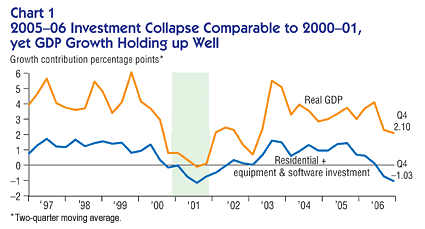
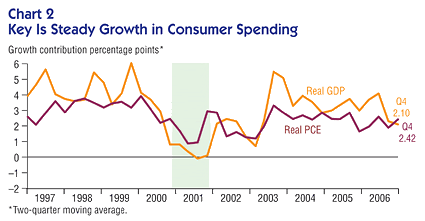
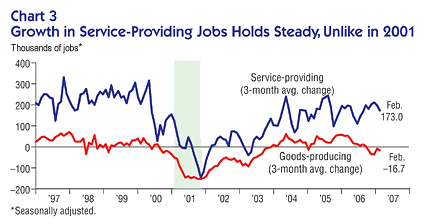
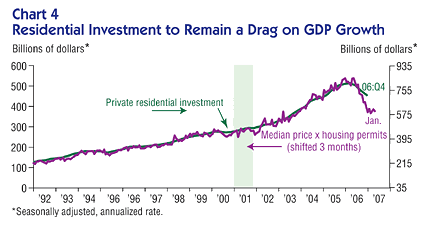
Here's the short version. Overall investment is down. Yet job growth in service industries is providing the consumer with enough money to continue spending. So long as job growth and wages continue to increase, the chances of a recession are low.

However, we don't know if the drop in investment and mortgage market problems will spill over into the larger economy.

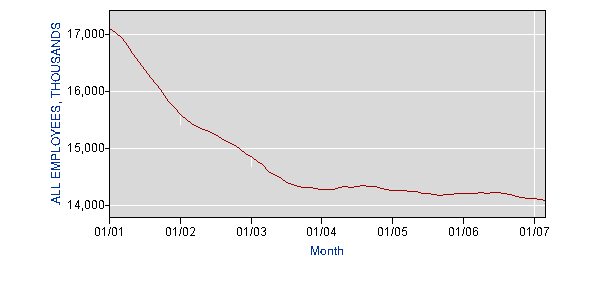
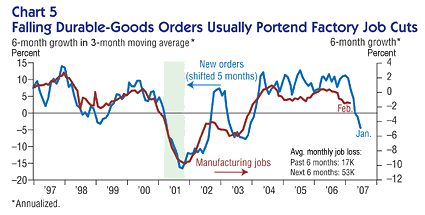
The last chart deals with manufacturing jobs and whether the drop in durable goods orders will lead to cuts in manufacturing jobs. Here is a counter-argument. Manufacturing employment hasn't grown during this expansion. That could mean there just isn't that much fat to cut from manufacturing payrolls. Here's a chart of seasonally adjusted manufacturing employment for the last 7 years.

Photo Sharing and Video Hosting at Photobucket

The following charts detail the Dallas Feds report.

Photo Sharing and Video Hosting at Photobucket

Photo Sharing and Video Hosting at Photobucket

Photo Sharing and Video Hosting at Photobucket

Photo Sharing and Video Hosting at Photobucket

Photo Sharing and Video Hosting at Photobucket

Payrolls + 180,000

From Bloomberg:

Hiring in the U.S. rose more than forecast and the jobless rate unexpectedly dropped, giving the economy a spark as it struggles to overcome slumps in housing and manufacturing.

The 180,000 increase in employment followed a 113,000 gain in February that was larger than previously estimated, the Labor Department reported today in Washington. The jobless rate fell to 4.4 percent, matching October's five-year low.

New jobs and bigger paychecks are giving more Americans the means to spend, preventing the housing recession from spreading to the rest of the economy. The drop in the jobless rate may concern Federal Reserve policy makers who've said the threat of inflation is a bigger risk for the expansion.


Here's a link to the report

First, The BLS revised February's number up. This has been a standard pattern for this expansion. The BLS added 800,000 or so jobs in an annual revision a few months ago.

Now, the internals are pretty solid.

Construction jobs increased 56,000. The means all the construction workers laid-off in January were essentially rehired. My guess is non-residential construction is doing most of the hiring at this point.

Oddly, professional services lost 7,000. That area of job growth has been pretty consistent for most of this expansion.

Education and health added 54,000 and leisure/hospitality added 21,000. The health area employment has been solid for the last 4 years as has leisure and hospitality.

Average hourly earnings increase 6 cents, and hours worked increased .1 hours.

This is a good report.

Thursday, April 5, 2007

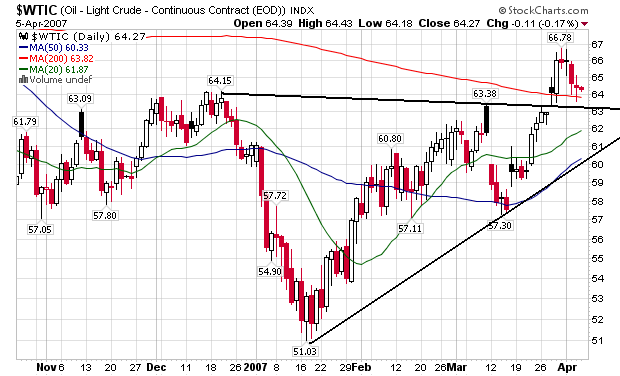
Oil Prices Holding Above Support

The British prisoner deal is over. Oil prices are now above resistance.

Photo Sharing and Video Hosting at Photobucket

The Markets Today

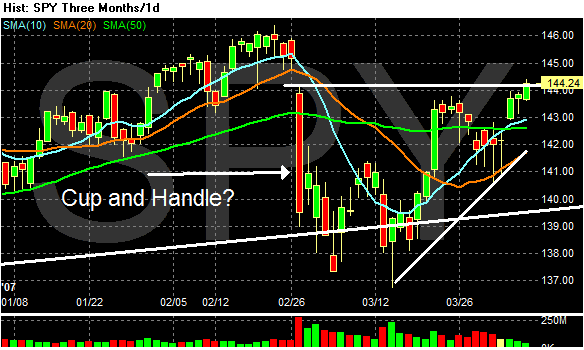
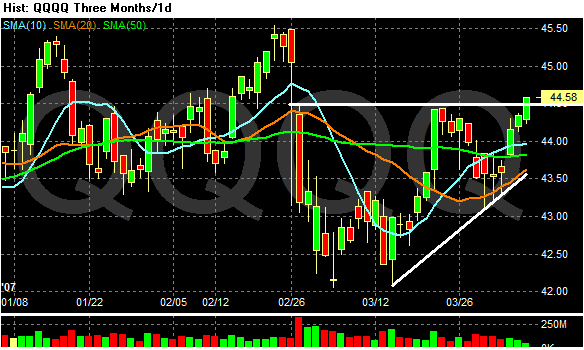
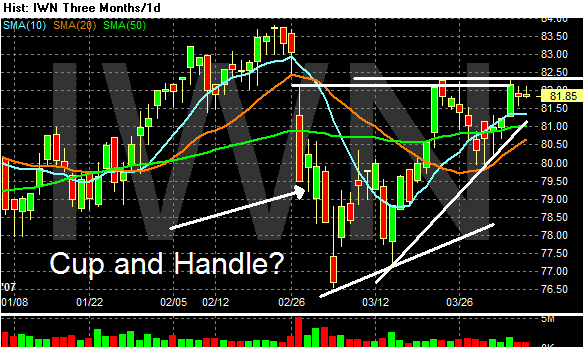
Today is technically Friday because the markets are closed tomorrow. The markets are trying to break through resistance. The QQQQs and SPYs are just over the line. But the volume is really weak on the break-out which makes it really technically suspect.

Photo Sharing and Video Hosting at Photobucket

Photo Sharing and Video Hosting at Photobucket

Photo Sharing and Video Hosting at Photobucket

Gas Prices Heading Higher?

From CBS Marketwatch:

"Just as the market was trying to digest exactly what this love-fest meant for the energy complex, the Department of Energy blindsided us with a wildly bullish 5-million-barrel drop in gasoline supply," said Phil Flynn, a senior analyst at Alaron Trading.

"For gas consumers, the DOE report can best be described as disturbing at the very least," he said in an e-mailed note to clients. "Gasoline supplies are tightening at a disturbing rate and that could mean only bad news for the consumer as we get ready to start a new summer-driving season."

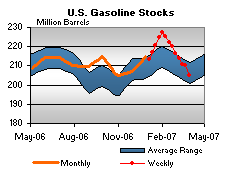
On Wednesday, Energy Department data showed a 5 million barrel decline in supplies of motor gasoline for the week ended March 30 -- much bigger than the market was expecting. Crude supplies rose a bigger-than-expected 4.3 million barrels while distillates were unchanged in the latest week.


Here's a chart of gasoline inventories from This Week in Petroleum:

Photo Sharing and Video Hosting at Photobucket

This has lead to continued price increases:

Gasoline prices saw another significant increase for the week of April 2, 2007, jumping 9.7 cents to 270.7 cents per gallon. This is the ninth consecutive week of increases; prices are now 11.9 cents per gallon higher than at this time last year. All regions reported higher prices.


This is not a good sign at all.

Inflation May Increase

From Ticker Sense:

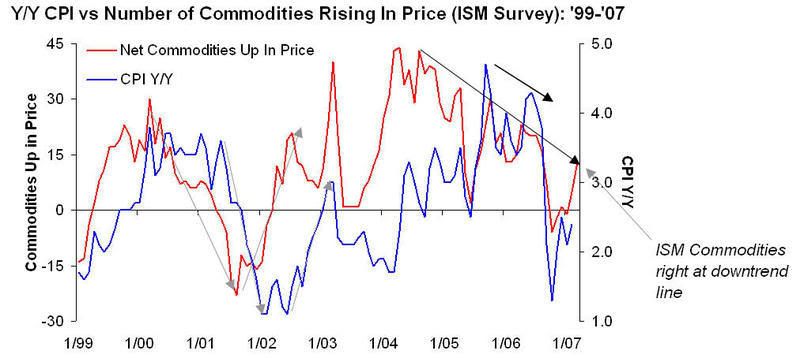
Besides the higher than expected prices paid index in this morning's ISM report, another aspect of the report shows that we could be in store for another up tick in inflation. Each month, in the Commodities survey, respondents are asked about the pricing conditions for the commodities they deal with. Namely, are they up in price, down in price, in short supply, or none of the above. As we have highlighted in the past, increases in inflation are often preceded by increases in the number of commodities rising in price, while decreases in the rate of inflation are preceded by respondents noting that more commodities are falling in price than rising.

In this month's survey, respondents noted increases in thirteen different commodities, with no commodities showing a decline in prices. This marks the highest reading since August of last Summer, and puts the current reading right on the downtrend line from 2004.


The provided chart indicates a very high correlation between this index and inflation.

Photo Sharing and Video Hosting at Photobucket

Dollar Update

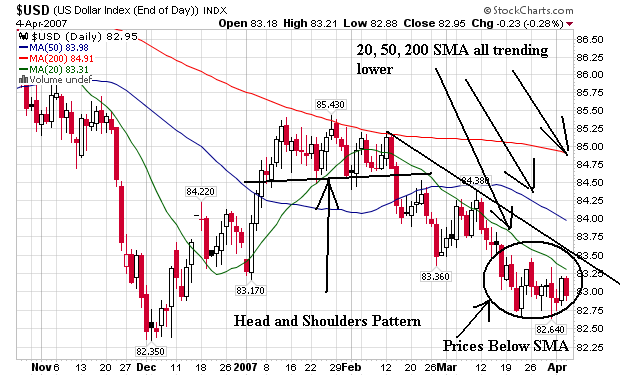
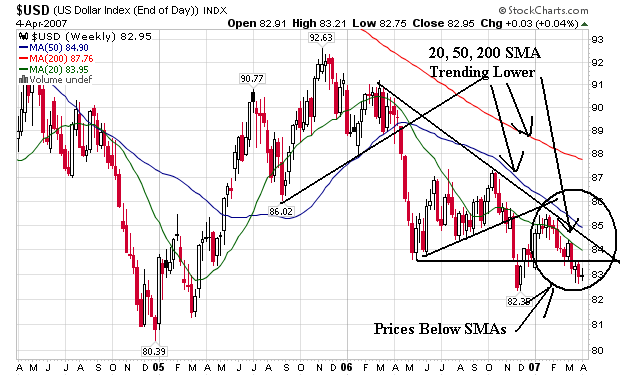
The daily and weekly dollar charts are still weak. Both have the same common bearish indicators:

1.) All the simple moving averages are trending down.

2.) The prices on both charts are below the simple moving averages

3.) Both charts are below a downward sloping trendline.

The daily chart

Photo Sharing and Video Hosting at Photobucket


The Weekly Chart


Photo Sharing and Video Hosting at Photobucket

Iran Releases Britons; Watch Oil Prices

It appears the Iranian hostage crisis is over. This event led to a spike in oil prices, which rose above the technically important $64/bbl. Keep an eye on oil prices to see if the retest $64 and rebound or fall through.

Consumer Spending One Economic Bright Spot

From Bloomberg:

Housing is in recession, a factory downturn lingers and companies are cutting investment. Even so, buoyant American consumers propelled the economy into its 65th month of expansion this week.

Rising wages and a jobless rate that's close to a five-year low are giving consumers the means to keep spending and maintain economic growth, albeit at a slower pace. More people consider jobs abundant, according to the Conference Board, whose March survey showed consumer confidence above the 2006 average.


The official unemployment rate is 4.5%. This has led to an increase in wages:

Personal income increased $65.4 billion, or 0.6 percent, and disposable personal income (DPI) increased $53.8 billion, or 0.5 percent, in February, according to the Bureau of Economic Analysis.
Personal consumption expenditures (PCE) increased $55.5 billion, or 0.6 percent. In January, personal income increased $110.5 billion, or 1.0 percent, DPI increased $74.2 billion, or 0.8 percent, and PCE increased $50.2 billion, or 0.5 percent, based on revised estimates.


Bernanke noted this trend in his latest Congressional testimony:

Employment has continued to expand as job losses in manufacturing and residential construction have been more than offset by gains in other sectors, notably health care, leisure and hospitality, and professional and technical services, and unemployment remains low by historical standards. The continuing increases in employment, together with some pickup in real wages, have helped sustain consumer spending, which increased at a brisk pace during the second half of last year and has continued to be well maintained so far this year. Growth in consumer spending should continue to support the economic expansion in coming quarters. In addition, fiscal policy at both the federal and the state and local levels should impart a small stimulus to economic activity this year.


This makes Friday's employment report that much more important because it is one bright spot in the economy. Also pay attention to the "inside numbers" -- population growth, job growth related to population and the labor participation rate. Those figures will tell us the depth of the labor market.

Natural Gas Cartel Forming?

From the WSJ:

Western leaders have long had to contend with OPEC, which leveraged control of a large share of world oil trade into geopolitical punch. Now, the West may begin facing a new energy nemesis: a potential natural-gas cartel.

The Gas Exporting Countries Forum, an assembly of 14 of the world's largest gas producers, will meet Monday and Tuesday in the Qatar capital of Doha. Major members such as Iran are openly talking of someday creating a version of the Organization of Petroleum Exporting Countries for gas, an increasingly important energy source and raw material for consumers and companies around the globe.

A group with OPEC's market-swaying might is highly unlikely to emerge anytime soon. But the forum's effort to lay the foundation for greater collaboration as the gas trade expands and grows more critical to global energy needs is ringing alarm bells in Western capitals. The group's long-term goals -- more influence over gas markets and greater political clout over clients in the U.S., Europe and Asia -- face tall hurdles but may be achievable nonetheless.


This is just the kind of news the Fed wants to hear right now.

European Inflation Still Around

From the WSJ:

Euro-zone inflation risks "have not diminished" in recent months and the European Central Bank hasn't signaled that interest rates are close to peaking, European Central Bank Governing Council member Klaus Liebscher said.

The comments arrived as surveys of purchasing managers working for service providers and manufacturers showed the euro-zone economy continued to expand at a rapid pace in March, and the remarks implied that the central bank is likely to raise interest rates at least one more time this year.

"We will say that [rates are close to a peak] when the time comes," Mr. Liebscher, who is also the governor of Austria's central bank, said in an interview. He reiterated that interest rates are moderate and monetary policy is still supporting economic growth.


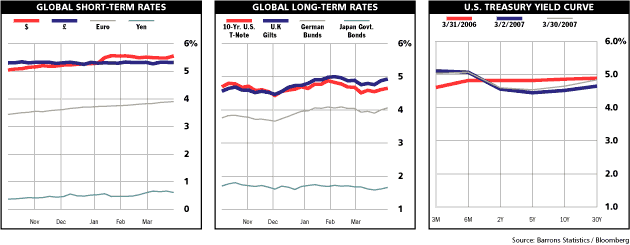
There are two reasons why the levels of various regions interest rates are important. The first is the carry trade. A "carry-trade" is an eco-geek way of saying, "borrow money in a region where interest rates are low and lend in regions where interest rates are high." Secondly, interest rates are important for currency traders. If a currency has a higher interest rate, traders will consider that currency more valuable. Some traders invest their currency holdings in that currencies interest rate investments.

Higher inflationary pressures mean higher interest rates. Higher interest rates mean a more valuable currency.

Also remember, there is slow global move to diversify currency reserves from dollars, primarily in euros. As European interest rates increase to stave off inflationary pressures expect this move to continue.

The following graph is from Barron's "The Current Yield", a weekly column on the bond market.

Photo Sharing and Video Hosting at Photobucket

Houing Inventories Increase In 20 Cities

From the WSJ:

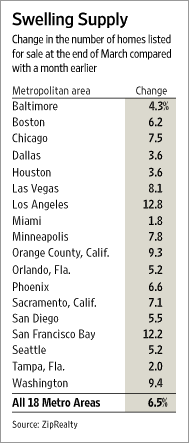
The number of homes listed for sale in 18 major U.S. metropolitan areas at the end of March increased 6.5% from a month earlier, according to data compiled by ZipRealty Inc., a national real-estate brokerage firm in Emeryville, Calif. The data cover listings of single-family homes, condominiums and town houses on local multiple-listing services.

Over the past 22 years, home inventories nationwide have increased an average of 1.7% in March from February, according to Credit Suisse Group. Supplies typically rise modestly in March as sellers pursue the many families with children who seek new homes in the spring, so they can move during summer vacations.


Inventories are already at high levels. News like this does not help to alleviate that problem.

In addition, this is another signal that housing prices are probably headed lower for a long time.

Here's a list of the cities and the percentage change in inventory.

Photo Sharing and Video Hosting at Photobucket

Wednesday, April 4, 2007

Daily Roundup

I was in court all day, so I'm a bit behind on the news.

Here are the highlights:

Gas prices increase again:

Gasoline prices saw another significant increase for the week of April 2, 2007, jumping 9.7 cents to 270.7 cents per gallon. This is the ninth consecutive week of increases; prices are now 11.9 cents per gallon higher than at this time last year. All regions reported higher prices. East Coast prices were up 9.6 cents to 267.1 cents per gallon, while Midwest prices rose 9.6 cents to 261.4 cents per gallon. The Gulf Coast saw the largest regional increase, with prices up 12.3 cents to 256.5 cents per gallon. In the Rocky Mountains, prices increased 8.1 cents to 261.9 cents per gallon. West Coast prices were up 8.0 cents to 309.6 cents per gallon, with the average price for regular grade in California up 7.6 cents to 322.8 cents per gallon, 48.5 cents per gallon above last year's price.


Last year we saw gas prices over $3.00 gallon. If prices stay on the same trajectory, we're in for an ugly summer.

This also increases pressure on the Fed not to lower interest rates.

I am also wondering how CPI will look next month with all of these increases.

ISM is increasing, albeit at a slower pace:

"Non-manufacturing business activity increased for the 48th consecutive month in March," Nieves said. He added, "Business Activity, New Orders and Employment increased at a slower rate in March than in February. The Prices Index increased 9.5 percentage points this month to 63.3 percent

Here's the anecdotal evidence:

* "Overall core business activity is slightly slower." (Finance & Insurance)
* "Constant increases in fuel costs seem to be causing an economic downturn. Outlook remains cautiously optimistic." (Professional, Scientific & Technical Services)
* "Business activity seems to have slowed with some brightness on the horizon." (Wholesale Trade)
* "Market remains stable." (Information)
* "Business is OK but not great. We will not get the price in the market. Making our year depends upon cost control." (Agriculture, Forestry, Fishing & Hunting)


The prices component is troubling:

Prices paid by non-manufacturing organizations for purchased materials and services increased in March for the 46th consecutive month (following the recent seasonal adjustments). ISM's Non-Manufacturing Prices Index for March is 63.3 percent, 9.5 percentage points higher than February's seasonally adjusted index of 53.8 percent. In March, the percentage of respondents reporting higher prices increased by 21 percentage points to 38 percent as compared to February. The percentage indicating no change decreased from 74 percent in February to 58 percent in March. The percentage of respondents noting lower prices decreased from 9 percent in February to 4 percent in March.


Again, like gas prices, this type of news may prevent the Fed from lowering interest rates unless there is a really big slowdown.

Copper and Gold Moving Up

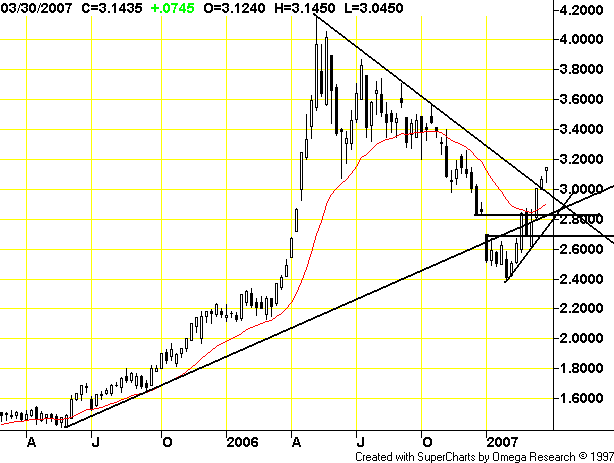
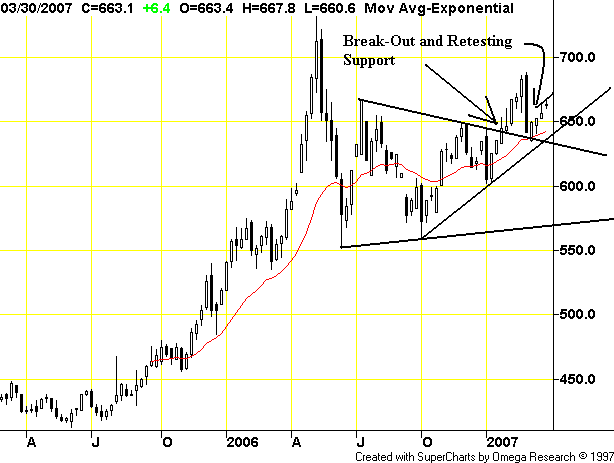
Here are the copper and gold charts, respectively.

Photo Sharing and Video Hosting at Photobucket

Photo Sharing and Video Hosting at Photobucket

Oil Drops; Will Support Hold?

From IBD:

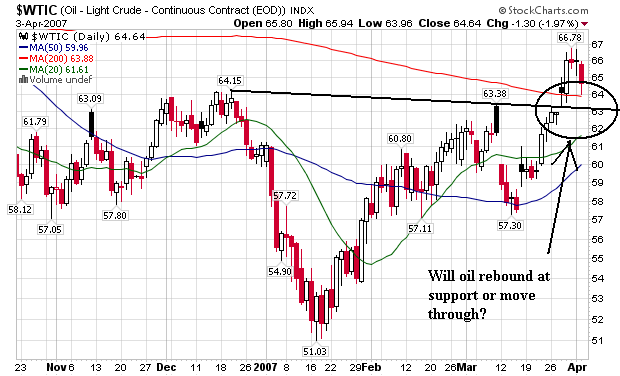
May crude fell $1.30 to $64.64 a barrel on easing U.K.-Iran tensions. That's still up $2.95 from March 22, the day before Iran captured 15 British sailors. RBOB gasoline futures fell by $2.51 cents to $2.0177 a gallon. Heating oil futures lost 2.38 cents to close at $1.8387. The Energy Dept. releases U.S. petroleum stockpile data on Wed.


Photo Sharing and Video Hosting at Photobucket

We have three support lines here.

1.) The line drawn on the chart. This is a neckline of a reverse/upside down head and shoulders formation.

2.) The 20 day SMA

3.) The 50 day SMA.

SubPrime Delinquencies Increase

From the WSJ (subscription required):

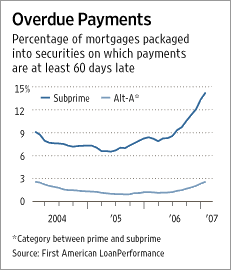
The First American data show that in January payments were at least 60 days late on 14.3% of "subprime" loans that had been packaged into securities, up from 13.4% in December and 8.4% in January 2006. Subprime loans are those made to borrowers with weak credit records or large debts in relation to their incomes.

For Alt-A loans -- a category between prime and subprime that includes many loans that don't require full documentation of the borrower's income or assets -- the late-payment figure rose to 2.6% in January from 2.3% in December and 1.3% in January 2006.


Here's the graph from the article:

Photo Sharing and Video Hosting at Photobucket

The news from housing continues to deteriorate. Inventories are very high, especially by historical standards. Household debt levels are high by historical and GDP/disposable income measures. Now we have delinquencies increasing -- again.

Tuesday, April 3, 2007

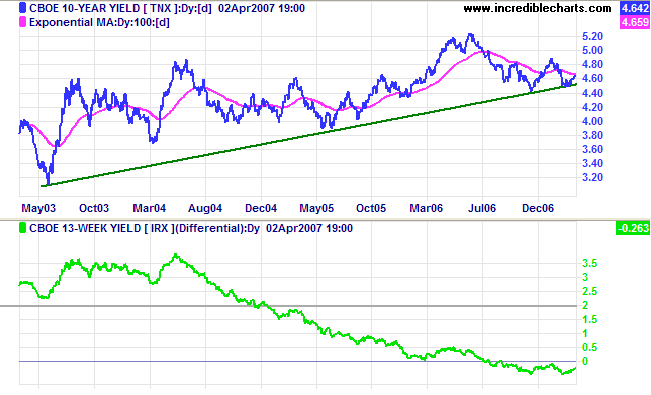
Treasury Yields -- The Long View

Here is a 4 year chart of Treasury Yields from Incredible Charts

Photo Sharing and Video Hosting at Photobucket

Here is some interesting commentary from last week's Barron's (subscription required):

In a replay of tariffs slapped on steel imports in 2002, the Commerce Department said it would impose tariffs of 10.9% to 20.4% on Chinese coated papers in retaliation for subsidies Beijing provides. The dollar reacted negatively to the protectionist measure, which recalls the currency's drop in the wake of the steel tariffs. Although later reversed by the World Trade Organization, those levies helped set off a 35% decline in the dollar against the euro in the following year, writes Ashraf Laidi, CMC Markets' chief foreign-exchange analyst.

Whether or not these new tariffs also are reversed by the WTO, the U.S. actions could trigger retaliation by China, notably further diversification of its currency reserves, the vast majority of which are held in dollars in the form of U.S. bonds. As noted here several weeks ago, one academic study estimated that foreign-capital inflows have lowered long-term U.S. interest rates by 90 basis points (0.9%). All else being equal, less buying of U.S. assets would tend to boost yields.

These higher rates would pile onto the already staggering housing market. Higher inflation resulting from the tariffs and the weaker dollar would add to pressure on the Federal Reserve not to lower rates to offset the effect of a housing slide on the economy, according to T.J. Marta, fixed-income strategist for RBC Capital Markets.


China and the US are in a mutually beneficial relationship; we buy their products, they loan us money.

In addition, China and the US are involved in a currency version of Mutual Assured Destruction. While I have expressed concern about the US/China relationship many times -- and am still concerned -- a move by the Chinese to dump dollars would devalue about $1 trillion in assets held by the central Chinese Bank. In short -- it would hurt them as well.

That does not mean we should not be concerned about China's international reserves. the trade deficit is indicative of a massively imbalanced international trading system. However, calls for monetary collapse based in this situation aren't 100% on the money.